



Metal roofs have gained immense popularity due to their various benefits. They have a very high level of durability and can withstand the test of time. Moreover, their aesthetic appeal cannot be disputed. A lot of people who own houses ponder over the question of how to put a sheet metal roof onto their homes. They do this to cut costs. This is a massive undertaking. On the other hand, if a person is resourceful enough with the right people helping him this situation can be overcome.
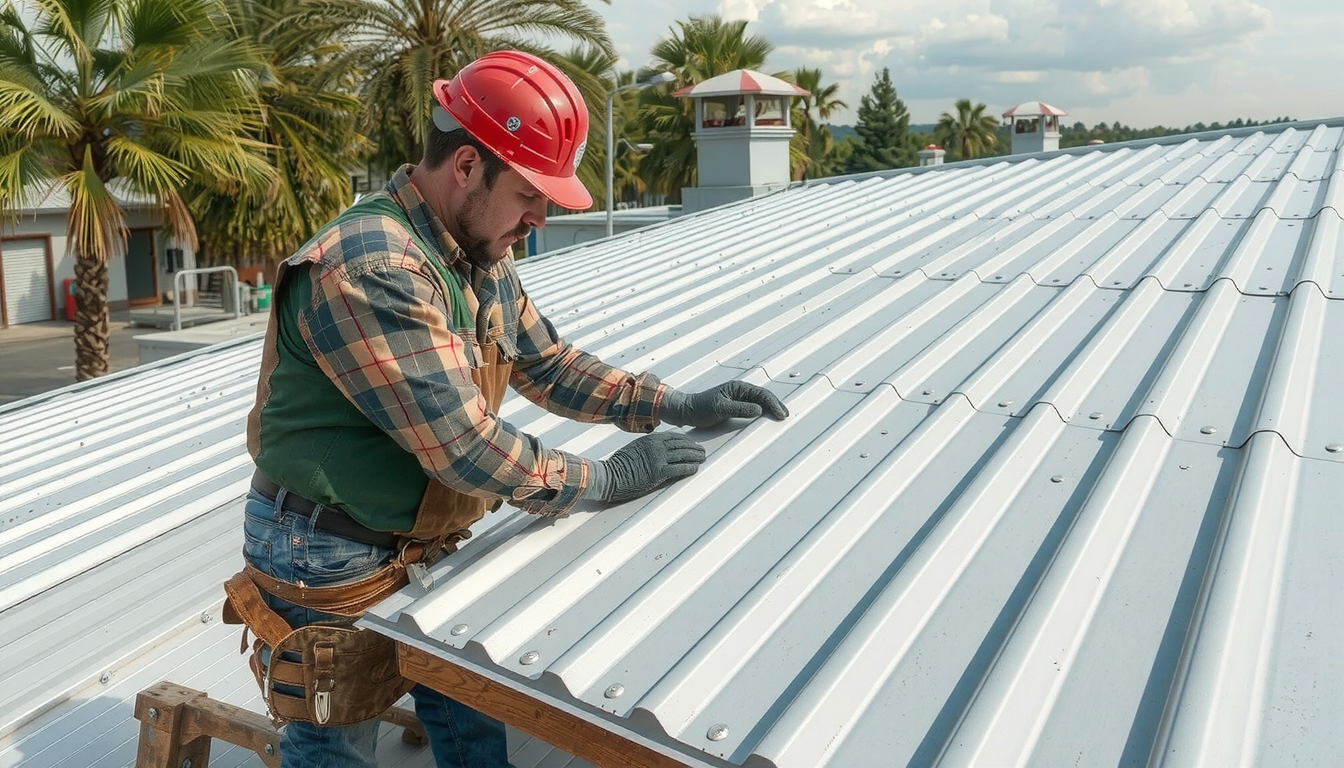
This article will equip you with the knowledge you need to do this job successfully. Every step involved in the installation will be thoroughly discussed. You will learn techniques for roofing preparation and planning. Further, you will be exposed to the methodical way of installing it. We will also address common problems. We will demonstrate the fixing process. A diligent job can give you the chance to place a sleek new roof. Furthermore, the project will also result in higher durability.
Are You Ready for DIY Sheet Metal Roof Installation? Decide in the Crucial Planning Phase
The basic rule of thumb is you need to draw a practical chart before you think of securing your materials. This is never the exception even during preparatory activities such as climbing a ladder. Accordingly, this planning phase is of utmost importance. It serves as a filter to determine if a DIY installation is indeed a wise choice for you. Planning the right way will take away any worries in the future.
Assessing Your Skills, Time, and Budget
The first task is to do self-examination of your abilities. You should relax and be free of fears of what you will find out. Obviously, you should be confident in your ability to work at heights. You need to be a measuring expert as well. You should be the boss of the saw too, cutting things the right way. Bear in mind that the first step to using a power tool is the safety aspect, i.e. working with power tools safely is a must. If you are not confident in these areas, hiring a pro is safer.
Consider your time along the path too. Having a small roof might mean spending a weekend while a full-roofing might take a couple of weekends. All this is when you have a partner to help you out. But the weather can also be a problem here.
Finally, keep in view the cost. A DIY project would lower the labor cost. On the other side, you still have to buy all materials and tools.
| Kostenfaktor | DIY Installation | Professional Installation |
|---|---|---|
| Materialien | Panels, trim, screws, underlayment, sealant | Included in total price |
| Tools | Must buy or rent (saws, drills, snips) | Included in total price |
| Permits | Your responsibility to obtain and pay for | Usually handled by the contractor |
| Arbeit | Your time (free) | The largest part of the total cost |
| Mistakes | You pay to fix them (e.g., wasted panels) | Covered by contractor’s insurance/warranty |
Additionally, you should remember the hidden costs associated with DIY errors. A roof that is poorly installed could be leaking areas and cause water damage that is costly.
Knowing Your Roof and Selecting Best Materials
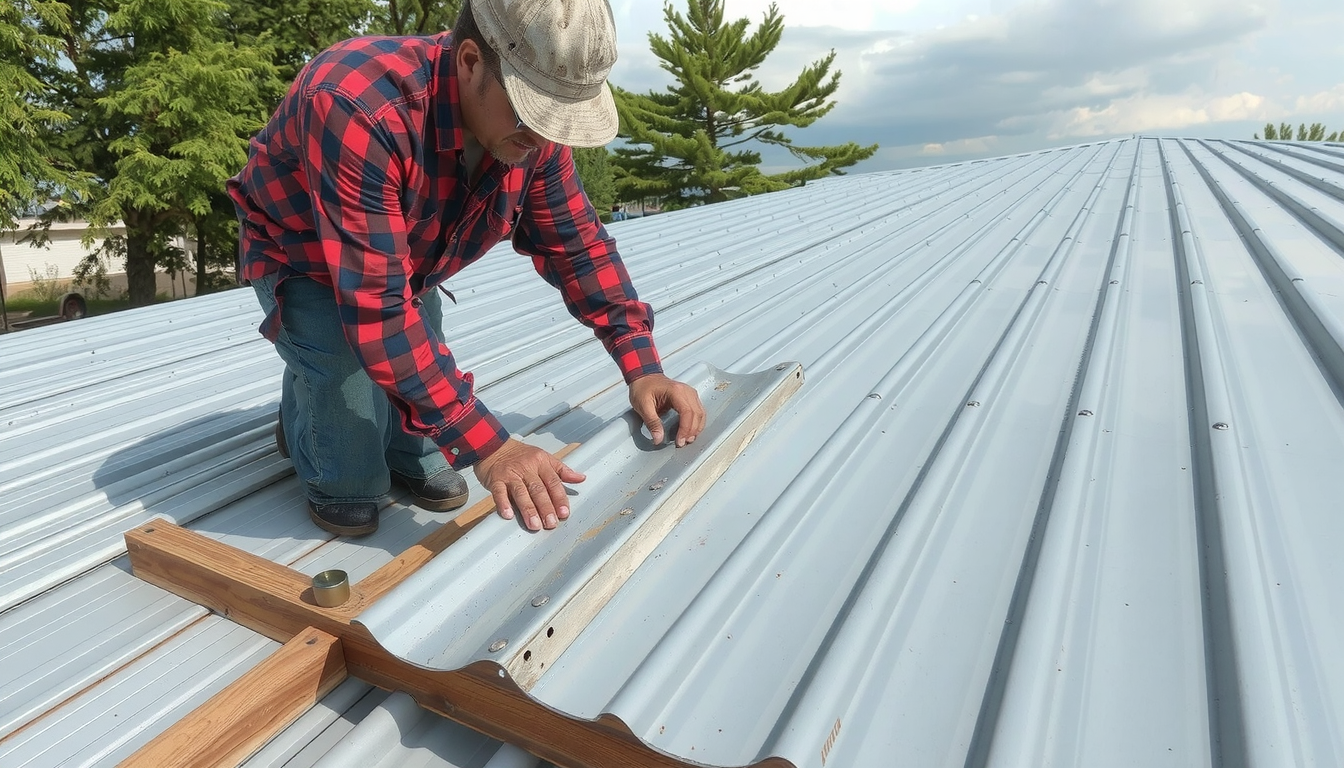
The design of your roof has an impact on the work you have to do. A steep roof is harder to deal with than a low-slope roof, for instance. Besides, it is more hazardous as well. Roofs that have many angles like these are really difficult. Roofs that are shaped like this require complicated angles and cuts. Other hitherto mentioned features like skylights, valleys, or dormers also complicate the matter. These features lead to difficult cuts. They also require tailored flashing.
There are two main types of metal panels. Standing seam panels use hidden fasteners. Because they look tidy, you may find them pleasing but difficult to install. Exposed fastener panels fit the bill of a far simpler installation for beginner DIYers. These could be R-panel or corrugated metal. They are easier to piece together so they will allow you to make mistakes.
Check the local building codes first. Some areas have regulations about the types of roofing materials, while other regions may restrict installing metal over old shingles.
Measuring Your Roof and Ordering Materials
Measuring your roof is the first step in determining your order size. For a simple gable roof, measure the length from the eave to the ridge. The eave is the bottom edge. The ridge is the peak. Then measure the length of the roof from side to side. Multiply these two numbers. This gives you the area of one side. Double it for the total area.
Always order extra material. We recommend ordering 10-15% more than your measurements show. This extra amount will cover cutting mistakes. It will cover damaged panels too. It is much better to have a little left over. You do not want to run out before the job is done.
Tools and Materials You Should Have for Sheet Metal Roof Installation
Without equipment and materials, the success of the project is impossible. You have to make sure that everything is in place before you start. This checklist will leave nothing to chance and help you keep the project to schedule. It will help you avoid multiple trips to the hardware store. It will also ensure smooth running of the project.
| Item | Pro-Tip / Why You Need It |
|---|---|
| Safety Gear | |
| Fall Protection Harness | Essential for safety when working on any roof. |
| Non-Slip Boots | Provides grip on the roof surface. |
| Heavy-Duty Gloves | Metal edges are very sharp. Never handle panels without gloves. |
| Safety Glasses | Protects your eyes from metal shavings when cutting. |
| Power Tools | |
| Cordless Drill/Driver | Use one with an adjustable clutch to avoid over-tightening screws. |
| Circular Saw | Must have a metal-cutting blade, not an abrasive one. |
| Aviation Snips | You need left-cut, right-cut, and straight-cut snips for details. |
| Hand Tools | |
| Measuring Tape | For accurate measurements of panels and trim. |
| Chalk Line | To snap straight, square lines for panel alignment. |
| Utility Knife | For cutting underlayment. |
| Caulking Gun | To apply sealant for a watertight seal. |
| Roofing Materials | |
| Metal Panels & Trim | The main roofing, plus eave, gable, and ridge trim. |
| Roofing Screws | Use screws with EPDM rubber washers to seal the hole. |
| Butyl Sealant Tape | Creates a waterproof seal at panel overlaps and under trim. |
| Synthetic Underlayment | A critical water barrier. Synthetic is stronger than felt paper. |
| Closure Strips | Foam strips that seal gaps under the ridge cap and at the eave. |
| Pipe Flashing/Boots | Rubber boots that seal around vent pipes. |
A quick note on saws: Never use an abrasive or friction blade. The heat and sparks can burn off the panel’s protective paint. This will cause it to rust quickly.
The 6-Step Guide to Installing Your Sheet Metal Roof
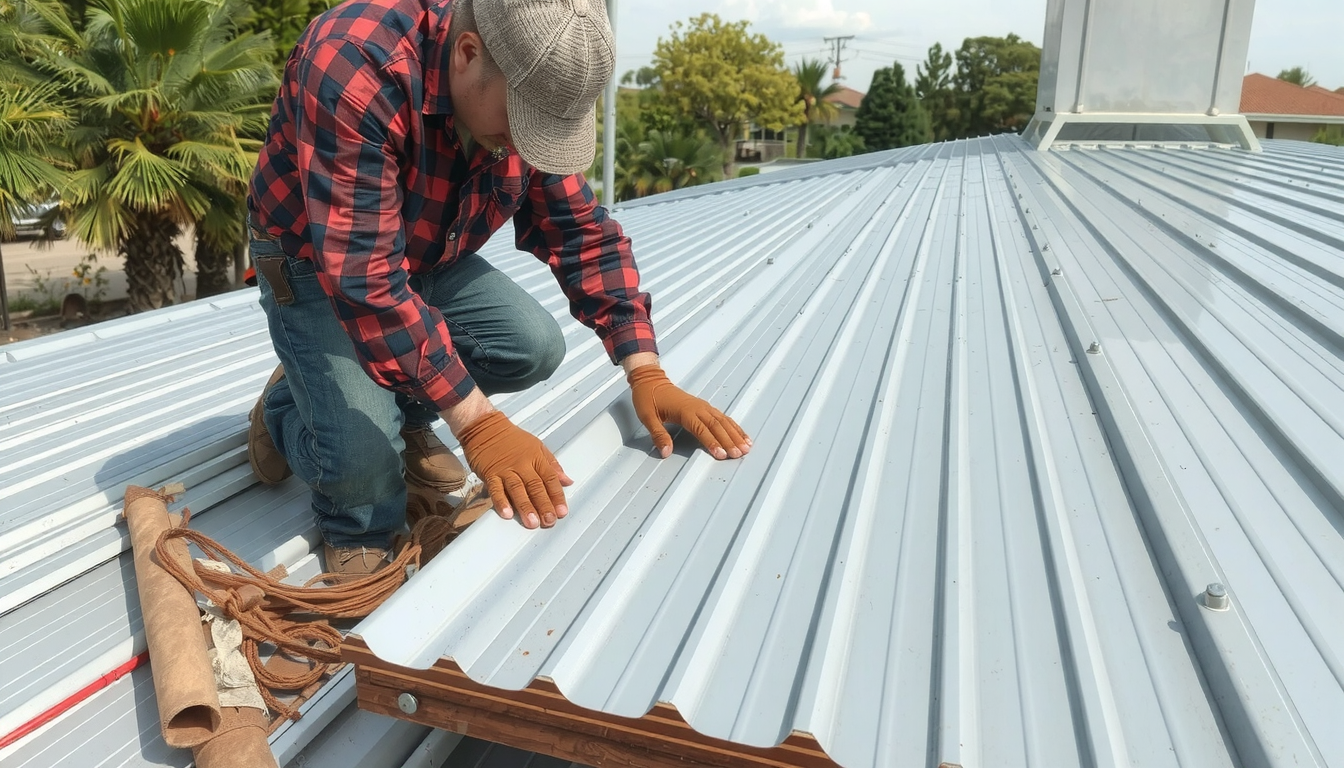
This is the practical segment of the article. This section describes how to install a sheet metal roof in six easy-to-follow steps. By following them accurately you will get the desired result. Work safely and never rush.
Step 1: Prepare the Roof Deck
Your new metal roof needs a solid, smooth base. If you are removing an old roof, tear off all the old shingles. Remove the felt paper too. Inspect the wood deck underneath. Look for any soft spots, rot, or damage. Replace any bad sheathing now.
Pull or hammer down any nails that are sticking up. Use a broom to sweep the entire deck clean. The surface must be clean, dry, and flat. Do this before you move on. According to the Metal Construction Association’s installation manual, proper substrate preparation is critical. It affects the roof’s performance.
Step 2: Install Underlayment and Drip Edge
Underlayment is your roof’s secondary defense against water. We recommend a high-quality synthetic underlayment. Start at the bottom edge of the roof. This is the eave. Roll the underlayment out across the roof. Keep it flat.
Overlap each new row over the one below it. Use at least 3-6 inches of overlap. This ensures that any water flows down and off the roof.
Next, install the metal drip edge or eave trim. This is a very important detail. At the eaves, the drip edge goes on top of the underlayment. The eaves are the bottom, horizontal edges. On the gables, the underlayment goes on top of the drip edge. The gables are the angled side edges. This layering directs all water away from the wood.
Step 3: Square the Roof and Install the First Panel
Here is a pro secret: houses are almost never perfectly square. If you just line up your first panel with the edge of the roof, your panels will slowly become crooked. You must create a true square line to follow.
We use the 3-4-5 method. Measure 3 feet up the gable edge from the corner. Make a mark. Then measure 4 feet along the eave from the same corner. Make a mark there too. The distance between those two marks should be exactly 5 feet. Adjust your 4-foot mark until the diagonal line is 5 feet. Snap a chalk line through this point. Make it parallel to the gable. This is your perfectly square starting line.

Place your first panel on the roof. Align its edge with your chalk line. Let the bottom of the panel hang over the eave by 1 to 1.5 inches. This overhang helps water drip clear of the house. Secure the panel with just a few screws to hold it in place.
Step 4: Fasten Panels and Manage Overlap
The way you fasten the panels is crucial for a leak-free roof. Your panel supplier will tell you the correct screw pattern. Screws usually go in the flat part of the panel. They go right next to a major rib.
Do not over-tighten the screws. This is a very common mistake. An over-tightened screw will damage the rubber washer. This causes a leak. The screw should be “snug, not sunk.” The washer should be flat and compressed. But it should not be bulging or spinning. Using a drill with an adjustable clutch helps prevent this.
Lay the next panel so it overlaps the first one. The major rib of the new panel should fit tightly over the edge of the previous one. For extra weather protection, run a line of butyl sealant tape along the seam. Do this before you overlap the panels. This is a key part of learning how to install sheet metal roofing correctly.
Step 5: Cutting Panels for Hips, Valleys, and Obstacles
Sooner or later, you will need to cut a panel. This could be for the end of a roof run. It could be for a valley. You might need to fit around a vent pipe or chimney. Measure carefully and double-check before you cut.
Use your circular saw with a metal-cutting blade for long, straight cuts. For small or complex cuts, use your aviation snips. The precision needed for these cuts is why professional Blechfertigung is considered a skilled trade. Take your time to get a clean, accurate cut.
Step 6: Install Trim, Ridge Cap, and Flashing
The final step is to install all the trim pieces. These cover the edges and seams. They give the roof a finished look. They make it fully waterproof too.
Install the gable or rake trim along the angled sides of the roof. Along the peak of the roof, install foam closure strips. These strips match the shape of the panels. They seal the gap. Then, install the ridge cap over the peak. Make sure it overlaps both sides of the roof evenly. Fasten it securely.
For any pipes coming through the roof, use a pipe flashing boot. Slide it over the pipe. Form it to the roof panels. Use a high-quality sealant under the base of the boot. This creates a permanent, watertight seal.
