



Certainly, you can indeed laser cut them. It is recognized as one of the most accurate, quickest, and most flexible techniques available nowadays. This particular method was first used for deep engravings on diamond and other clear materials. Here is how it works: it involves the use of a highly concentrated beam of light that cuts the sheet metal into various complex shapes.

The technology is now frequently the preferred method of making parts for both the electronics and the aerospace industry. The description of this technology and the whole process will be given here along with lists of accessible materials. Both the advantages and disadvantages will be elaborated on. You will be exposed to the comparison with alternative technologies for metal cutting, as well.
This step-by-step demonstration of the process will deepen your understanding of Blechfertigung. After that, you will be able to see if it will go well with your project.
Synopsis
- Definitely Yes: The laser cutting is a prime method for the sheet metal to be dealt with intricate designs and high speed.
- Methodology: The beam from a high-density laser vaporizes the metal, while an air jet carries the liquid and solid out. It is a true digital process carried out by a CAM file.
- Material Variety: It is applicable to different metals, e.g., carbon steel, stainless steel, aluminum, copper, and brass respectively. The limits of thickness for each material may vary.
- Suitable Conditions: The laser cutter is the way to go when dealing with complex designs and tight tolerances. Lasers, especially, are good for the clean edge finish for the thin and medium thick materials.
- Look for Quality: One of the criteria is a neat, smooth edge that is not protruded by additional material. Warped parts caused by excessive heat or burn marks are the signs of a poor quality or faulty product.
Mechanism of Laser Cutting
Generally, laser cutting requires thermal energy for the process. A laser focused on one point can literally vaporize the material. Melting, or burning, are two other possible outcomes. These actions occur in a very limited area.
A computer system controls this process. This type of control is called Computer Numerical Control, or CNC. The CNC controller interprets the design file and sends an instruction to the laser so it will follow the outline just as planned. This accurate performance leads to very little mistake or disparity in the outcome cuts.
A jet of gas is also blown through the nozzle in a new cutting operation. Oxygen or nitrogen can be used as a carrier gas. It is responsible for clearing away both the vaporized metal and the melted metal from the inside of the cut. Gas action results in the adjustment of kerf to be now clear, and the edge is smooth.
As stated on A Comprehensive Guide to Sheet Metal Laser Cutting the air jet doubles the cutting efficiency as it gets rid of the molten and vaporized materials and creates a clean kerf.
In this process, only a few points need to be followed:
- Loading Design: A two-dimensional computer design file like DXF or DWG is fed into the software of the machine.
- Material Configuration: The machine’s cutting bed is set with a flat sheet of metal that is placed and secured.
- Laser Start-Up: The starting point is determined by program instructions that move the laser head across the machine.
- Piercing & Cutting: The laser beam initially pierces the metal. Right after it, it starts to move in accordance with the design path. The gas then clears the cut parts while the material is being severed.
- Part Finalization: The complete set of cuts is carried out by the machine. Afterward, the parts are detached from the whole sheet.
Fiber and CO2 Lasers
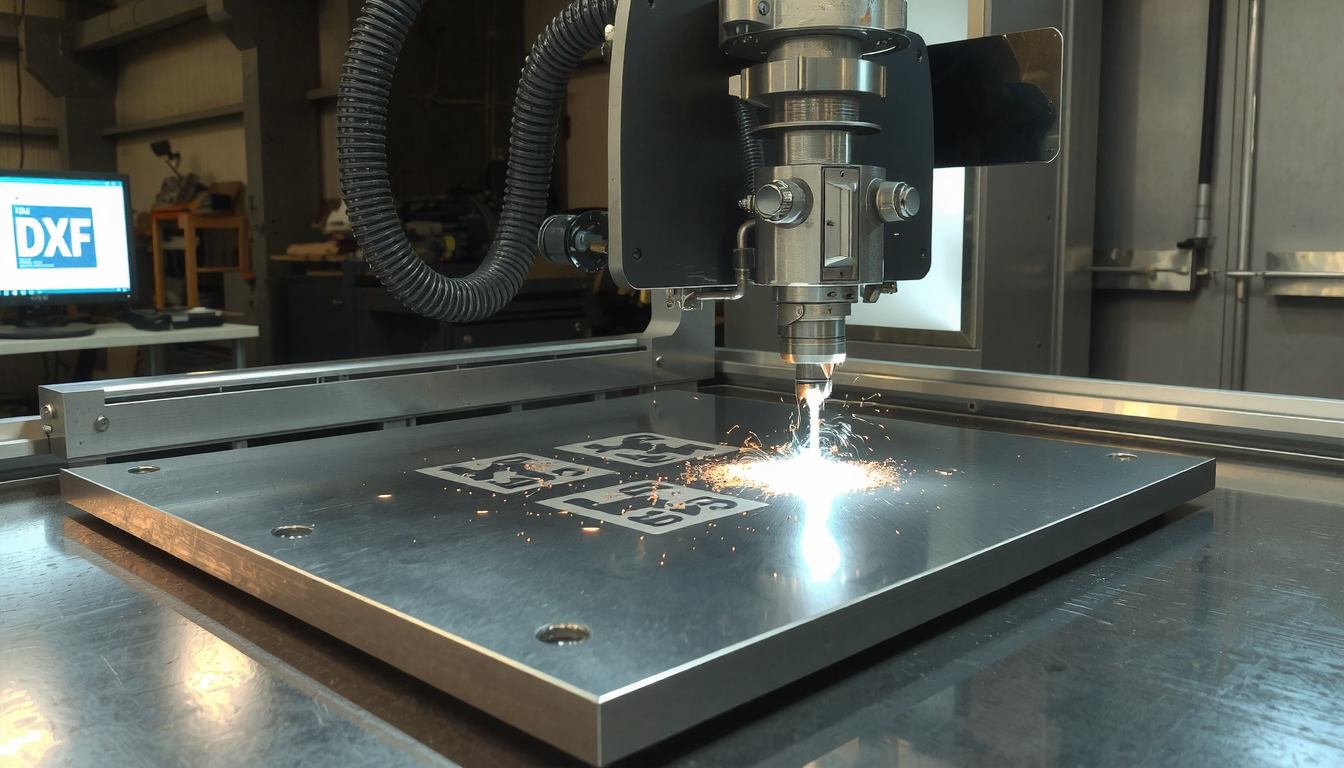
The two principal types of lasers, used for sheet metal laser cutting, fiber and CO2 are. Fiber lasers are the newest of the two. They are very productive, and the operational range is extended to various materials. They are particularly fast when used on thinner metals. Moreover, fiber lasers also outperform in processing light metals such as copper, brass, and aluminum.
CO2 lasers are the traditional cutting machines for about 30 years. They are versatile machines cutting metals and non-metals like wood or plastic as well. Generally speaking, they often show a more attractive surface and better quality of cutting than the laser on thicker steel plates.
| Merkmal | Fiber Laser | CO2 Laser |
|---|---|---|
| Laser Type | Solid state laser generated through fiber optics. | Gas laser created by exciting a CO2 gas mixture. |
| Best For | Thin to medium metals, high speed cutting. | Thicker steel plates, non-metals, superior edge finish on thick steel. |
| How it Works | Very energy efficient, require less power, lower maintenance. | Well established technology, effective on a wide range of materials. |
| Reflective Metals | Good. The short wavelength is absorbed well. | Poor. The beam often reflects which may damage the machine. |
Today, most sheet metal cutting jobs are carried out by fiber lasers. This is due to their increased speeds and lower energy usages. Nevertheless, CO2 lasers are often recommended for selected works. These include cases when the highest surface quality pt of very thick steel is preferred.
Metals and Thicknesses
One frequently asked question as to whether it is likely to laser cut metals is such: “of course, it is? How thick a metal can the machines cut?” The laser cutting technology is applicable to a multitude of metals, including copper, brass, and so on. However, the thickness limit is mainly determined by the type of metal and the laser power.
High-power fiber lasers are the ones that made these impressive limits possible. For instance, the latest machine will be able to cut a good quality 25mm (1 inch) and even 20mm (about 0.75 inches) thick mild steel, stainless steel, and aluminum respectively, besides that as a value for money you should know the adjustments from the fiber laser in the limits.
Nevertheless, the best quality and cost are often available at slightly lower limits. Thick plates cut by laser machines are usually slow and costly.
Shiny metals such as copper and brass are difficult to cut. They reflect laser energy and transfer heat away quickly. The results of these cons are that they are the most challenging. But with the help of the latest fiber laser cutting machines, these metals are now easily manipulated.
A research paper on Sheet Metal Laser Cutting: Process, Pros & Cons suggests that the successful cutting process solely depends on the material choice.
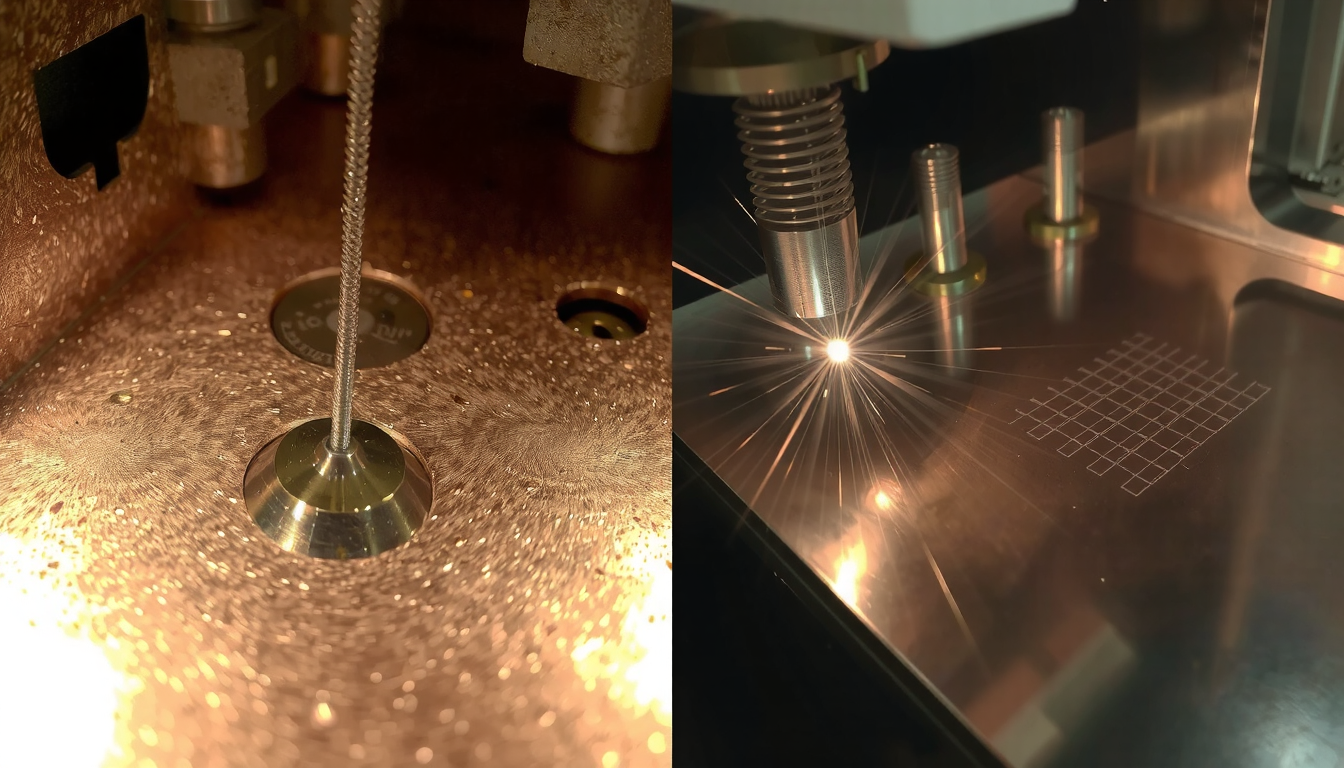
Presenting below is a compilation list of common metals and their approximate limits of thickness, which are allowed for the excellent quality laser cutting.
| Metall Typ | Typical Max Thickness (for quality cuts) | Notes & Considerations |
|---|---|---|
| Baustahl | 20mm (~0.75″) | Best cut quality. The gas used is oxygen, which speeds up the process. |
| Rostfreier Stahl | 15mm (~0.60″) | Nitrogen gas is used for the clean, non-oxidized, silver edge finish. |
| Aluminium | 12mm (~0.50″) | Reflective. A high-power fiber laser is needed for optimal performance. |
| Kupfer | 5mm (~0.20″) | Sturdy reflector and heat conductor. Very challenging. |
| Messing | 4mm (~0.16″) | Reflective. Getting the best cut requires a modern fiber laser. |
Laser Cutting vs. Plasma or Waterjet
Deciding whether you should laser cut sheet metal often means comparing it to other cutting methods. These include plasma and waterjet. Each process has its ideal use. Choosing the right one depends on your project’s needs. You need to think about precision, material thickness, cost, and edge quality.
This section helps you decide which process is right for your job.
Choose laser cutting when:
* Precision is critical. Tolerances are very tight.
* The design has fine details or complex shapes.
* A clean, smooth edge finish is required with no extra work.
* The material is thin to medium in thickness.
Plasma cutting is a good choice for thick metals. This is when extreme precision is not the top priority. Waterjet cutting is unique because it uses no heat. This makes it perfect for materials that cannot be exposed to high temperatures.
Laser cutting is excellent for 2D shapes. However, if a part needs features like threads or a round profile, it requires other processes. For example, after a flat part is cut, it might need more operations. For round or turned parts, a different method like CNC-Drehmaschinen-Dienstleistungen is necessary.
Here is a comparison of the three main cutting technologies.
| Attribute | Laserschneiden | Plasma Cutting | Waterjet Cutting |
|---|---|---|---|
| Precision/Tolerance | Höchste | Gut | Sehr hoch |
| Edge Finish | Ausgezeichnet | Good (some dross) | Excellent (satin finish) |
| Material Dicke | Thin-to-Medium | Medium-to-Very Thick | Any thickness |
| Geschwindigkeit | Very Fast (on thin) | Fastest (on thick) | Slow |
| Kosten | Mäßig | Niedrig | Hoch |
| Heat Affected Zone (HAZ) | Small | Larger | Keine |
Spotting Common Quality Issues
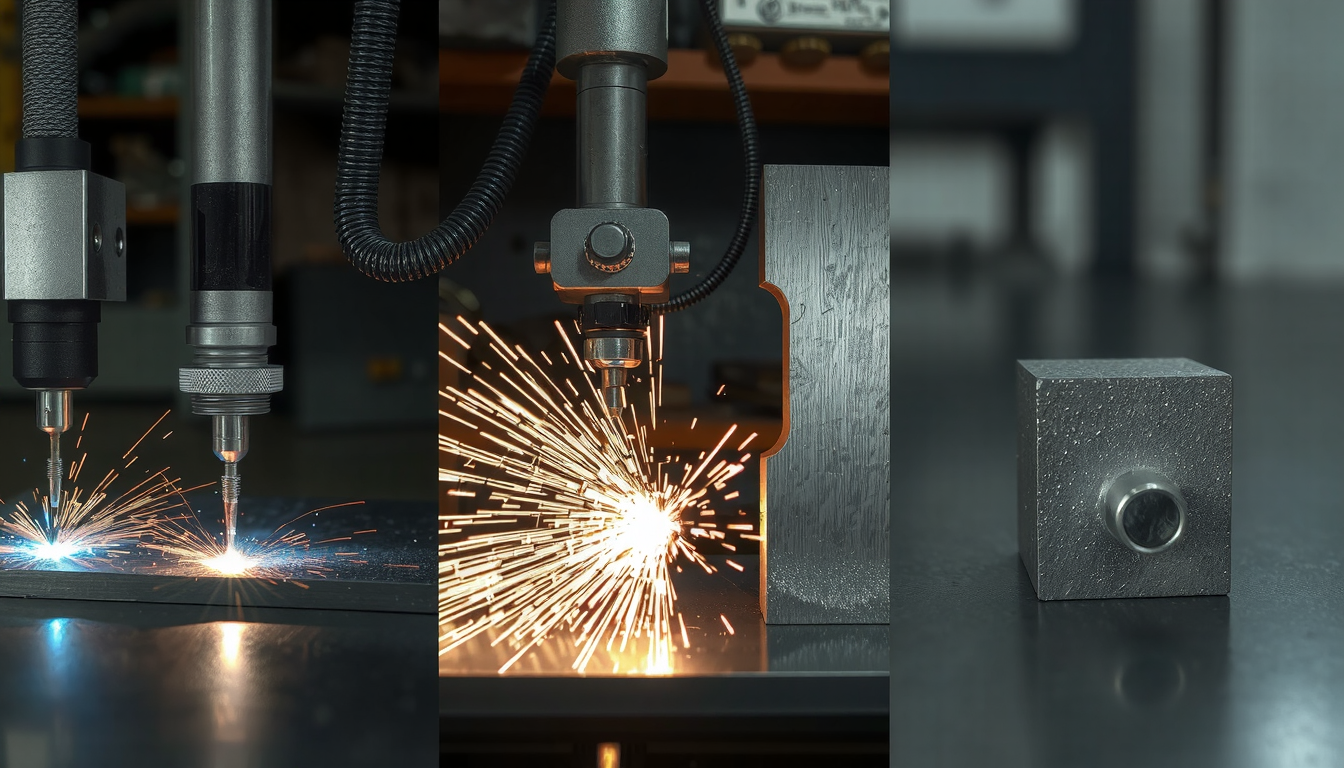
As a customer, knowing how to spot quality issues in laser-cut parts is valuable. It helps you ensure you are getting what you paid for. From our experience in reviewing thousands of parts, there are a few key quality signs to watch for. Understanding these can help you have a good talk with your fabrication partner.
Here are some common issues and what they mean:
-
Dross or Burrs
Dross is leftover melted metal that hardens on the bottom edge of the cut. A high-quality cut should have almost no dross. If you see a lot of burrs, it often means the machine settings were not right. This could be the wrong speed, power, or gas pressure. -
Heat Distortion or Warping
This happens most often on very thin sheets. It also happens when many cuts are close together. The heat from the laser can cause the metal to warp or bend. A skilled operator prevents this. They use correct settings and plan the cutting path to manage heat. -
Wrong or Rounded Corners
A laser beam has a physical radius. So it cannot create a perfectly sharp internal corner. Sharp corners might appear slightly rounded. This is a known limit of the process. Good design for manufacturing plans for this. It adds small reliefs in corners if sharp internal edges are needed. -
Surface Scratches or Burns
Scratches can happen during material handling before or after cutting. Burn marks on the surface can be caused by wrong piercing. This is where the laser stays too long when starting a cut. This points to a lack of care in the overall process.
Partnering with a Quality Service
Choosing the right partner is key to a successful project. A good supplier will not only cut your parts. They will also offer advice to improve your design and save costs. When you need to find a service to laser cut sheet metal, asking the right questions can make all the difference.
Here is a checklist of questions to ask a potential supplier:
- What types of laser cutters do you use (Fiber, CO2)?
- What is your typical cutting tolerance for a material of X thickness?
- Can you show me examples of parts you have made that are similar to mine?
- What quality control systems do you have in place?
- Do you offer other services like bending, welding, or finishing?
A partner who offers a full range of services can be a huge asset. It means they can handle your project from start to finish. According to The Comprehensive Guide to Sheet Metal Laser Cutting, working with a trained and experienced team is vital for quality results.
For a partner with extensive expertise in a full range of fabrication processes, you can explore services at MekaLite. A full-service shop ensures a smooth workflow. It also ensures a consistent level of quality across all production stages.
FAQ: Your Questions Answered
Here are answers to some common questions about laser cutting sheet metal.
1. Is it expensive to laser cut sheet metal?
The cost depends on several factors. These include the type of metal, its thickness, how complex the part is, and how many you order. There is a base cost to set up the machine. However, laser cutting is very cost-effective for medium to large batches. This is because it is fast and needs little labor. The cost per part will be higher for a single prototype.
2. What is the smallest hole you can laser cut in sheet metal?
A good rule to follow is this: the smallest hole diameter should be about the same as the material’s thickness. For example, in a 3mm thick steel sheet, a 3mm hole is the smallest you can reliably cut. Trying to cut smaller holes can cause the metal to distort. It may result in a poor-quality cut.
3. Can a hobbyist laser cutter cut sheet metal?
Generally, the answer is no. Most desktop or hobby lasers do not have enough power to cut metal. These include diode or low-power CO2 models. They are made for softer materials like wood, plastic, and leather. To cut sheet metal, you need a high-power industrial fiber or CO2 laser.
4. Does laser cutting affect the metal’s properties?
Yes, but only slightly. The process creates a very small Heat Affected Zone (HAZ) right at the cut edge. In this tiny area, the metal’s hardness can change. For most parts, this effect is not a problem. But for very sensitive engineering components, it is something to consider.
5. Do I need a special file to get my parts laser cut?
Yes, fabrication shops need a 2D vector file to program the machine. The most common and preferred file types are DXF (Drawing Exchange Format) or DWG (an AutoCAD drawing file). These files give the CNC machine the exact path to follow to cut your design.
