



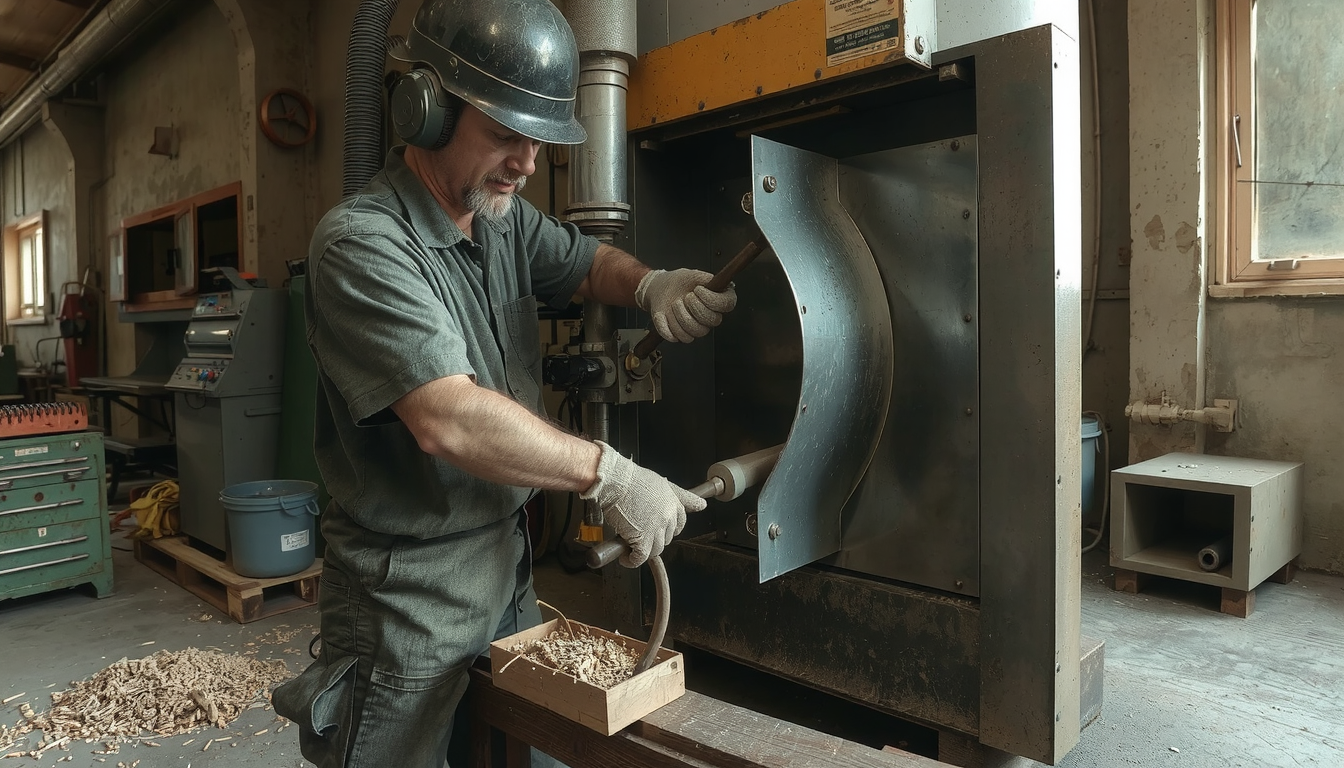
Sheet metal bending is a way to make flat metal into angled shapes. This is done by using force with a machine like a press brake. The main idea is simple: the force must be strong enough to push the material past its yield strength. This creates a lasting change called plastic deformation. This process is key for making many products. These include car bodies, electronic cases, and support brackets. As a leader in custom manufacturing, we at Mekalit have learned these methods well. We use them to make precise parts for our clients. This guide will explain the science, tools, and main ways to bend sheet metal. It will help you understand how to pick the right method and design better parts.
Wichtige Punkte
- Main Idea: Bending works by using force to go beyond the metal’s yield strength. This causes lasting plastic change.
- Most Used Method: V-bending on a press brake is the most common way. This is because it works well and is flexible.
- Important Factors: Success depends on managing springback. This is when metal tries to return to its first shape. You also need the right bend radius to stop cracking. You must calculate bend allowance for correct flat patterns.
- Key Methods: Besides V-bending, other ways include roll bending for big curves. There is also U-bending for channels and rotary bending for delicate surfaces.
- Design for Success: Good design is crucial. This includes picking the right material and using features like bend reliefs. This helps avoid defects and makes high-quality finished parts.
The Science Behind the Bend: Key Ideas and Terms
To understand how sheet metal is bent, we need to look at the science first. It’s more than just using force. It’s about controlling how the material acts under stress. Understanding these main ideas is key to designing parts that can be made right and efficiently.
Plastic vs. Elastic Change
When you apply force to metal, it first changes elastically. If you let go of the force, it will spring back to its first shape. This is like a ruler you bend slightly. To make a lasting bend, you must use enough force to cause plastic change. This means you have stressed the material beyond its ability to spring back completely.
The Neutral Axis, Bend Allowance, and K-Factor
When a sheet is bent, the material on the inside gets compressed. The material on the outside gets stretched. Somewhere in between is a line called the Neutral Axis. This is a theoretical area that does not change in length.
Where this neutral axis sits is important for calculations. It helps us find the Bend Allowance. This is the length of the arc of the bend. This, along with the K-Factor, lets us calculate the exact size of the flat piece of metal needed. The K-Factor shows where the neutral axis is located.
Understanding Springback
Springback is when material tries to partly return to its flat shape after the bending force is removed. This happens because of stresses left inside the metal. It is one of the biggest challenges in getting the right bend angle. To get a perfect 90-degree bend, we often have to bend the part a bit more. Maybe to 92 or 93 degrees to account for springback. How much springback happens depends on the material, its thickness, and the bending method. These fundamental principles of sheet metal forming are crucial for precision.
Why Bend Radius Matters
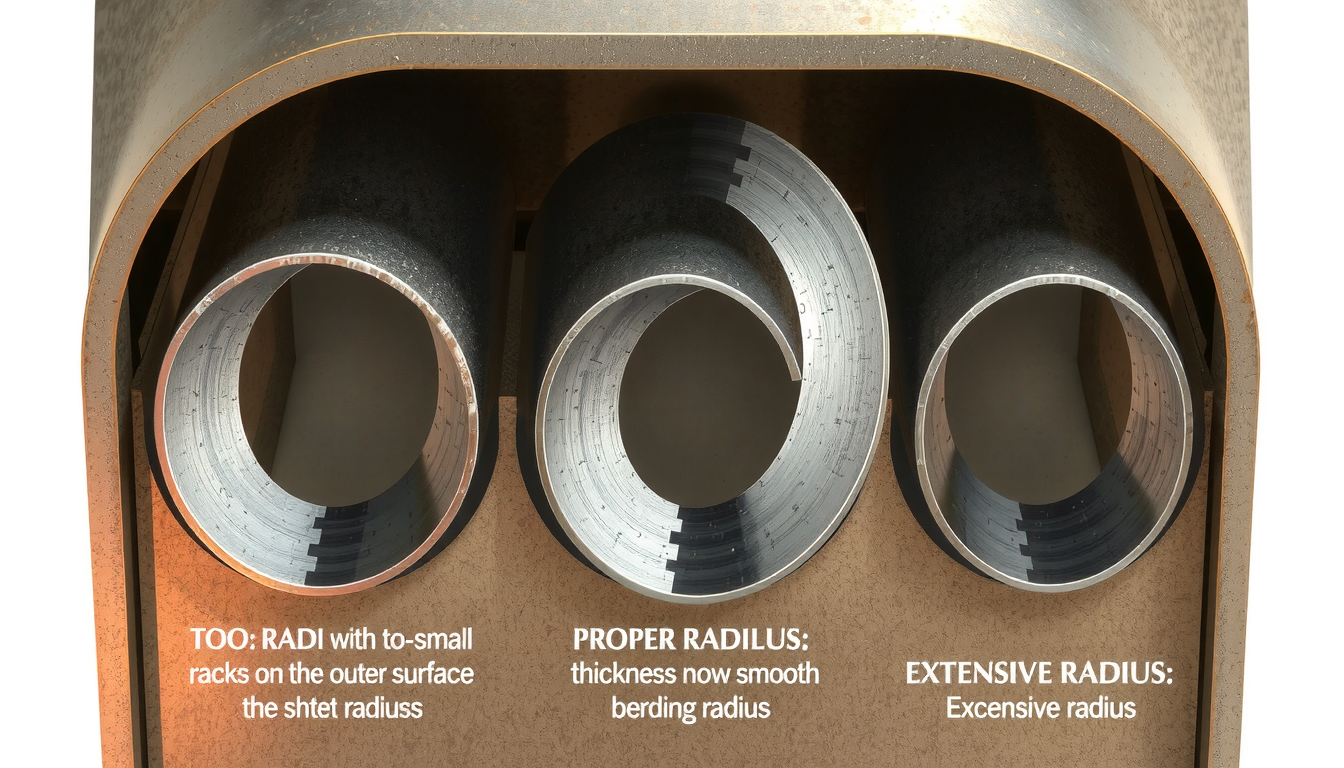
The bend radius is the inside radius of the bend. You cannot make a perfectly sharp corner. There will always be a radius. If the bend radius is too small for the material and its thickness, the outer surface can stretch too much and crack. A general rule is that the minimum inside bend radius should be at least equal to the material’s thickness. This rule changes based on the type of metal being used.
The Main Methods: How is Sheet Metal Bent in Industry?
In a professional shop, a machine called a press brake is the main tool for bending sheet metal. It uses a punch (the top tool) to press the sheet into a die (the bottom tool). While this is the basic setup, there are several different methods. Each has its own benefits.
V-Bending (The Most Common Method)
This is the most popular way sheet metal is bent. It uses a V-shaped punch and a V-shaped die. There are three main ways to do V-bending.
-
Air Bending: In this method, the punch presses the sheet into the V-die. But the sheet only touches the top two edges of the die. The final angle is controlled by how far the punch pushes the sheet down. Air bending is very flexible. One set of tools can create many different angles. It also needs less force than other methods.
-
Bottoming: With bottoming, the punch presses the sheet metal so it makes full contact with the inner faces of the die. This forces the material to match the angle of the tool. It is more accurate and repeatable than air bending. But it needs a specific punch and die set for each angle you want to create.
-
Coining: This method uses very high force. The punch presses into the material with so much pressure that it thins the material at the bend. This process “stamps” a lasting, highly accurate angle with almost no springback. Coining is very precise but needs a lot of force. It also causes high wear on the tools.
Roll Bending
How is sheet metal bent into large curves or cylinders? The answer is roll bending. This method uses a machine with three or four large rollers. The sheet metal is fed through the rollers. Their positions are adjusted to create a smooth curve. This is the ideal process for making parts like tanks, cones, and large curved panels.
U-Bending
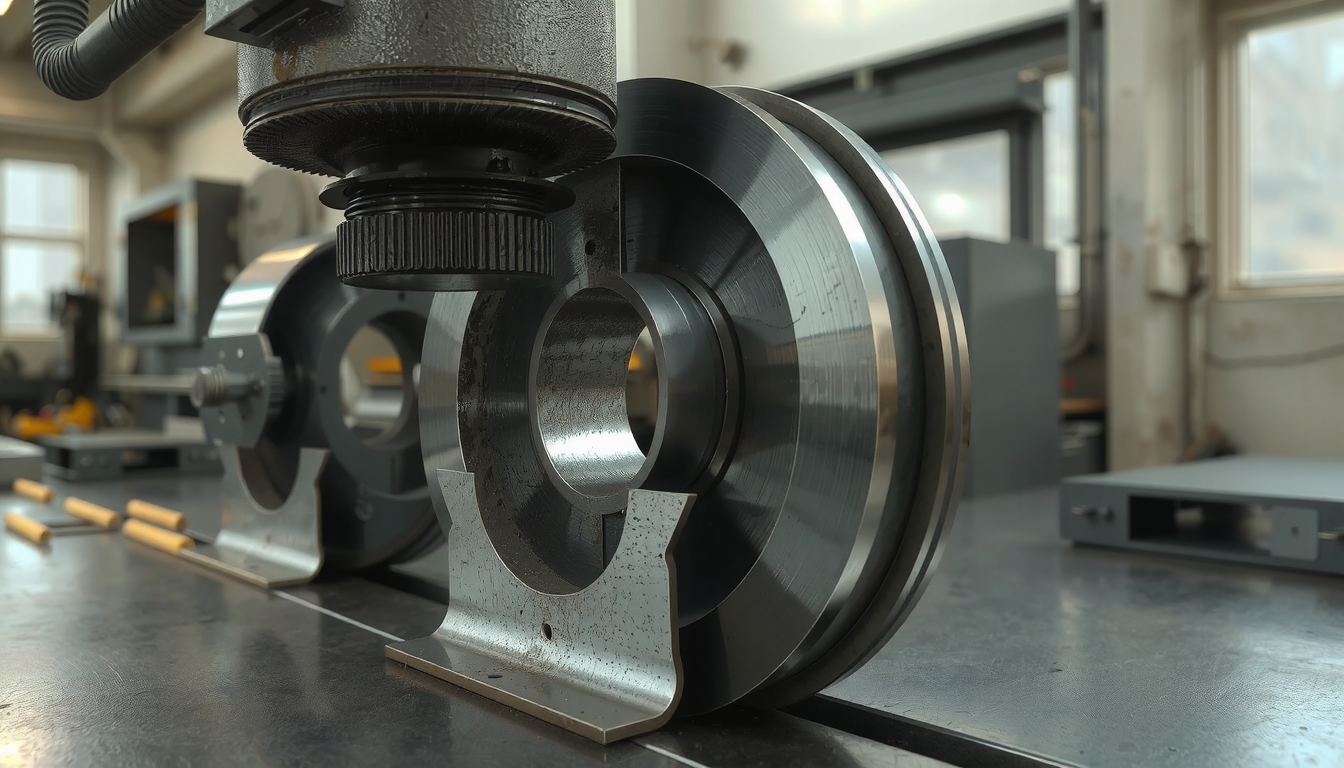
U-bending works much like V-bending. But it uses a U-shaped punch and die. This lets fabricators create U-channels in a single press stroke. This makes it very efficient for producing parts with two parallel 90-degree bends.
Rotary Bending
Rotary bending is a unique method that “folds” the metal. It uses a cylindrical die that rocks or rotates against the sheet. Because it wipes the material around the bend instead of forcing a punch into it, it often leaves no marks. This makes it perfect for pre-painted or delicate materials. It is also great for creating bends sharper than 90 degrees. These Bending basics for sheet metal fabrication highlight the versatility of modern techniques.
Method Comparison: Which Bending Method Is Right for Your Project?
Picking the right bending method depends on your project’s needs for precision, cost, and volume. The table below compares the most common methods to help you decide which is best for your use. This comparison shows how sheet metal is bent for different outcomes.
| Bending Method | Precision/Tolerance | Tooling Cost | Flexibilität | Best For… | Surface Marking |
|---|---|---|---|---|---|
| Air Bending | Mäßig | Niedrig | High (one toolset for many angles) | Prototypes & small runs, general fabrication | Minimal |
| Bottoming | Hoch | Mittel | Low (angle-specific tooling) | Medium to high-volume production | Possible |
| Coining | Sehr hoch | Hoch | Low (angle-specific tooling) | High-volume, high-precision parts | Noticeable |
| Roll Bending | Mäßig | Mittel | Moderate (adjustable for radius) | Large curves, cylinders, cones | Minimal |
| Rotary Bending | Hoch | Hoch | Mäßig | Delicate surfaces, bends over 90 degrees | Keine |
From the Shop Floor: Common Bending Problems & How to Avoid Them
Even with the best machines, problems can happen. From our experience on the shop floor, we know how to spot and fix common bending problems. Understanding these issues can help you design better parts from the start.
Cracking on the Outer Radius
A common issue is cracking on the outside of a bend. This usually happens for one of two reasons. First, the bend radius might be too sharp for the material type and thickness. Harder materials need a larger radius. Second, the bend might be oriented parallel to the material’s grain. This is its weakest direction.
To solve this, you can increase the bend radius in your design. If possible, orient the part so the bend line goes across the material grain, not with it.
Wrong Bend Angles
When a finished part doesn’t have the right angle, the cause is almost always unmanaged springback. The solution is to predict and compensate for it accurately. Experienced fabricators use data for specific materials to calculate how much to “over-bend” the part. For example, to achieve a 90-degree angle, we might bend the part to 88 degrees. Then let it spring back to exactly 90. Methods like bottoming or coining can also be used to greatly reduce springback.
Wrinkling or Warping
Wrinkling can happen on the inner radius of a bend. This is especially true with thin materials or when making a large-radius bend. This is caused by the material compressing without proper support. Using specialized tooling, like a rotary bender, can prevent this. Making sure the part is properly supported during the bending process is also key.
Designing for Success
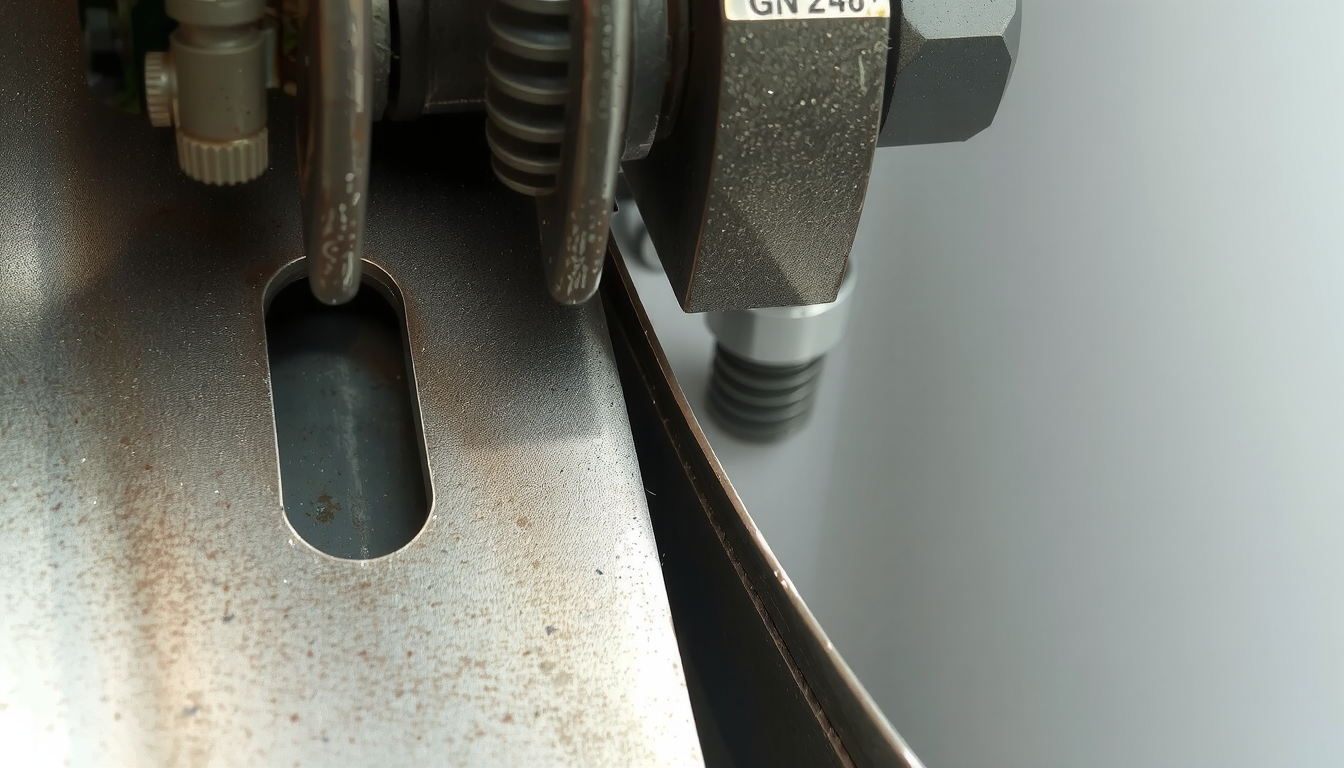
A well-designed part is easier to bend accurately. Adding features like bend reliefs can prevent material from tearing or deforming in complex parts. These are small cuts near a bend. Following a basic guide and tips for bending during the design phase can prevent many downstream issues.
Bending in Context: Materials, Design, and The Full Manufacturing Process
Sheet metal bending is rarely done by itself. It is one step in a larger manufacturing workflow. The material you choose and how the part is designed have a huge impact on the final result.
How Material Choice Affects Bending
Different metals act differently when bent. Ductility is a key property. This is a material’s ability to be stretched without breaking.
Soft materials like aluminum 3003 are very ductile. They can handle a very sharp bend, sometimes even a 0-radius bend. In contrast, stronger alloys like aluminum 6061-T6 are less ductile. They will crack if the bend radius is too small. Stainless steel and mild steel each have their own unique springback properties and minimum bend radii that must be considered.
Bending as Part of a Complete Solution
A bent part is often just the beginning. After a flat sheet is cut and bent, it may need other features to become a finished product. This is where other manufacturing processes come into play.
For example, a bent bracket might need precisely drilled holes or a threaded shaft attached. This is where other manufacturing capabilities become essential to complete the part. Such as CNC-Drehmaschinen-Dienstleistungen. Many final products also need multiple bent components to be joined together through welding or fastening.
The Rise of CNC in Sheet Metal Bending
Modern manufacturing has been changed by CNC (Computer Numerical Control). CNC press brakes use computers to control the punch and die with incredible precision. This allows for high repeatability, complex multi-bend sequences, and near-perfect accuracy. CNC technology is a core reason why professional Blechfertigung can produce such consistent and complex parts. It ensures every bend is made to exact specifications.
Conclusion: From Flat Sheet to Finished Form
We have explored the question, “how is sheet metal bent?” from multiple angles. We’ve seen that it is a precise process of plastic deformation, guided by scientific principles. From the flexibility of V-bending to the smooth curves of roll bending, each method is chosen for a specific outcome.
For anyone designing a part, understanding concepts like springback, bend radius, and material properties is vital for success. By planning for these factors, you can create designs that are not only functional but also manufacturable. If you need high-quality, precise bent parts for your project, partnering with an expert fabricator is the best way to turn your flat design into a finished form.
Frequently Asked Questions (FAQ)
What is the most common way to bend sheet metal?
The most common industrial method is V-bending using a press brake. Air bending is the most popular variation because of its flexibility. It allows a fabricator to create a wide range of angles with a single set of tools. This makes it fast and cost-effective.
Can you bend sheet metal at a 90-degree angle?
Yes, a 90-degree angle is one of the most common bends in sheet metal fabrication. All V-bending methods work well for precise 90-degree angles. These include air bending, bottoming, and coining. The choice of method depends on the required accuracy and production volume.
What is the difference between bending and folding sheet metal?
In the industry, the terms are often used the same way. However, “bending” usually refers to using a punch and die on a press brake. “Folding” can sometimes describe a process where a clamping beam holds the sheet and a separate tool folds the edge up. In practice, both processes result in a bent sheet.
How do you calculate the length of sheet metal before bending?
To find the initial flat pattern length, you must calculate the “bend allowance” or “bend deduction.” This calculation accounts for how the material stretches during the bend. It uses key factors like the material thickness, the desired bend radius, the bend angle, and the material’s specific K-factor to determine the correct starting length.
What’s the thickest sheet metal that can be bent?
This depends entirely on the power (tonnage) of the bending machine and the strength of the material. Powerful industrial press brakes can bend steel plate that is an inch thick or even more. However, this requires immense force and very large-radius tooling. For most common applications, sheet metal is typically under 6mm (about 1/4 inch) thick.
