



Yes, of course, sheet metal can be welded. It is widely used in many manufacturing industries. These are auto body repair and aerospace work. The question “is it possible to weld the sheet metal?” is commonly asked by the ones who have tried and failed. The fact that it is thin makes it easy to burn through or to change its configuration.
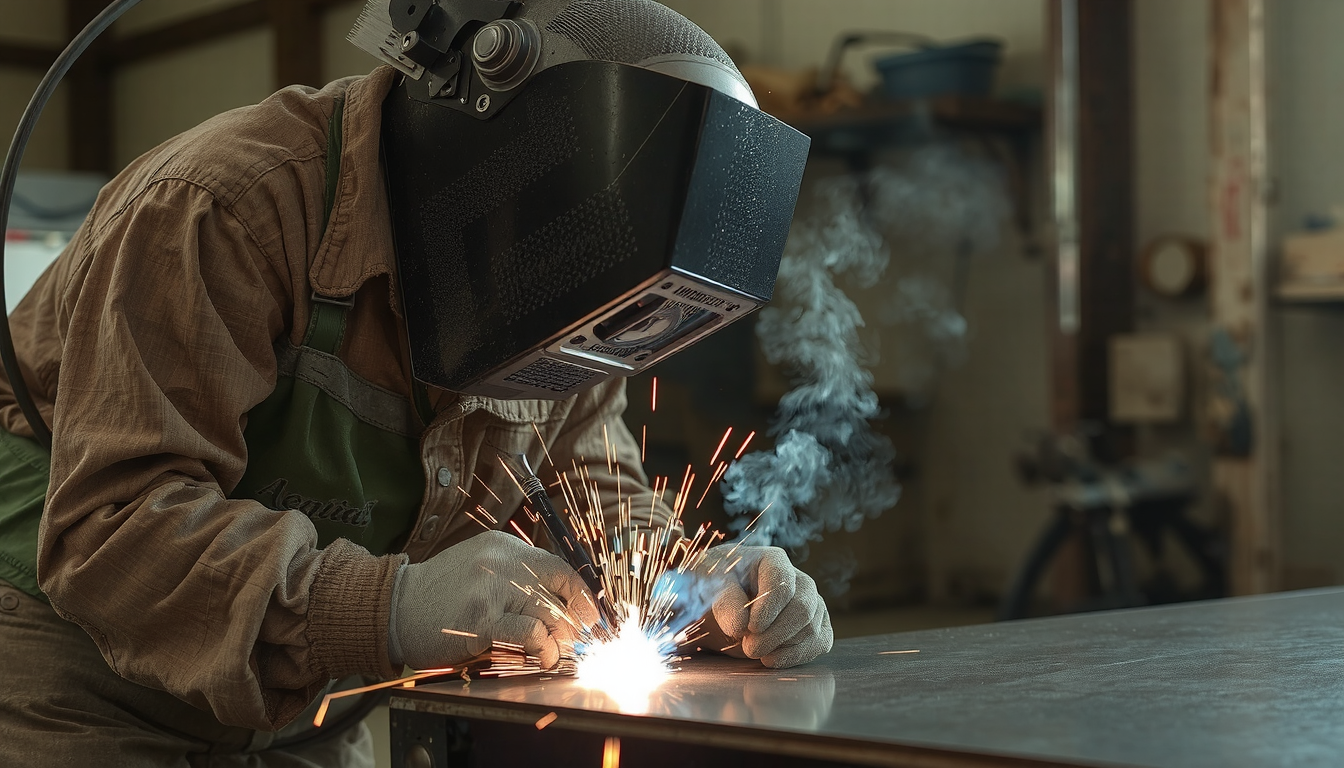
Success in the welding process is attributed to having the right combination of knowledge and skills. This guide will introduce you to all that you have to learn. We will go through the methods to achieve the ideal outcome. You will be learning how to weld sheet metal properly.
Comprehending the Primary Concern
The chief issue when welding thin sheets of metal is the heat. The sheet metal gets to a temperature that is high enough to melt and to lose structural strength than heavy steel plates do. The too much heat is always antagonistic for a good weld on sheet metal.
This additional heat causes three major issues. Getting to know them will help you eliminate them.
- Burn-Through: This takes place when the welder makes a hole in the metal instead of a weld. This could be due to overheating or moving too slowly.
- Warping: It is also referred to as distortion. The metal sheet bends and becomes wavering. The reason this happens is that the metal expands and contracts unevenly while heating and cooling.
- Weak Welds: This kind of weld occurs when the weld only partially penetrates the base metal. Even though the joint looks good from the top, it could be structurally weak and break easily due to the applied stress.
Sheet Metal Welding Techniques Comparison
A number of welding techniques can be employed on sheet metal. All of them have their merits and demerits. It is good to know the options so that you have your right tool for the right project. The fundamental options are MIG, TIG, Laser, and Spot welding.
Professionals emphasize that a lot of methods are accessible. Each of them has specific advantages. Choosing the best one is the first step. The appropriate technique for sheet metal welding depends on your skills, budget, and project requirements.
We prepared a table to help you with the comparison of the most frequently used options.
| Méthode | Meilleur pour | Learning Curve | Cost (Equipment) | Vitesse | Weld Appearance |
|---|---|---|---|---|---|
| MIG (GMAW) | Beginners, speed, auto body | Easy to Moderate | Low to Medium | Rapide | Good, requires some cleanup |
| TIG (GTAW) | Precision, clean welds, aluminum | Steep | Medium to High | Lenteur | Excellent, “stack of dimes” |
| Laser Welding | Automation, high-volume, delicate parts | Professional Only | Très élevé | Very Fast | Exceptional, minimal heat zone |
| Spot Welding | Joining overlapping sheets (flanges) | Easy (for its purpose) | Moyen | Very Fast (per spot) | Functional, not continuous |
MIG welding is an excellent point of departure. It is a fast-tracked process and one that is very easy to learn. Hence, it is ideal for auto body work and general repairs where time is of the essence. The welds are very durable but might require some cleanup for a cleaner look.
TIG welding is the only method that provides the most control and renders beautiful and clean welds. Besides, it is much slower and harder to master. Custom art is one of the places that it is best used where appearance is key.
Laser welding and Spot welding are typically factory operations. Laser welding is very fast and accurate although the equipment is too expensive. Spot welding is used to connect overlapping pieces too quickly, like in the making of cars.
Step-by-Step MIG Guide to Your First Weld
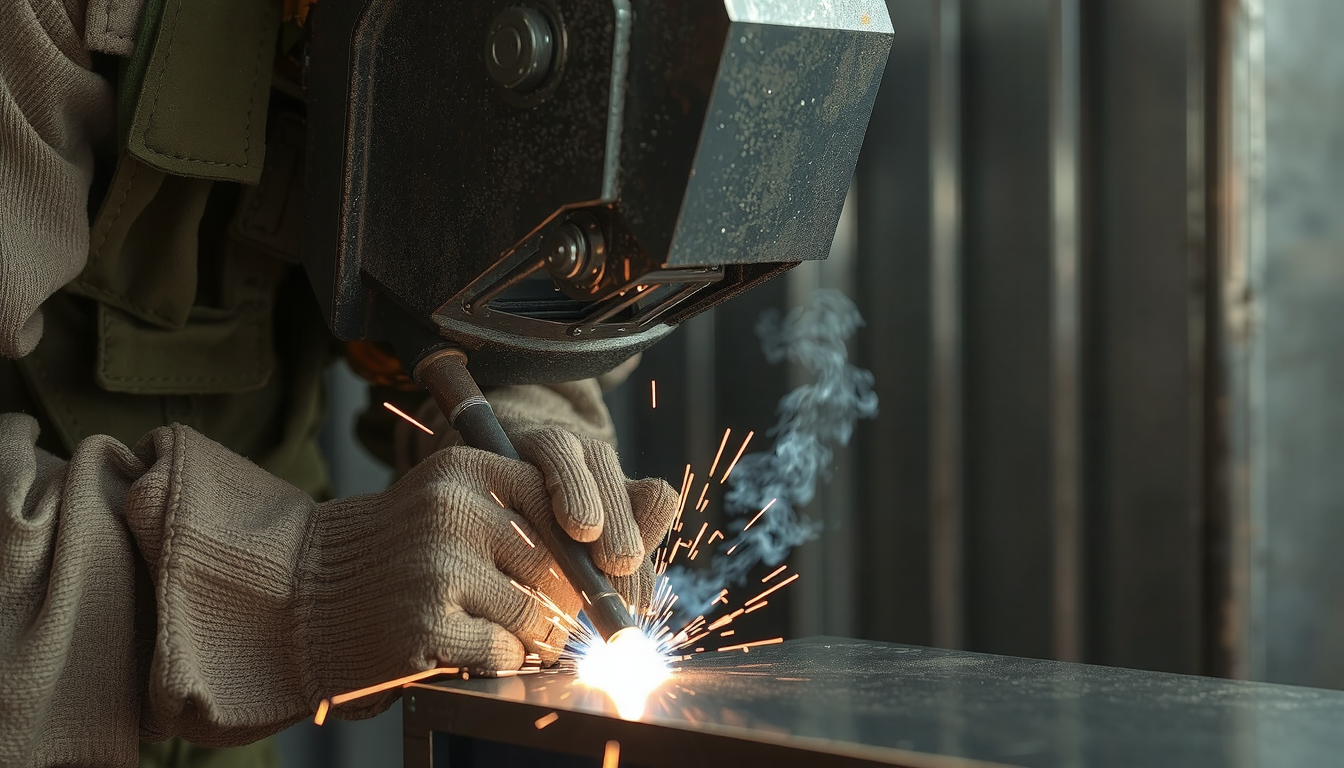
MIG welding is the best method for beginners. The first step is to go through the steps to make your first weld on very thin metal. Stick to the steps and within no time you can begin with the welding of sheet metal.
Step 1: Preparation is 90% of the Job
To have a good weld you need to get ready beforehand. The key step is right preparation before everything begins.
First of all, clean the metal surface entirely. Use a wire brush or a grinder that is equipped with a flap disc to scrape all paint, rust, oil, and other presence. The area for the welding should be shiny, bare metal.
Next, ensure that the pieces fit perfectly. The two pieces of sheet metal should be in contact without any gaps. Gaps are a big reason for the burn-through issue because the arc has to jump across them. This results in excessive heat. You can use clamps to hold the pieces firmly together and against a flat surface.
Step 2: Setting Up Your MIG Welder
The machine settings are the main factor in controlling the heat. The number one reason for difficult welding of thin metal is the wrong settings.
Use a smaller wire size. A wire of 0.023 inches or 0.024 inches in thickness is recommended for sheet metal. The thinner wire will consume less energy and produce less heat.
Use the correct shielding gas. A gas mixture of 75% Argon and 25% CO2 is the MIG welding standard for use with steel. This gas forms a barrier that keeps the molten metal from the atmosphere.
Confirm your machine’s polarity. For solid wire with gas, you can use Direct Current Electro Positive (DCEP). The work clamp connects to the negative terminal. The gun connects to the positive.
Finally, set your voltage and wire speed. Look for a chart inside your welder’s side panel. It will give you a good starting point for the thickness of metal you are using. Always test your settings on a piece of scrap metal that is the same thickness as your project.
Step 3: The Technique for Perfect Welds
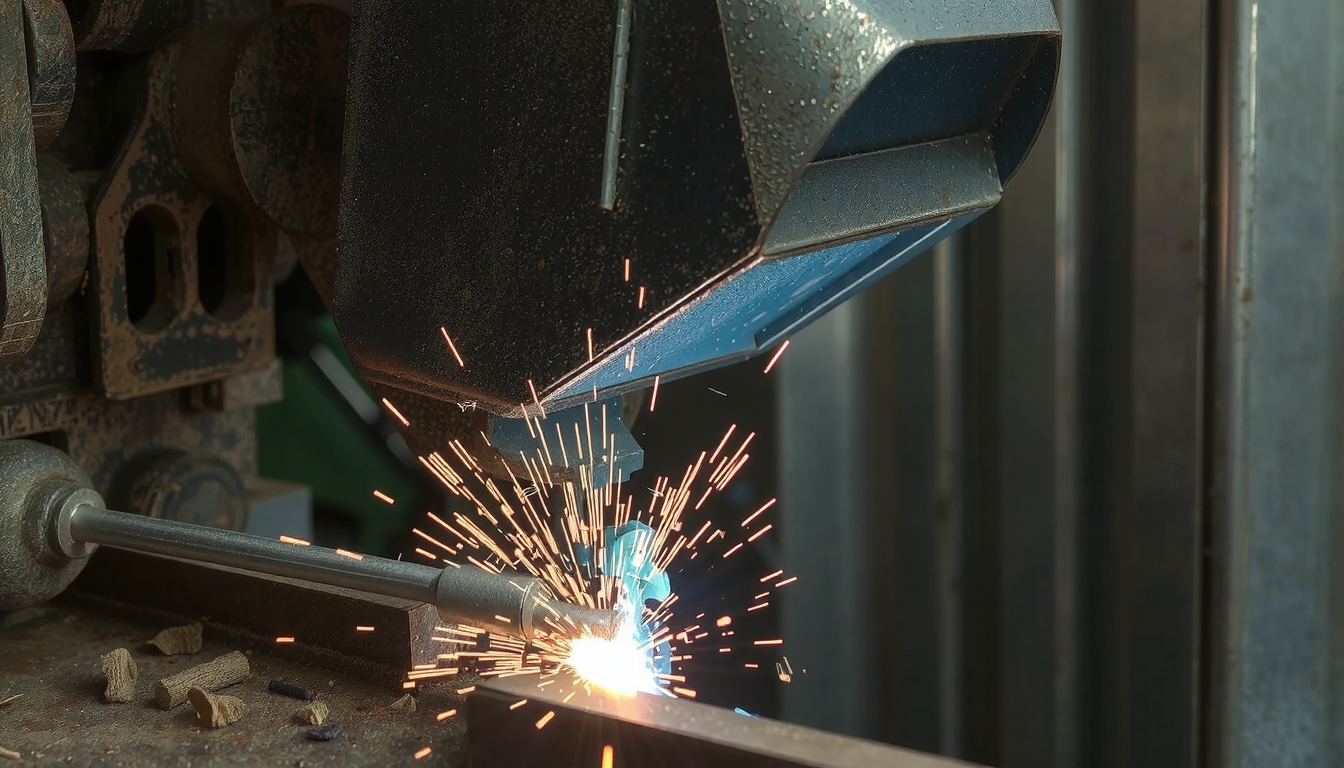
In welding sheet metal, you can’t just run a lengthy, heavy bead alone. This would put too much heat into the metal panel. It definitely will make it burn through and warp. Instead, we use the “stitch” or “tack” method.
This technique involves the use of a series of very short welds that are made one after the other like individual tacks. Pull the trigger for a second only to make a small tack weld. Stop and let the area cool for a few seconds. Move to a different place on the seam and tack again.
By changing locations on the project piece, you help to distribute the heat evenly. Hence, no particular location stays warm enough. After making enough tacks to join the piece, you just need to go back and fill the spaces between them. The aforementioned approach, which is laid out in The Beginner’s Guide to Welding Sheet Metal, is very effective in preventing distortion.
Be mindful of your gun angle and the speed of travel. The gun should be at an angle of about 10-15 degrees towards the movement direction. Move quickly and evenly. A good weld on sheet metal will often make a sound similar to the sizzling of bacon.
Overcoming Different Common Problems
In spite of your expertise and the experience you will have problems from time to time. Finding the solutions and knowing how to identify them is part of the learning of how to weld sheet metal correctly. These are some common problems with a quick fix guide.
| Problem | Visual Cue | Likely Cause(s) | How to Fix It |
|---|---|---|---|
| Burn-Through | A hole is blown through the metal. | 1. Heat setting (voltage) is too high. 2. Travel speed is too slow. 3. Large gap between panels. |
1. Lower the voltage. 2. Increase your travel speed. 3. Use the “stitch” technique. 4. Ensure perfect fit-up. |
| Warping / Distortion | The sheet metal panel is buckled or wavy after cooling. | 1. Too much heat in one area. 2. Long, continuous weld beads. |
1. Use a skip/stitch welding sequence. 2. Clamp the piece securely to a flat surface. 3. Use heat sinks (copper or aluminum blocks). |
| Porous / “Swiss Cheese” Welds | The weld bead has tiny holes or pits. | 1. Inadequate shielding gas coverage. 2. Contaminated metal surface. 3. Welding in a drafty area. |
1. Increase gas flow rate. 2. Check for leaks in the gas line. 3. Thoroughly clean the metal before welding. |
| “Bird Poop” Welds | Lumpy, inconsistent, and ugly weld bead. | 1. Incorrect machine settings. 2. Unsteady hand / inconsistent travel speed. 3. Incorrect gun angle. |
1. Practice on scrap to dial in settings. 2. Brace your hands to stay steady. 3. Maintain a consistent gun angle (10-15°). |
When to Do-It-Yourself and When to Consult a Professional
Learning how to weld sheet metal thin will make you a skilled person. But some projects are sent to professionals for a reason. Knowing when to do it yourself and when to hire an expert can save you time, money, and frustration.
You can consider trying to make it yourself if:
* The project is a hobby, like a garden ornament or a workbench.
* The final appearance is not the most important factor.
* You have the time and patience to practice and learn.
* The part is not critical for safety.
Hiring a professional service should be done in cases where:
* The part has structural significance or is safety related, like vehicle frames.
* A perfect-cut, flawless finish is needed for a high-end project.
* The material is difficult, like too thin aluminum or stainless steel.
* You want multiple identical parts, each made with high precision.
For such projects where precise performance is needed in every step of the process, the best option is professional fabrication de tôles. They do everything from accurate cutting to expert welding and finishing.
Sometimes a project requires more than just welded sheets. If your assembly needs custom-made parts to fit together, then services such as Services de tournage CNC are needed to achieve the best result. You can check out the full list of services that a full-service provider such as Mékalite offers to see the extent of the manufacturing options.
Conclusion: Welding Skills Are Worth Pursuing.
So is it possible to weld the sheet metal? Of course! The success does not lie in magical acts; it is all about respecting the material and adapting the right method. You will just as well be learning to control the heat on your own.
The path to great welds starts with clean metal and a tight fit. Adjust your welder settings correctly. And above all, make use of techniques like stitch welding to control heat input. With some practice on scrap metals, you can turn anyone into an expert at producing durable, beautiful welds on thin materials.
Popular Questions (FAQ)
1. What is the simplest way to join sheet metal?
MIG welding has been proven time and again to be the simplest method of welding sheet metal for beginners. Its “point-and-shoot” style is more accommodating than TIG. The stitch technique used with MIG is just so easy to learn and it’s very practical to monitor the heat.
2. Is it possible to weld sheet metal with a stick welder?
In theory, yes, but it’s discouraged. Stick welding (SMAW) is too hot and aggressive a welding process. It creates an environment that is impossible to avoid burn-through on thin metals, even with an experienced welder. It is preferable for entry level welders to operate with a MIG or TIG welder.
3. What thickness is generally accepted as ‘sheet metal’?
By and large, sheet metal is termed metal of 0.5mm (in the vicinity of 24 gauge) to 6mm (in the vicinity of 3/16 inch) in thickness. The techniques we highlighted for material control are most useful for metals under 3mm (in the region of 1/8 inch) thick.
4. How to successfully weld thin sheet metal to thick metal?
A thick piece needs to get more heat than the tailstock. Your welding torch or gun should be focused more on the thick metal part. The weld puddle should be started first on the thick part. As you move, quickly swing the puddle over to the edge of the thin sheet to weld it in. This will join without blowing a hole in the lightweight part.
5. Is shielding gas necessary for welding sheet metal?
Definitely, for MIG and TIG welding, shielding gas is absolutely required. The gas produces a protective bubble around the molten weld, which is free from atmospheric oxygen. Without it, the weld would become weak, brittle, and filled with holes. Gasless MIG wires, which are a version of MIG, have a built-in shielding mechanism, but they are hotter and more difficult to use on thin sheets.
