



So, what is sheet metal components? In brief, a sheet metal component is a part manufactured by cutting, bending, and shaping a flat piece of metal. This process makes a 2D sheet a useful 3D object. It is not the same as making parts by carving some material from a solid block. It is also not forming parts by pouring liquid metal into a mold. These components can be seen almost everywhere, from the appliances used in your kitchen to that car you own.

- Principales conclusiones
- Definition: A sheet metal component is a part made from a flat metal sheet through cutting, bending, and assembly. These sheets are 0.5 to 6 mm thick. They are cut, bent, and joined together.
- Advantages: Their strength-to-weight ratio is very high. They offer low cost. They can be made out of many materials like steel, aluminum, and stainless steel.
- Process: The process starts with cutting using a laser or plasma method. This is followed by bending and stamping. The joining also includes welding and riveting. As a last step, the product is decorated with painting or powder coating.
- Design is Key: Efficient design is what makes good quality parts at a low cost. This is called Design for Manufacturability (DFM). It involves considering bend radius and hole location.
- Applications: Automotive, aerospace, electronics, construction, and medical industries use these components regularly.
This guide will provide you with all the information you need. Firstly, we will highlight the major characteristics of these components. Then we will look into the main materials used. After that, we will take you through the making process step by step. We will also highlight essential design tips and see how far the products have spread in the world today.
The Fundamentals: More Than Just Metal
If you want to find out what is sheet metal components and you will need to get their characteristics in the first place. These items are not random pieces of metal; in fact, they are engineered with specific characteristics that make them extremely useful.
Sheet Metal vs. Sheet Metal Components
First, let’s clarify the terminology. “Sheet metal” is the input material. Think of it as the flat sheet you buy. A “Sheet metal components” is the actual part made out of that sheet metal. Rather, we could say: a piece of wood is a raw material. An armchair is the final part.
Sheet metal is classified based on thickness. It is made of metal that is usually ranging from 0.5 mm to 6 mm thick. That means it would be around 0.02 to 0.25 inches. If it is less than that, it is called foil. If it is thicker than that, it is called plate. The thickness of the sheet is significant since it determines how a component is designed and manufactured.
Key Characteristics and Advantages
Sheet metal components are preferred for several reasons. They provide various advantages that other methods of production cannot match. Here are the significant benefits of using sheet metal components:
- High Strength-to-Weight Ratio: These pieces are durable while being lightweight. Thus, they fit well into car and airplane design. The overall performance and fuel efficiency are highly affected by the weight reduction.
- Versatilidad: Sheet metal can be manipulated into different shapes. It can be as simple as brackets or complex enclosures.
- Rentabilidad: The tools for sheet metal are mostly less expensive than those for casting or molding. Thus, going for these means you can do a project with low or medium production numbers.
- Scalability: The machine can produce either one part or thousands. Simply, it can grow with your needs.
- Material Variety: A range of different metals like brass, zinc, aluminum, etc., are available. Thus, you can make an informed choice based on the specific requirements like corrosion resistance, electrical conduction, or appealing aesthetics.
Common Materials for Sheet Metal Components
Selecting appropriate material for the design of a component is one of the topmost decisions. Your selection can determine costs, strength, weight, and rust-resistance ability. To know what is sheet metal components, you have to learn about the materials. Below, you will see some of the most popular materials.
| Material | Propiedades clave | Aplicaciones comunes |
|---|---|---|
| Steel (e.g., Cold Rolled, Galvanized) | Solid, long-lasting, and economic. It’s easy to work with. Galvanized steel is coated in zinc to prevent rust. | Car bodies, household appliances (washers, dryers), electrical enclosures, structural brackets. |
| Acero inoxidable (por ejemplo, 304, 316) | It has fantastic rust and corrosion resistance, is hygienic, and has a sleek, modern appearance. | Food processing machinery, kitchen sinks, medical instruments, surgical tools, architectural trim. |
| Aluminum (e.g., 5052, 6061) | The metal’s high density (it weighs about a third of the weight of steel), rust-proof and is a good heat and electricity conductor. | Aircraft body materials, electronic cases, boat parts, road signs. |
| Copper & Brass | Copper is a fantastic electrical conductor. Brass (a mixture of copper and zinc) is attractive, durable, and corrosion-resistant. | Electrical connectors, busbars, decorative light fixtures, plumbing fittings, musical instruments. |

The Fabrication Journey: How a Component Is Made
The life of a sheet metal component is a series of stages. It is created from a flat and uninteresting metal sheet, which is transformed into a precise and useful part. Even though every project has its unique features, most combine design and production according to a similar order. This section highlights the main steps in the fabrication process of professional fabricación de chapa metálica.
Step 1: Cutting (Separation)
The first step involves shaping the component by cutting it out of a big metal sheet. This is like cutting out a fabric pattern to sew clothes. There are some common methods to do this.
- Laser Cutting: An extremely accurate laser beam is used to either melt or vaporize the metal. The result is a clean edge, which is necessary for running various metal thicknesses and intricate shapes.
- Plasma Cutting: In this technique, a hot plasma jet is used to punch holes in metals. It is the fastest and cheapest option for thicker materials but is not as precise as the laser method.
- Punching: A turret punch, which is a machine that uses a tool to punch out holes and various other shapes, executes this procedure quickly and efficiently.
Step 2: Forming (Bending & Shaping)
When the flat pattern is cut, it is required to bend and shape it into its 3-dimensional form. This moment marks when the component truly materializes.
- Bending/Press Braking: This is a commonly adopted method. The flat component is situated in a tool called a press brake. A tool, the punch, applies pressure to the metal and pushes it into a channel, the die. At the end, the metal bends in a clean 90-degree angle.
- Stamping: In mass production, stamping is the method mostly used. A tremendous press with a specialized tool (a die) makes the sheet metal take on a shape all in one shot. Door panels in cars are one of the examples of parts made this way.
Step 3: Joining (Assembly)
Most of the time, sheet metal components are built from multiple pieces. These pieces ought to be secured together quite well.
- Welding: It is a process of melting the edges of two metal pieces and joining them. Some types for strong and permanent joints are MIG and TIG welding.
- Riveting: Rivets are small pieces of metal that act as mechanical fasteners holding two or more pieces together. They are a reliable way to joist components without the use of heat.
- Hardware Insertion: Different standard fasteners such as standoffs, spikes, and nuts can be inserted directly into the sheet metal before any machining is done. It is helpful in creating secure mounts for other hardware.
Step 4: Finishing
The last step in the process is finishing. This step addresses not only the improved look for the component but also the protection it gets from the environment.
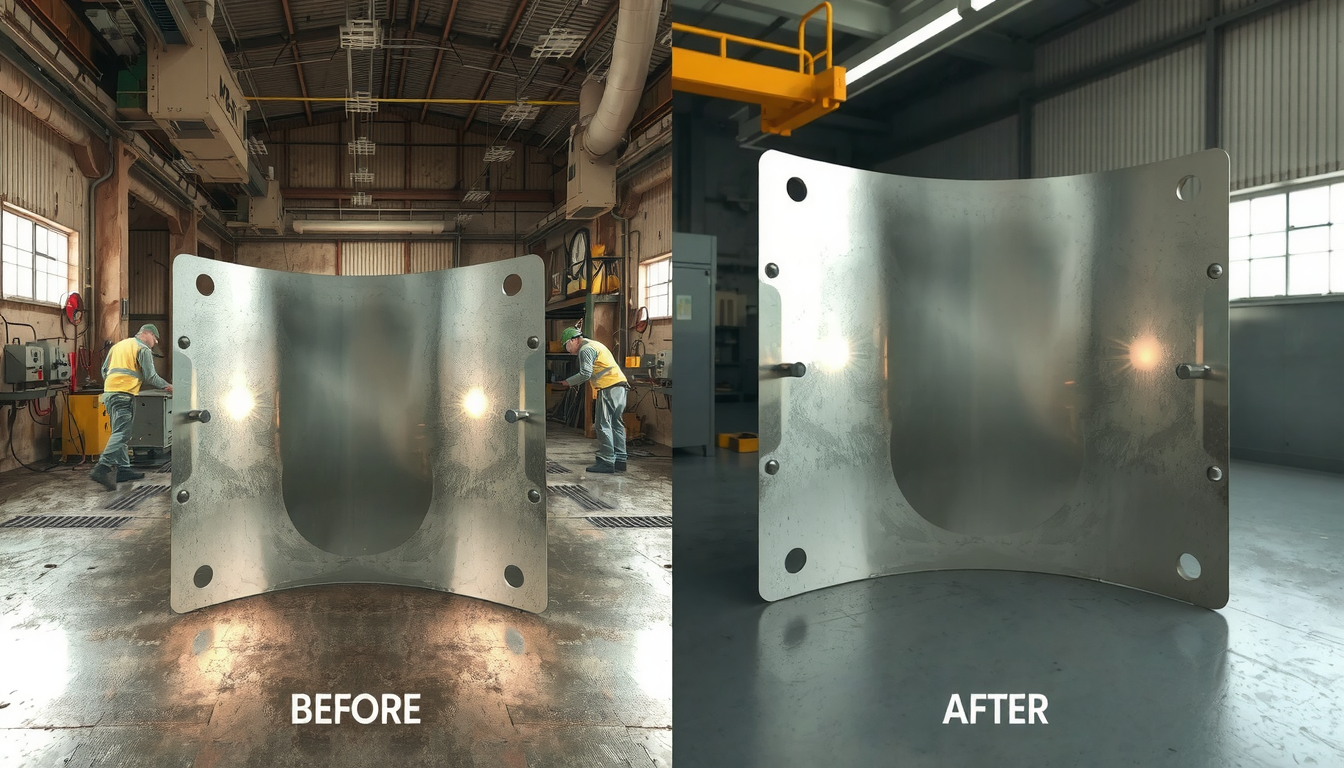
- Powder Coating/Painting: A coat of paint or powder is added to give color and protect the part from rust.
- Anodizing (for Aluminum): This is an electrical process that creates a surface that is hard, durable, and rust-resistant on aluminum parts.
- Chapado: This is done when another metal is added to the surface of the component by coating it with a thin layer of zinc or nickel. It enhances the surface, protects it, or improves its electrical conductivity.
- Deburring & Graining: These procedures will remove sharp edges left after cutting. They may make the surface looks smooth and uniform at the end.
Design for Manufacturability (DFM): Key Rules
A good design is beyond just the way a part looks or it operates. However, a great design is one which can be easily and affordably made. This is the purpose of Design for Manufacturability (DFM). From our expertise as professional designers, we have learned that implementing some straightforward DFM rules for your sheet metal components can save you valuable time and significant amounts of money.
Mind the Bend Radius
When attempting to create a bend in metal, there will not by nature form a sharp perfect 90 degree corner. The inside surface of the bend will require a small amount of arc. This is termed the bend radius.
Trying to form the metal too tightly (by using too small of a radius) would stretch out the material on the outer side of the bend thus creating cracks. One good guideline is to ensure that the inside bend radius is at least equal to the metal thickness. Doing this will keep the part strong.
Hole and Slot Placement
Slots and holes are two features found in a great deal of projects dealing with sheet metal. The placement of these features is very important. For example, if a hole is placed too close to a bend, the hole might stretch and during the bending process become distorted.
In contrast, a prudent rule would be to keep the distance of all holes at least twice the material thickness away from any edge or bend line. This, in turn, helps the features’ shape and accuracy to be maintained.
Keep It Uniform
If possible, always design your product using only one thickness of material. Using a variety of thicknesses in one assembly will mean that you will need to order, store and process multiple raw material types.
Focusing on a single thickness not only makes the manufacturing process less complicated but it will also cut down on material waste and speed up production while cutting costs. This is a crucial insight for the manufacturing of cost-effective sheet metal components.
Plan for Unfolding
Every component begins its life as a single flat piece of metal. Therefore, your design must be able to unfold into a flat pattern. If the design fails to be unfolded, it cannot be produced through standard sheet metal processes.
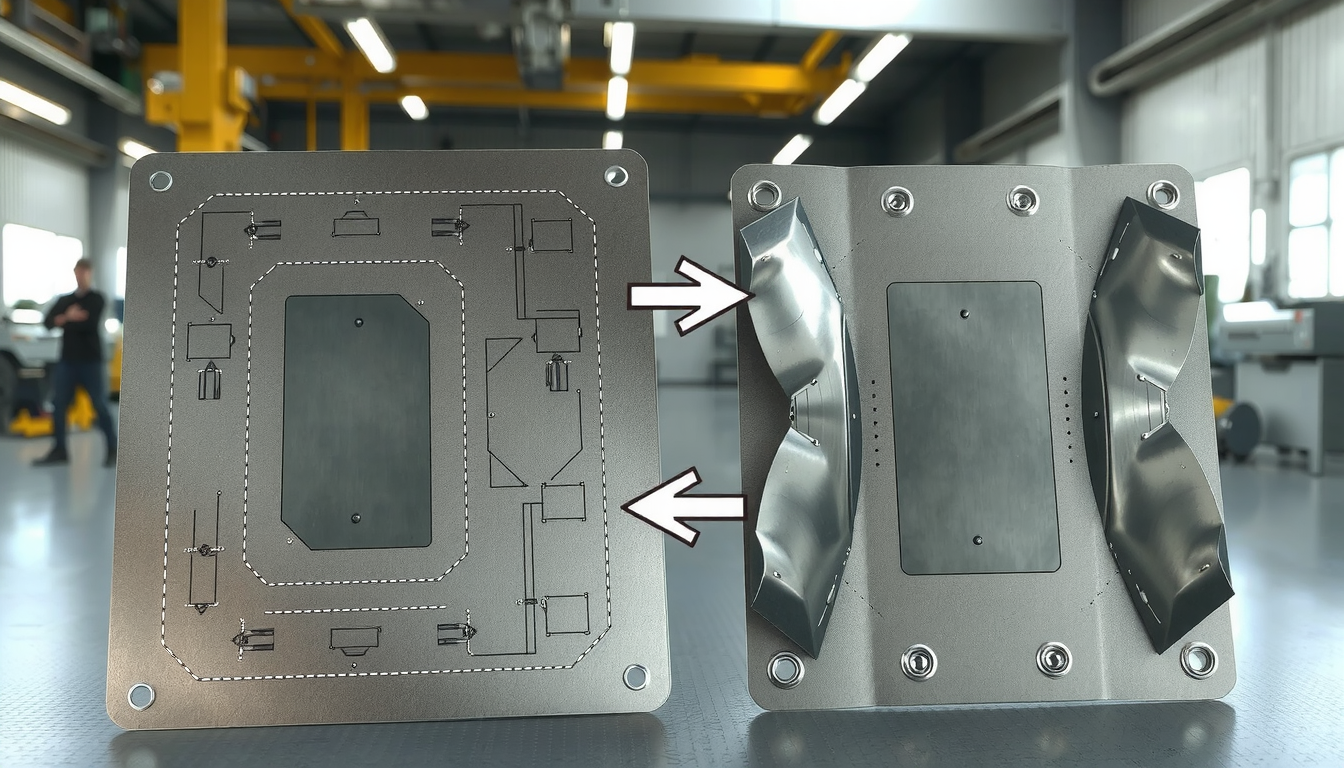
That is why considering unfolding during the design phase is essential. Deliberating on the flat pattern at the outset will guarantee the manufacturability of your part from the first day, thus ensuring the viability of your project.
Sheet Metal vs. Other Processes: Making the Right Choice
Sheet metal fabrication is a powerful process. However, it is not always the best choice for every part. To make an intelligent decision about your project, it is useful to be acquainted with how it compares with other common methods of manufacturing. Mastering which kind of one process over another is a vital asset in product development.
For you to handpick between the two easily, here is a simple comparison to help you.
| Factor | Fabricación de chapas metálicas | Mecanizado CNC | Impresión 3D |
|---|---|---|---|
| Starting Material | Flat Sheet | Solid Block | Filament/Powder/Resin |
| Lo mejor para | Enclosures, brackets, panels, and structural parts with a uniform thickness. | High-precision parts, complex internal features, and parts requiring extreme strength. | Prototypes, very complex shapes that are hard to make any other way, and custom one-off parts. |
| Fuerza | Good to Excellent | Excelente | Varies by material, generally good for prototypes but weaker than metal parts. |
| Coste | Low-to-mid tooling costs. Very efficient and low per-part cost at scale. | Higher per-part cost due to material waste and machine time. No tooling costs. | Low initial cost for one part. Becomes very expensive for mass production. |
| Velocidad | Fast for simple parts and very fast for high-volume production runs. | Slower per part, as material is removed bit by bit. | Fast for a single prototype, but slow for producing many parts. |
In short, each process has its strengths. While sheet metal is perfect for creating strong, lightweight enclosures and brackets, it has limits. For example, if your part requires intricate internal pockets or the tight tolerances of a turned shaft, alternative processes like Servicios de torneado CNC would be a more appropriate choice. 3D printing is unmatched for speed when you need a single, complex prototype to test a design.
Real-World Applications
Now that you know what is sheet metal components and how they’re made, you’ll start seeing them everywhere. From the car you drive to the computer on your desk, these parts are the quiet heroes of the modern world. They are essential in almost every major industry.
Here are just a few examples of where you can find them:
- Automóvil: Body panels, doors, hoods, chassis brackets, exhaust system parts, and frames for dashboards.
- Aeroespacial: The skin of the fuselage, wing ribs, engine cowlings, and countless mounting brackets inside the aircraft.
- Electrónica: Computer cases, server racks, EMI shielding to block interference, and the metal bodies of smartphones and tablets.
- Construction & Architecture: Metal roofing panels, HVAC ductwork, wall panels, gutters, and structural support brackets.
- Médico: Rolling equipment carts, housings for large medical devices like MRI machines, and stainless steel surgical trays.
- Consumer Goods: The bodies of refrigerators, ovens, and washing machines, as well as BBQ grills, toolboxes, and metal furniture.
Many of these items are custom sheet metal components that were designed specifically for a single product, showcasing the versatility of the process.
Conclusion: Your Partner in Manufacturing
We have explored the question, “what is sheet metal components?” from every angle. You now know that they are versatile, strong, and cost-effective parts that are vital to countless products we use every day. We have covered the materials, the fabrication process, and the key design rules that lead to success.
However, turning a great design into a physical reality requires skill, experience, and the right equipment. Partnering with a knowledgeable and reliable fabricator is the most important step in your manufacturing journey. An expert partner can help you optimize your design. They can help you choose the right materials. They can produce high-quality parts on time and on budget. If you’re ready to bring your project to life, explore the possibilities with a trusted manufacturing partner. Learn more at Mekalite.
Frequently Asked Questions (FAQ)
1. What is the difference between sheet metal and metal plate?
The main difference is thickness. Generally, any flat metal up to 6mm (0.25 inches) thick is called sheet metal. Anything thicker than that is called a metal plate. This difference is important because it changes the tools and processes needed to cut and form the material.
2. What is a “gauge” in sheet metal?
Gauge is a traditional unit used to measure the thickness of sheet metal. It can be a little confusing because a lower gauge number means a thicker sheet of metal. For example, 16 gauge steel is thicker and stronger than 20 gauge steel.
3. Can you weld aluminum sheet metal?
Yes, aluminum sheet metal can be welded. However, it is more difficult to weld than steel. It requires special equipment and techniques, like TIG or MIG welding, with specific settings. This is because aluminum conducts heat very quickly and has a tough outer oxide layer that must be cleaned off.
4. What is the most common process for bending sheet metal?
The most common method for bending sheet metal is called press braking. This process uses a machine called a press brake. It has a long tool (a punch) that presses the sheet into a v-shaped channel (a die). This creates a very precise and clean bend.
5. Why is a minimum bend radius important in sheet metal design?
A minimum bend radius is important to prevent the part from breaking. If you try to bend a piece of metal too sharply, the outer surface has to stretch a lot. If it stretches too much, it can crack, which weakens the part. Following the minimum bend radius for a given material and thickness ensures the component remains strong and reliable.
