

The cutting of sheet metal is a task many tend to associate with heavy and complex machinery. However, not all operations require such dedicated equipment. Some demand less powerful handheld instruments, others call for medium-capacity tools, and still, others need heavy tools. Looking at the tool’s features will lead you to the best choice for your particular task.

Principles in a Nutshell
- Select the Proper Tool: Adjust your choice based on the type of sheet metal, cut type (straight or circular), and desired finish.
- Use of Hand Tools: For close control especially in cutting thin metal, hand tools like tin snips are the most controlled cost-effective solution.
- Power Tools for Performance: To reduce processing time on a long cut, power tools such as angle grinders or circular saws work best. To cut curves, a jigsaw is the best.
- Work Safety First: Always wear cut-proof gloves and safety goggles. Any metal edge is a blade and power tools can throw not only sparks but sharp pieces too.
- Avoid Warping: Heat generated from cutting can cause damage; therefore, choose tools that cut without generating much heat. Use tools like snips, shears, or nibblers.
Comprehensible Guide: Grab Your Tool
The below table provides a quick and easy look up of the required tools and how to connect them to the specific job you are dealing with. Simply find your task and see which tools are the best for it.
| Tool Name | Lo mejor para | Metal Thickness (Gauge) | Cut Quality | Velocidad | Coste | Skill Level |
|---|---|---|---|---|---|---|
| Tin Snips | Short straight & curved cuts | Very Thin (22g & up) | Good, some bending | Lento | Bajo | Principiante |
| Hand Shears | Cortes largos y rectos | Thin (20g & up) | Genial | Lento | Low-Med | Principiante |
| Hacksaw | Rough cuts, thick pieces | Any | Rough | Very Slow | Bajo | Principiante |
| Angle Grinder | Fast, straight cuts | Any | Rough (needs cleanup) | Very Fast | Low-Med | Medio |
| Jigsaw | Complex curves, shapes | Thin to Medium (16g & up) | Bien | Medio | Medio | Medio |
| Circular Saw | Cortes largos y rectos | Thin to Medium (14g & up) | Good to Great | Very Fast | Medio | Medio |
| Nibbler | No-warp cuts, profiles | Thin to Medium (16g & up) | Genial | Medio | Alta | Medio |
| Cortadora de plasma | Thick metal, any shape | Any | Good to Great | Very Fast | Alta | Avanzado |
Hand Tools: Precision Cuts, Control, and Small Jobs
Power tools are not mandatory for many jobs. Hand tools are a great option at low prices and they provide excellent precision control. They are ideal for small jobs and are the best choice for beginners looking for what tool to cut sheet metal.
Tin Snips: The All-Time Essential Tool
Tin snips look like metal scissors, which are very durable, but a person can also operate them by hands. They are also sometimes referred to as aviation snips. Thin sheet metal work will never be the same again without them.
There are three main categories. The different types are distinguished by the color of their handle. Yellow handles are for straight cuts, red handles for left curves, and green handles for right curves.
-
Best For: Short straight cuts and tight curves on thin metal (up to 22-gauge steel).
-
Advantages: They are inexpensive and easy to control without risk of making dangerous sparks or unwanted noise.
- Disadvantages: They require effort, especially in the case of long cuts. The edges can get slightly bent. They don’t work on thick materials.
Hand Shears & Bench Shears: More Power for Straight Cuts
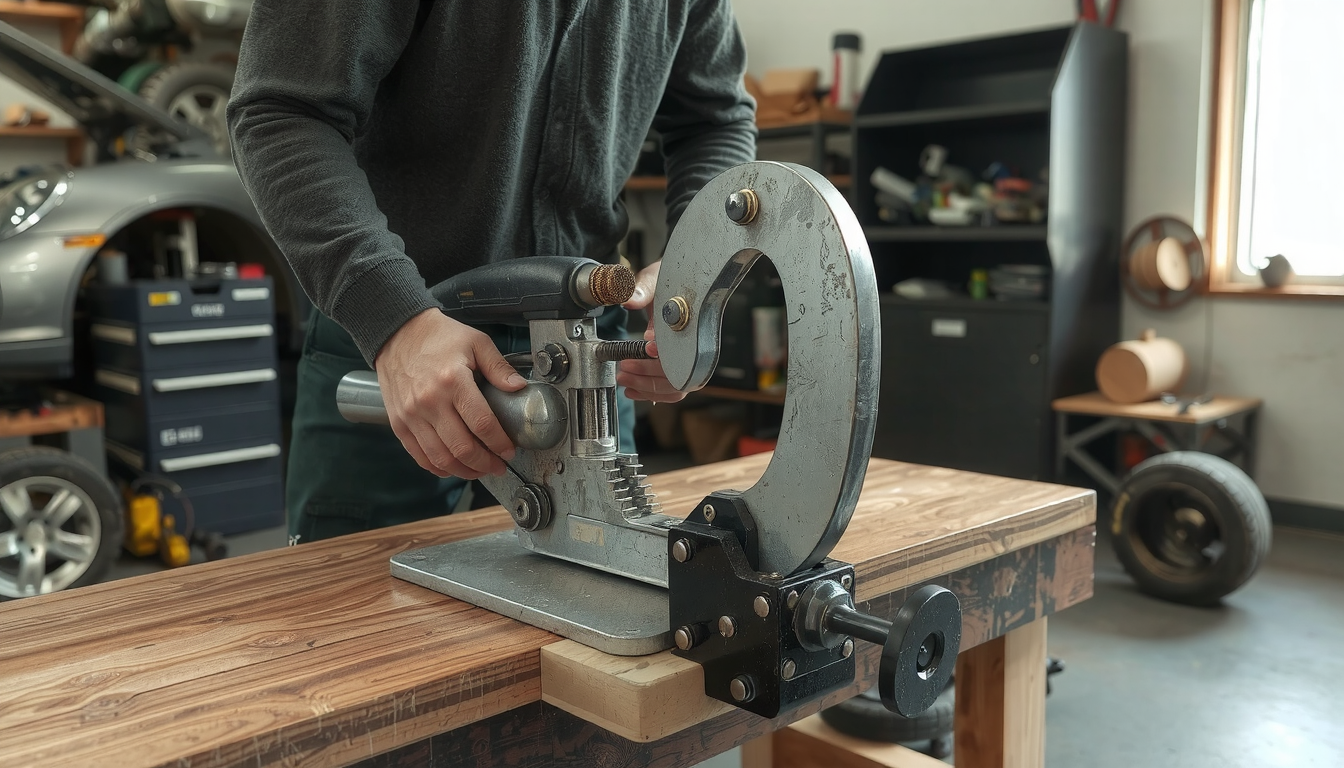
Unlike the simple automotive snips, hand shears and bench shears are what professional car mechanics use. Bench shears are fastened to the workbench and so you have more power with them.
The tools make cuts that are less difficult and almost mechanically straight than smaller snips. They give you a mechanical advantage for slicing through slightly thicker sheets.
-
Best For: Very clean, long, and straight cuts in thin to medium sheets of metal.
-
Advantages: They enable you to achieve very straight and smooth edges with no bending. They are stronger than snips.
- Disadvantages: They can cut only in straight lines. Bench shears are not movable. They require a little bit of space in the workshop.
Hacksaw: The Old-School, Multi-Use Option
A hacksaw consists of a frame that holds replaceable blades. This is the most regular tool you can find in any workshop. A hacksaw can be used to cut metal, wood, and other materials.
When you use a hacksaw for cutting sheet metal, you must select the right blade. A blade with more teeth per inch (TPI) is necessary for a fine cut.
-
Best For: Creating small very thick pieces of metal and rough cuts when no other tool seems to do the trick.
-
Advantages: The cost of a hacksaw is very low. You can also use it for wood and plastic.
- Disadvantages: Cutting is slow and takes lots of work. You can’t cut curves easily. The edge will be rough and need filing. For a better finish, use a blade with 24 to 32 TPI.
Power Tools: Speed, Easy Work, and Thick Materials
When dimensions are large, cuts are long, or metal is thicker, power tools are the solution. These tools save enormous amounts of time and effort. Choosing what tool to cut sheet metal from this group can change your approach in a very good way.
Angle Grinder: The Fast and Strong Cutter
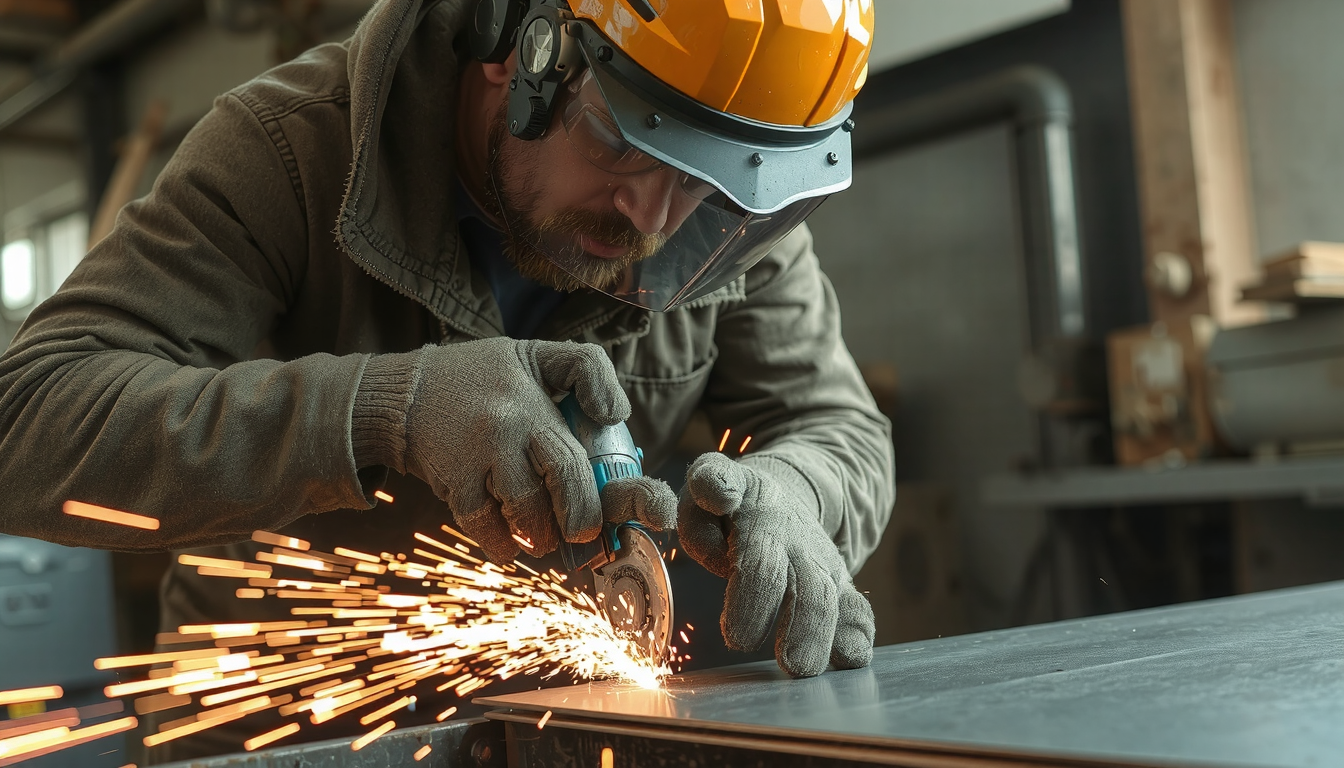
An angle grinder is a very powerful handheld tool. It works by spinning a disc at a very high speed. When you attach a very thin and light cut-off wheel to the tool, it cuts through metal rapidly.
This is the tool if speed is what you are after, but it isn’t the best choice for pretty cuts. This kind of tool is the perfect one for quickly cutting through thick steel plates, or demo work.
-
Best For: Only very quick, straight cuts in any thickness of metal. You can also use this for cutting off old bolts or rebar.
-
How to Use & Safety: Always use a thin “cut-off” wheel, not a thick “grinding” wheel for cutting. A face shield and gloves are not optional. They are required. Let the speed of the wheel do the cutting. Don’t force it. Guide it with a steady hand along your line. Expect lots of noise and hot sparks.
-
Advantages: It’s very fast and can cut through thick metal very easily.
- Disadvantages: Earsplitting noise and flying sparks everywhere are among the reasons it’s considered a messy machine. The blade causes a lot of heat. This is a rough cut and the cutting edges are sharp and necessitate cleaning. It is not for cutting curves.
Jigsaw: The Top Tool For Curves
A jigsaw uses a little blade that oscillates up and down to make cuts. Its core benefit, however, is its ability to bend, which is perfect for complex shapes.
Specific types of blades are for metal cutting only; so only these should be used with a jigsaw. They have very fine teeth.
-
Best For: Cutting circles, curves, and other complex shapes in thin to medium sheet metal (up to about 16 gauge).
-
How to Use & Safety: Make sure the sheet metal is clamped tightly to a workbench. If the metal moves too much, you might lose control. This can be avoided by placing a sandwich of two plywood boards on the metal. This gives support to the metal and helps to achieve a cleaner cut.
-
Advantages: It is the most efficient tool for cutting curves. The cuts produced are pretty clean. Your control over the position of the tool is very good.
- Disadvantages: Cutting long, straight lines requires a lot of patience because it is slow. The thin blades can be fragile and break if you apply too much force. The up and down motion could warp very thin metal sheets.
Circular Saw: For Long, Straight Cuts Performed in a Hurry
Using a circular saw, one can slice through a metal sheet quickly and cleanly. A special blade that cuts metal or an abrasive wheel will be installed so that it can channel through sheet metal swiftly.
This equipment works best for greater areas of flat material. Picture the big sheets used in roofing or construction. Properly following the safety instructions is a must.
-
Best For: Making long, straight cuts efficiently with flat, sheet metal.
-
How to Use & Safety: Adjust the blade just a little deeper than the cut you are making. This will cut back the chances of kickback. You can find great step-by-step instructions for using a circular saw on sheet metal that focus on safety and technique.
-
Advantages: The quick way to do long straight cuts. The blade can make a surprisingly clean cut if the right one is used.
- Disadvantages: It only cuts in straight lines. The use of this machine can be challenging as it can be scary. It also produces hot metal chips so, face protection is very important.
Nibblers & Power Shears: The No-Warp Edge

These are the tools made to cut metal without bending or warping it. A nibbler operates by removing tiny “bites” from the metal. Power shears are basically a scissor that is powered by a motor. They work the same as hand snips, just powered by a motor.
You can find these tools as standalone units or as attachments for power drills.
-
Best For: Making corrugated sheet metal edges flat (like roofing) or any time a perfectly flat, no-warp edge is the top goal.
-
Advantages: Disfiguring or bending the material is not a problem with them. They also work well for cutting shaped sheets. The edges are clean.
- Disadvantages: These are less efficient than an angle grinder or circular saw. Nibblers create thousands of tiny metal pieces that must be cleaned up carefully.
Beyond DIY: A Look at Professional Sheet Metal Cutting
Although hand and power tools are appropriate for the majority of small jobs, industrial work needs more advanced methods. These machines are so fast and accurate that they are highly popular for large-scale production.
Plasma Cutters: The Warm Knife through Butter Effect
A plasma cutter works by pushing a jet of extremely intense gas through the metal. The gas melts the metal while at the same time, a stream of high-speed gas carries away the melted particles.
Plasma cutters go directly through very thick steel plate with ease. They are one of the machines used in fabrication and auto body repair. They quickly remove a large part or any detailed shape where perfect edge quality is not a consideration.
CNC Laser and Waterjet Cutting: Technologies with the Greatest Accuracy
For the highest level of accuracy, professionals use CNC machines. The term CNC, short for Computer Numerical Control, refers to a computer that guides the cutting head.
Lasers cut metal by using a highly focused beam of light to melt or burn away the material. Waterjets use an extremely high-pressure stream of water mixed with fine abrasive material to erode the material. Mechanical engineers use CNC machines a lot for sheet metal processing to make parts that are totally smooth and that have intricate details that are impossible to achieve by hand.
Essential Safety Equipment and Best Practices for Cutting Sheet Metal
Working with sheet metal can harm you if not done carefully. Always prioritize safety. The sharp edges and fast-moving tools need your utmost respect and attention.
- Eye and Face Protection: Wear safety glasses that are approved. For tools like angle grinders, which create sparks and debris, a full-face shield is much better.
- Hand Protection: A metal edge cut is as sharp as a blade. It is always a good idea to wear thick and well-fitting cut-resistant gloves when handling sheet metal.
- Hearing Protection: Power equipment such as grinders and circular saws run very loud. So you should use earplugs or earmuffs that will protect against hearing loss.
- Secure Your Workpiece: Never try to hold the sheet metal with one hand and cut it with the other. Use clamps to secure it to the workbench.
- Fire Safety: An angle grinder can throw sparks beyond 10 feet. Always keep the work area clear of material that can catch fire. That includes sawdust, paper, or oily rags. Have a fire extinguisher at hand.
Frequently Asked Questions (FAQ)
What is the easiest tool for a beginner to use to cut sheet metal?
For thin sheet metal (22 gauge or thinner), the easiest and safest tool is a good pair of aviation snips (tin snips). They offer excellent control, require no power, and are inexpensive, making them perfect for learning.
How can I cut sheet metal without warping it?
The best way to avoid warping is to use a tool that doesn’t generate heat. Manual shears, tin snips, and power tools like nibblers or power shears are excellent choices as they cut the metal mechanically without heating it. If using a jigsaw, use a sharp blade and don’t force the tool.
Can I use a Dremel or rotary tool to cut sheet metal?
Yes, you can use a rotary tool with a reinforced abrasive cut-off wheel. It’s best suited for very small, intricate cuts or for cutting in tight spaces on thin sheet metal. It is not efficient for long, straight cuts as the small discs wear out quickly.
What’s the best tool for cutting thick sheet metal or steel plate?
For thick metal (e.g., 1/8 inch or 3mm and thicker), an angle grinder with a cut-off wheel is a common and effective choice for straight cuts. For even thicker plate or more complex shapes at a professional level, a plasma cutter is the standard tool.
Do I need a special blade to cut sheet metal with a power saw?
Absolutely. When using a circular saw or jigsaw, you must use a blade specifically designed for cutting metal. These blades have a much higher tooth count (high TPI) and are made of harder materials (like bi-metal or carbide-tipped) to withstand cutting through metal safely and cleanly.
