

Yes, it’s possible to bend aluminum sheet metal. Even so, the vast majority of people who try to perform this task end up with unserviceable metal suffering from cracking.
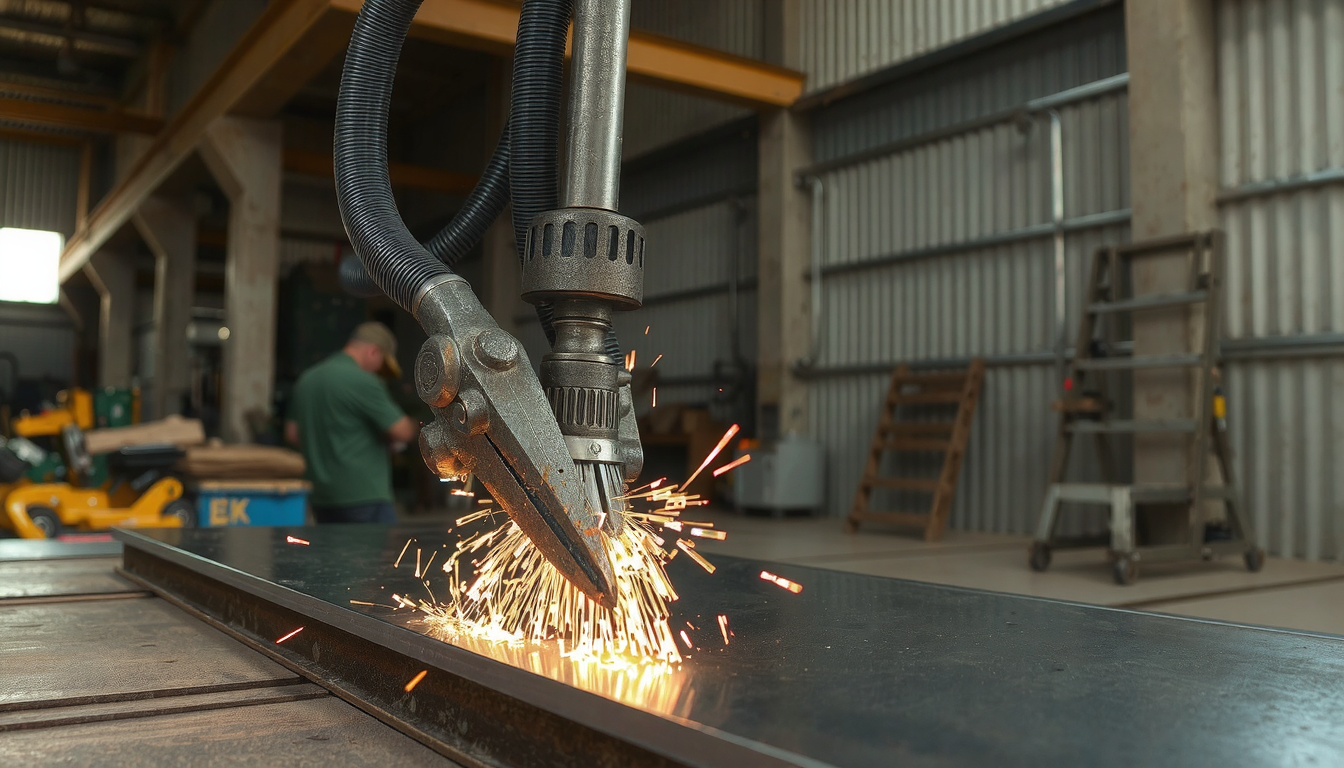
The reason for this is that unlike steel, aluminum is more difficult to work with. More often than not, the metal breaks or cracks if you don’t bend it correctly.
This guide is a detailed outline on what to consider. We will discuss the suitable materials and methods to use. Besides common mistakes we will address, this article will also provide you with tips to avoid them. With this info, every time, you will be able to get your aluminum piece bent without cracks.
The Reasons Bending Aluminum Is Not Easy
If we want to be able to bend aluminum correctly, the first thing we must know is the cause of its breakage. The knowledge of the metal science is the core to your achievement.
The Concepts of Ductility and Work Hardening
The metals have a property known as ductility which is a measure of how much they can stretch without breaking. In this sense, aluminum is less ductile than mild steel.
Moreover, aluminum also work-hardens very fast. It means that, when you bend it, the part of the metal at the bending line undergoes hardening and becomes more brittle.
Consider a paperclip being bent back and forth. The very first time you bend it, it’s easy to do so. Each consecutive bend it can do becomes harder, till it finally breaks. This is what is called work hardening. Aluminum bending is an exact replica of this process.
The Important Function of Aluminum Alloys
You should note that “aluminum” is not one single type of metal but rather a family of different materials known as alloys. Each alloy boasts a distinct character.
Alloys which are soft like 3003 are very easily bendable. Others such as 6061-T6 that are very common are much stronger and considerably brittle. Bending a hard alloy that is with the wrong technique will result in cracks. The first step of the success is to choose the right alloy.
The Issue of the Direction of the Grain
Sheet metal is made by rolling a huge piece of metal into a thin sheet. That rolling process creates a grain direction just like the grain in a piece of wood.
Bending sheet metal is by the book only if you always bend across the grain of the material. Bending with the grain is a very common cause of failure.
Bending along the grain means that the material outside the bend must stretch too much. The consequence of this is that very small cracks can form that can grow into large cracks. Stretching across the grain helps the metal do the stretching work without breakage.
The Metal Selection for Bending
Picking the right aluminum alloy is one of your most important decisions. While some alloys are formed-to-needs others are strong enough to resist bending. Choosing the right one for your project always pays off.
We are going to list the most widely used aluminum alloys in sheet metal projects. This will facilitate your decision on the suitable alloy for bending the aluminum sheet metal.
Aluminum Alloy Bendability Chart
This chart lists the most common aluminum alloys and their bendability. It can be used as a quick reference guide before you buy your material.
| Alloy Grade | Bendability Rating | Usos comunes | Notas |
|---|---|---|---|
| 1100 | Excelente | General forming, decorative parts | Almost pure aluminum. Very soft and easy to shape. |
| 3003 | Excelente | General purpose sheet metal, tanks | Most common and very forgiving. Great for beginners. |
| 5052 | Bien | Marine parts, truck bodies, chassis | Higher strength than 3003 but still has good formability. |
| 6061-T6 | Pobre | Structural parts, machine parts | Very strong but brittle. Will crack on tight bends unless softened. |
| 7075-T6 | Very Poor | Aerospace parts, high-stress parts | Extremely strong. Do not try to bend this alloy cold. |
Based on the table, alloys like 3003 or 5052 are your best bet if you are doing any bending on your project. But even if you have 6061-T6, you must do it the special way to make the bending possible. We will discuss that later.
4 Counsels to Get a Perfect Aluminum Bend
You need to get to know the four basic principles before using any tool. These will help you avoid most common bending issues. These rules work whether you use simple hand tools or a large machine.
Rule #1: Be Part of the Minimum Bend Radius
A sharp, 90-degree corner is the enemy of aluminum. Making a sharp turn bends too much metal stress on the outer side, causing it to crack. All bends must have a curve, or radius.
The inside bend radius is the radius of the curve on the inside of the bend. A good rule is to make this radius at least one to three times the thickness of the material.
For example, your sheet should be 1/8 thick and the inside bend radius should be at least 1/8 inch. Increasing the radius is a precaution since it is always safer and reduces stress. This Sheet Metal Bending Design Tips explains it well, a good radius is all it takes to keep metals that are less bendable from cracking.
Rule #2: Orient the Bend Across the Grain
We have discussed this before, but it is too important not to emphasize it again. Always remember to bend across the grain.
How can you locate the grain direction? On a new sheet, the grain usually runs parallel to the longest side. If you take a close look at the surface, it is possible to see some very faint lines coming from the rolling process. If you are unsure, just assume that the grain goes the length of the sheet.
Rule #3: Take Into Consideration the Springback
When you bend a piece of metal, it will try to spring back a little toward its original flat shape. This is called springback. Aluminum has more springback than steel.
In other words, you have to first put a small bend in the sheet before you reach the final angle. For a 90-degree bend, you might need to bend it to 92 or 95 degrees. The particular quantity is alloy, thickness, and bend radius dependent. The process is usually trial and error.
Rule #4: Keep the Bending Zone Clean
Look closely at the area where you plan to bend. Any deep scratches, gouges, or marks from a sharp tool can create a problem.
These small flaws are known as stress risers. They make a material weak, where a crack will be created due to the stress of bending. The bend line should be clean and smooth before you set to work.
Bending Aluminum Sheet Metal: Step-By-Step Guidelines
Knowing the rules is one thing, but being able to implement them for bending aluminum sheet metal is quite another. We will cover everything from a simple DIY method to professional techniques.
Method 1: The DIY Approach
There is no need for the more expensive gadgets to get you a good bend at your home. By using a vise, some blocks of wood, and a mallet, you can bend aluminum sheet metal quite well.
Step 1: Preparation is Key.
At first, use a pencil or permanent marker to outline the bending line clearly. Do not use a sharp scribe as this would create a stress riser. Fix the sheet between the two jaws of a strong bench vise. Put a smooth, hard block of wood between the jaws and the aluminum on each side. This way the jaws will neither dent your part nor mark it. Align the marked line so that it stays just above the wooden blocks when they are laid out.
Step 2: The Gentle Bend.
Do not use a steel hammer; instead, you need a rubber or plastic dead-blow mallet. A steel hammer will dent the aluminum. Start tapping gently along the entire length of the bend line. Work your way from one end to the other. Gradually work the metal over. Do not try to bend one spot all the way to 90 degrees at once. This even pressure is key to a clean bend.
Step 3: Finishing the Bend.
As soon as the sheet material gets beyond the 45-degree bend, you can use another block of wood. Put it on top of the bent section and tap the wood block using your mallet. This will create a more uniform and crisp radius. Proceed till you reach your intended angle. Bear in mind to consider the springback.
Method 2: Using a Sheet Metal Brake
A sheet metal brake is the best tool for high-precision projects or for the production of many identical parts. A brake gives a much cleaner and more accurate bend than you can achieve by hand.
A brake works by seriously clamping the sheet metal into place. A hinged part, called leaf, is then lifted. This action raises the sheet metal and creates a straight, clean bend against a clamping edge. As shown in this Guide to Sheet Metal Bending: Techniques, Tools…, there are brakes that vary in size from small benchtop models to big industrial machines.
While bonding, the same rules apply here. You need to choose the right alloy, respect the bend radius, and orient the part across the grain.
Method 3: Annealing for Hard Alloys
Suppose you want to bend one such hard alloy as 6061-T6, what should you do? The solution is to anneal. Annealing is a process used for heating metal to soften it thus making it viable for bending without cracking.
The “Soot Trick” is a method that has been around for a long time; it is tried and tested. First, either a pure acetylene flame or even a simple candle can be used to coat the bend line with a layer of black soot.
Next, use a propane torch to gently heat the sooty area. You have to keep the flame moving constantly to heat the area evenly. As the aluminum reaches the correct temperature (around 750°F / 400°C), the black soot will burn off and disappear completely.
Once the soot is gone, remove the heat and let the part cool down slowly in the air. Do not put it in water. The aluminum at the bend line is now in a soft, annealed state and can be bent easily.
Important Safety Warning: Always wear proper safety gear, including gloves and safety glasses. Work in a well-ventilated area away from flammable materials. Be extremely careful, as aluminum does not glow red like steel before it melts.
Troubleshooting Common Bending Failures
No matter how well you have prepared, things may go wrong. Here are some quick tips for you to identify and fix the common problems when you try to bend aluminum sheet metal.
-
Problem: The metal cracked on the outside of the bend.
- Likely Causes: Your bend radius was too sharp. You bent along the grain instead of across it. You used the wrong alloy, like 6061-T6, without annealing it first.
- Solutions: Increase the inside bend radius to at least 1x the material thickness. Turn your part 90 degrees to bend across the grain. Check your material and switch to a more bendable alloy like 3003 or 5052, or anneal the bend line.
-
Problem: The surface is marked, dented, or scratched.
- Likely Causes: You used a steel hammer directly on the aluminum. You clamped the sheet in serrated (toothy) vise jaws without protection.
- Solutions: Only use a rubber or plastic mallet. Always use “soft jaws” made of smooth wood or scrap aluminum in your vise to protect the workpiece.
-
Problem: The bend is not straight or uniform.
- Likely Causes: You applied force unevenly, focusing on one spot instead of working along the whole bend line.
- Solutions: Use slow, gradual taps and move back and forth along the entire length of the bend. For the best and straightest results, use a sheet metal brake.
When to Skip DIY and Hire a Professional
There’s no doubt about it, at home you can bend aluminum sheet metal, but there are some projects that are better left to professionals. Outsourcing your work at the right time can save time, money, and material waste.
You can consider professional help when:
* The project involves numerous copies that need extreme precision and regularity.
* The material is thick (over 1/8 inch or 3mm) and the machine is too powerful.
* Some difficult alloys or a very tight bend radius.
* The part is quite complicated with several different bends in various directions.
Professional shops have a range of advanced equipment, such as CNC press brakes and precision measuring tools. This is where a partner like Mekalite can be a useful asset. If you want 100% perfect results, using expert fabricación de chapa metálica services will provide you with a flawless result.
Moreover, a lot of parts require more than just bending. When forming, they might need other features. Professional shops can offer processes like Servicios de torneado CNC to create holes, threads, or other custom features for a complete part. As many guides on Metalworking – Aluminum Bending claim, to get the best results, CNC machines are the solution.
