



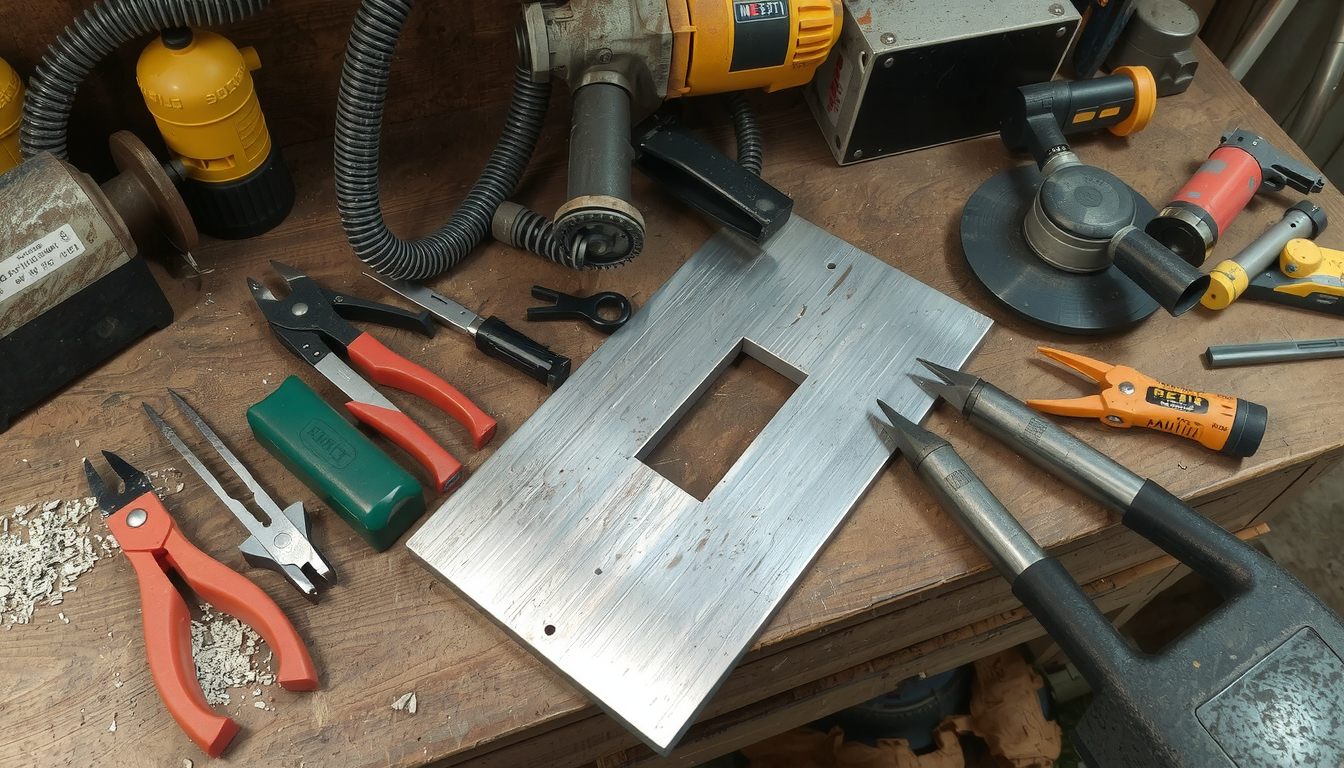
When you face a sheet of metal, you often wonder, “What is the best tool to cut sheet metal?” The answer isn’t just one tool. There are many options, and each works best for different jobs. You might be a DIY fan, a hobbyist, or a professional. Understanding the right tool for your project is key to getting a clean, safe cut. This guide will show you everything you need to know to make the right choice.
Principales conclusiones
- There is no single “best” tool. The right choice depends on how thick the metal is, how complex the cut is, and how big your project is.
- Hand tools like aviation snips work great for beginners. They’re perfect for small, precise cuts on thin metal.
- Power tools like jigsaws, circular saws, and angle grinders give you speed and power. Use them for thicker materials and larger jobs.
- Special tools like nibblers and shears make clean cuts without bending the metal. They’re ideal for auto body work.
- Safety is critical. Always wear gloves and safety glasses. Secure your metal before cutting.
There’s No Single “Best” Tool: How to Choose the Right One for You
Let me make this clear: the “best tool to cut sheet metal” is only the one that suits your job the most. There is no tool that is good for everything.
To find your ideal tool, ask yourself a few simple questions. First off, what type of metal are you cutting? How thick is it? A tool that easily cuts thin aluminum might have a hard time with thick steel. Second, what kind of cut are you looking for? A straight line that is long needs different tools than a tight, complex curve.
Finally, consider your project size and what finish you want. A quick, rough cut for a repair is very different from a smooth, perfect edge for a finished product. Sometimes, tools that require more precision or are not available in DIY hardware stores are better off being done with professionals like Mekalite. This guide will help you navigate these factors and select the right tool to use every time.
A Deep Dive into Sheet Metal Cutting Tools
When it comes to metal cutting tools, the variety is almost endless. They can be as simple as tools that have been utilized for many years to machines that are able to operate through the hardest materials in a flash. Knowing what each tool is particularly good at using is the first step to judging what tool to cut sheet metal for your workshop. We will categorize them according to their mechanism and their purpose.
Hand Tools: For Precision, Control, and Small Jobs
Hand tools are often where people start when learning to work with sheet metal. They cost less, give you great control, and work perfectly for smaller tasks.
Aviation Snips (Tin Snips)
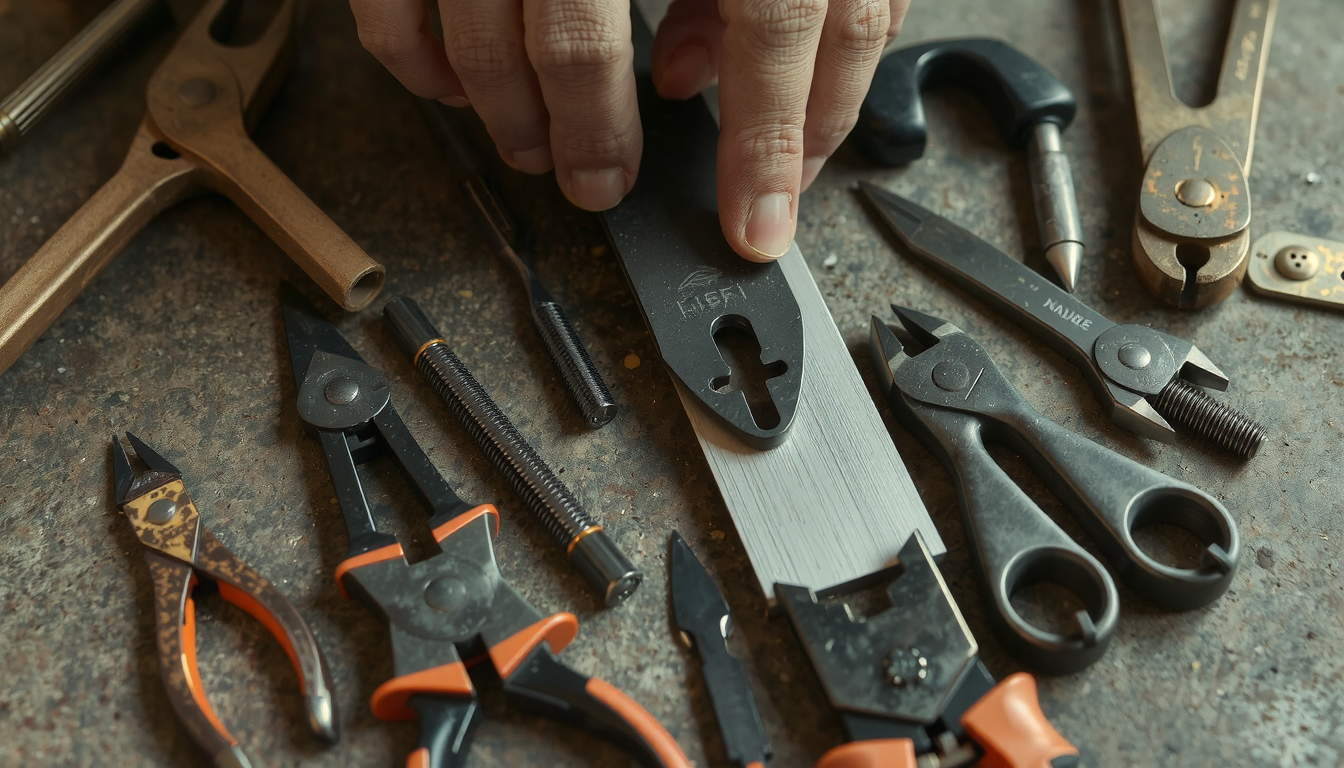
These are heavy-duty scissors for metal. They’re color-coded to make things easy. Red-handled snips cut curves to the left. Green-handled snips cut curves to the right. Yellow-handled snips are for straight cuts.
There’s a big difference between using sharp, quality snips and dull, cheap ones. A good pair gives you a clean, satisfying “snip” as it moves through thin metal. A dull pair will chew and bend the metal. This leaves a jagged edge and frustrates you.
Hand Shears (Bench Shears)
These are larger shears mounted to a workbench. They use a long handle to give you the leverage you need. This helps you cut thicker or longer pieces of sheet metal. They work great for making repeated straight cuts quickly. But they’re not designed for curves.
Hacksaw
The classic hacksaw is a must-have in any workshop. It’s a low-cost tool that can cut through almost anything with the right blade. When cutting sheet metal, choose a blade with high TPI (Teeth Per Inch). You need a firm grip on the metal to stop it from shaking. Shaking can lead to a rough cut.
Power Tools: For Speed, Efficiency, and Thicker Materials
When you need more power or have a bigger job, power tools are the answer. They save time and muscle. But each comes with its own pros and cons. Finding the best power tool to cut sheet metal means matching its strengths to your project’s needs.
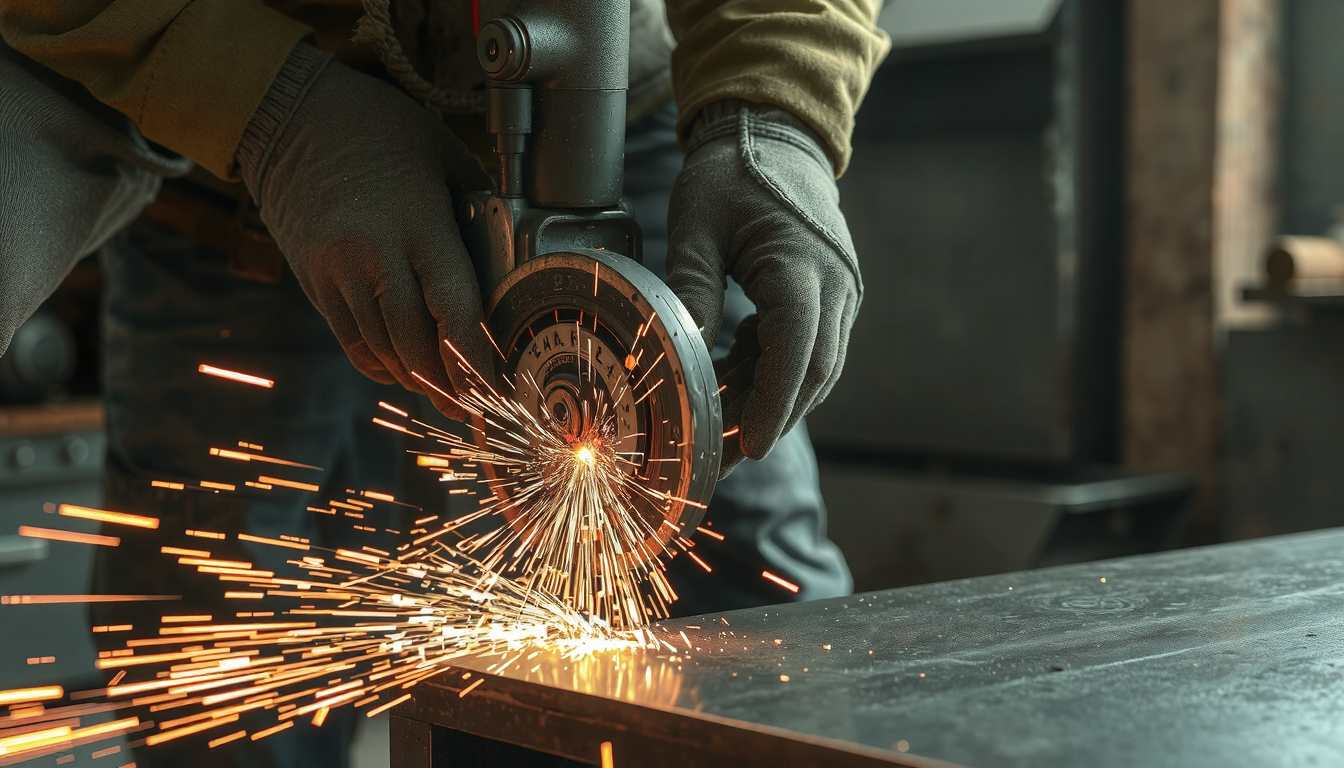
Angle Grinder with Cut-Off Wheel
- Pros: Very fast and powerful. It can cut through thick steel easily. It’s useful for many other jobs besides cutting.
- Cons: It creates a lot of heat, which can warp thin metal. It also throws many sparks, creating a fire risk. The cut edge is usually rough and needs to be cleaned up.
Jigsaw with a Metal-Cutting Blade
- Pros: This is the best power tool for cutting curves and complex shapes. With the right blade, it can make a very clean finish.
- Cons: It’s slower than other power tools for making long, straight cuts. The tool can also vibrate a lot, which can be tiring. For a clean cut in sheet metal, use a fine-toothed blade with 21-24 TPI.
Circular Saw with a Metal-Cutting Blade
- Pros: Unbeatable for making fast, long, and straight cuts in sheet metal.
- Cons: This tool is not for curves. It can be scary to use on metal for the first time. You must use a specific carbide-tipped, non-abrasive blade made for metal. Don’t use a standard wood blade or abrasive wheel.
Power Shears and Nibblers
These are two special tools that are fantastic for sheet metal. Power shears work like electric scissors. They use two blades to make a clean cut with minimal bending. A nibbler works differently. It takes tiny “bites” or punches out of the metal. This process creates no heat or warping. This makes it perfect for auto body work where the panel’s shape must stay the same. The different types of power shears and nibblers are designed for specific tasks, from straight lines to tight curves.
Industrial Methods: For Unmatched Precision and Volume
For large-scale production or when extreme accuracy is needed, professionals use industrial machines. You won’t have these in your garage, but it’s good to know what they are.
Methods like laser, plasma, and waterjet cutting are controlled by computers. They create perfect parts every time. They can cut very complex shapes with very high precision. For materials that are sensitive to heat, Waterjet cutting is a cold-cutting process that uses high-pressure water and abrasive material. It slices through metal without creating any heat-affected zones.
Scenario-Based Guide: What is the Best Tool for YOUR Project?
To make things simple, here is a table that suggests the best tool to cut sheet metal based on most common DIY and workshop projects.
| Project Scenario | Primary Tool | Why It’s the Best Choice | Alternative(s) |
|---|---|---|---|
| Cutting a straight line in thin (22-gauge) steel for a DIY backsplash. | Aviation Snips (Yellow) | Offers excellent control, a clean edge, and is inexpensive. No heat or sparks. | Power Shears, Circular Saw |
| Cutting intricate curves for a metal art project in 18-gauge aluminum. | Jigsaw | Unmatched ability to follow complex lines and tight radii. | Hand Nibbler, Dremel (for small details) |
| Removing a rusted floor pan from a car (demolition cut). | Reciprocating Saw | Fast, aggressive cutting power is perfect for rough cuts and demolition work. | Angle Grinder |
| Making multiple, long, straight cuts in 16-gauge steel for shelving. | Circular Saw (Metal Blade) | Offers the best combination of speed and accuracy for long, straight cuts. | Power Shears, Bench Shear |
| Cutting a hole in HVAC ducting. | Aviation Snips (Red/Green) | Perfect for making the initial plunge cut and then navigating the curve of the duct. | Power Nibbler |
Beyond the Cut: Finishing and Full Fabrication
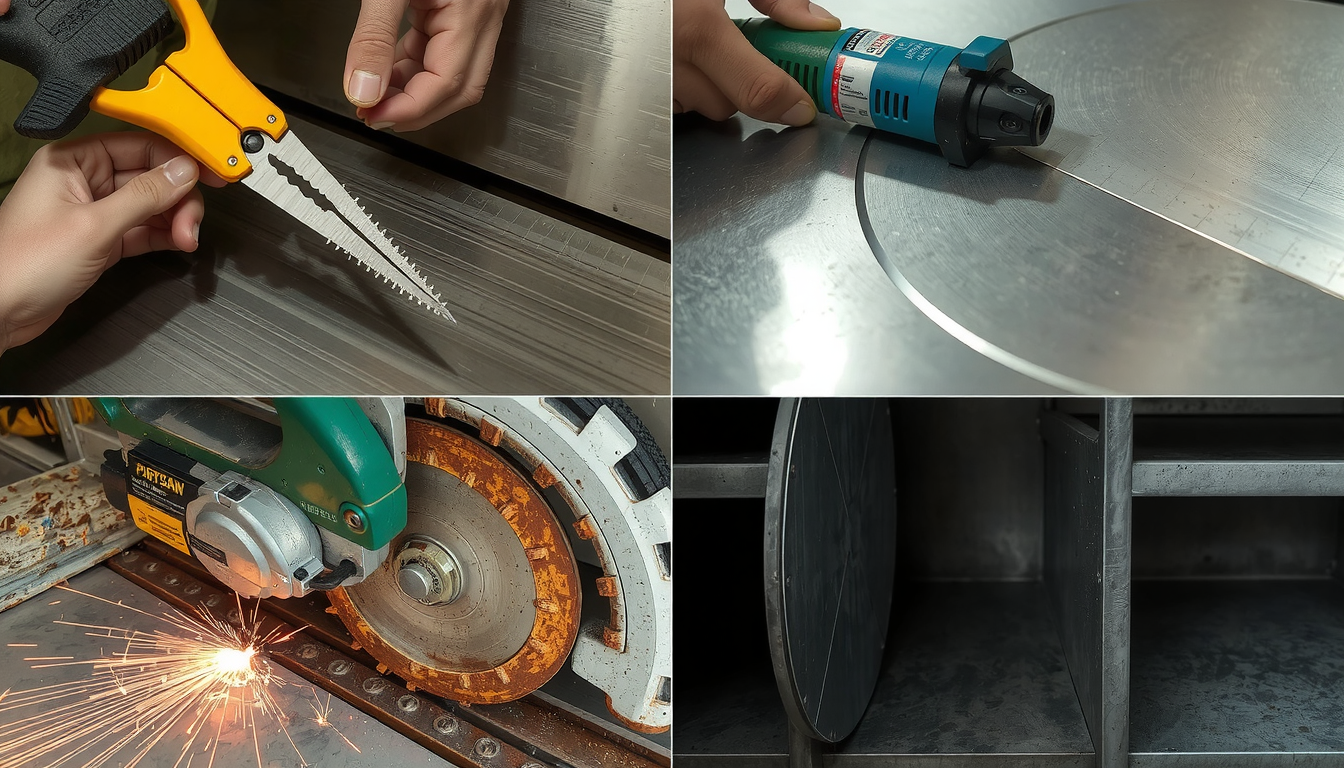
Cutting is just one part of the story. Once your piece is cut, there are a few more steps to turn it into a finished part. Understanding this full process is important for planning your project from start to finish.
Step 1: Deburring and Smoothing the Edge
Almost every tool will leave a sharp edge called a burr. This edge is not just ugly; it’s very sharp and dangerous. The process of removing it is called deburring.
You can do this with simple tools like a hand file or a special deburring tool. For a faster result, a flap disc on an angle grinder can quickly smooth the edge. This step is crucial for both safety and a professional-looking finish.
Step 2: From a Cut Piece to a Finished Part
Often, a cut piece of metal is just the beginning. It may need to be bent, shaped, or joined with other parts. For complex assemblies, the process extends into a complete fabricación de chapa metálica workflow. This includes bending, forming, and welding.
Moreover, many projects need custom-made components with the cut sheets. These parts include threaded bosses, custom pins, or mounting brackets. They are often precision-machined using methods like Servicios de torneado CNC to ensure perfect fit and function. Thinking about these next steps helps you choose a cutting method that makes the whole job easier.
Safety First: Essential Precautions for Cutting Sheet Metal
Working with sheet metal can be dangerous if you don’t take the right precautions. Sharp edges and powerful tools demand respect. Figuring out what is the best tool to cut sheet metal also means understanding how to use it safely.
- Always Wear PPE: This is non-negotiable. Wear thick leather gloves to protect your hands. Wear wrap-around safety glasses to protect your eyes from flying metal chips.
- Secure Your Workpiece: A piece of metal that vibrates or moves while you’re cutting is very dangerous. It can catch the blade and cause the tool to jump toward you. Always use clamps to hold the sheet metal firmly to a stable work surface.
- Mind the Sharp Edges: Freshly cut metal is as sharp as a razor. Handle all pieces with care, even after you think you’ve smoothed the edges.
- Manage Sparks: If you’re using an angle grinder or a saw that creates sparks, check your surroundings. Move any flammable materials like sawdust, oily rags, or gasoline cans far away.
- Read Your Manual: Every power tool is different. Always read and follow the specific safety instructions in your tool’s manual. Following comprehensive safety regulations for cutting metal is not just recommended. It’s essential for preventing injury.
Frequently Asked Questions (FAQ)
What is the easiest tool for a beginner to cut sheet metal?
For thin metal (24-gauge or thinner), a good pair of aviation snips (tin snips) is the easiest and safest tool to start with. They are easy to use, affordable, and offer great control for straight lines and gentle curves.
How can I cut sheet metal without it warping?
The key is to avoid heat. Use “cold cutting” tools like power shears, nibblers, or hand snips. If you must use a tool that generates heat like an angle grinder, work in short bursts. Allow the metal to cool. You can also use a damp cloth to cool the metal between cuts.
Can a Dremel or rotary tool cut sheet metal?
Yes, a Dremel with a reinforced cut-off wheel works well for small, detailed cuts. It also works for cutting in tight spaces on thin sheet metal. It is not practical for long, straight cuts. It wears through discs quickly and can be hard to guide perfectly straight.
What kind of blade is best for cutting sheet metal?
For jigsaws and reciprocating saws, use a blade designed for metal with a high tooth count (TPI). Typically use 21-24 TPI. For circular saws, use a carbide-tipped metal-cutting blade, not an abrasive wheel. This gives cleaner, cooler, and safer cuts.
When should I hire a professional for sheet metal cutting?
Consider a professional service when you need high precision (tight tolerances). Also consider them when working with thick materials (over 1/8 inch or ~3mm). Or when you need complex or repeated intricate designs. For large volumes of parts, professional shops offer speed and consistency that are hard to match with DIY tools.
