



Supplier Comparison
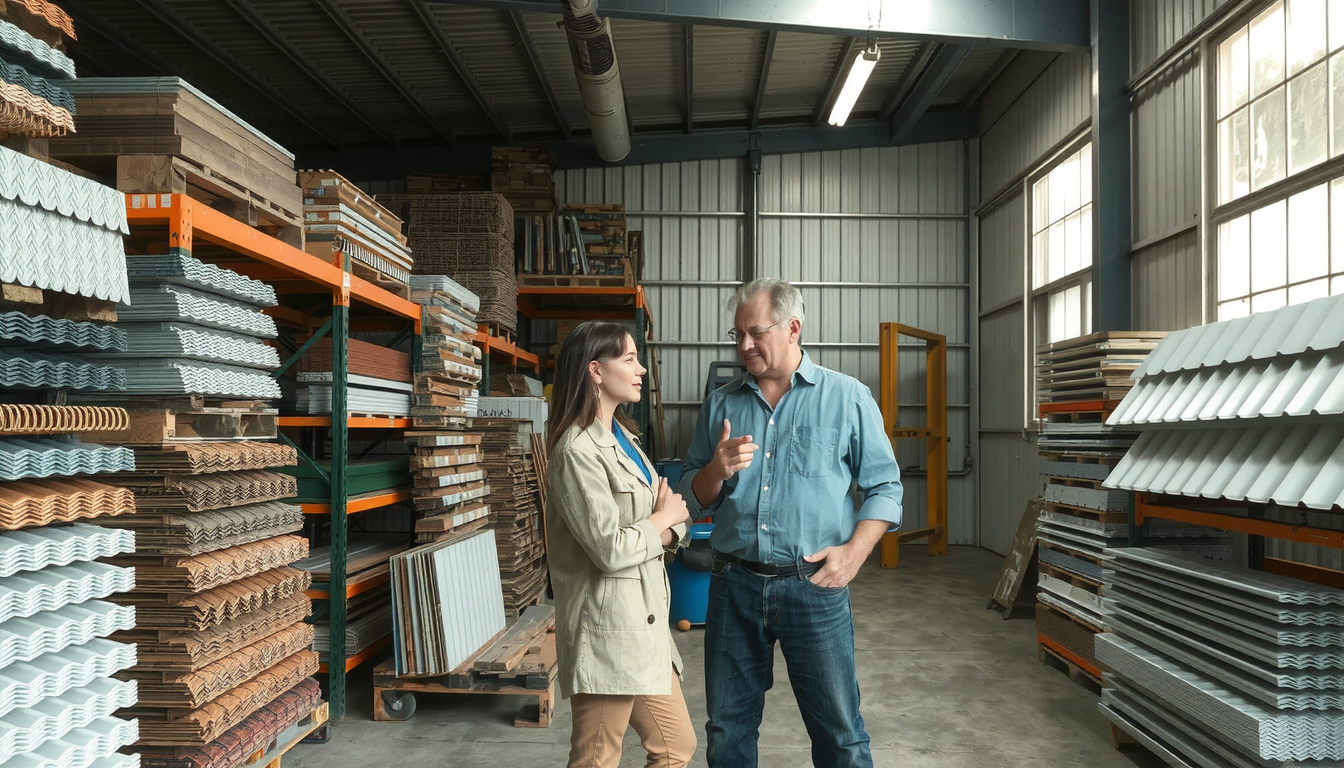
It appears almost inevitable that, at one point or another, you would need to make a choice as to where to buy your sheet metal roofing material. This table aims to give an overview of options and their suitability for your project.
| Supplier Type | Best For… | Typical Price | Selection & Customization | Expertise Provided |
|---|---|---|---|---|
| Big-Box Retailer | DIY repairs, sheds, small projects | $$ | Low | Low |
| Roofing Distributor | Contractors, large residential | $$$ | High | Medium-High |
| Local Fabricator | Custom homes, complex roofs | $$$$ | Highest (Fully Custom) | High |
| Online Supplier | DIYers & contractors who prefer online ordering | $-$$$ | Very High | Varies (Self-Service) |
5 Key Things to Know if Buying Metal Roofing
Knowing where to buy sheet metal roofing is not enough. You also need to know what to buy. Five essential factors ensure you choose the right product which shall be aesthetically-pleasing, perform the job fine and, lastly, be durable for many long years.
Material and Finish (Steel vs. Aluminum vs. Copper)
The choice of metals is definitely the most critical decision you have to make. Every option has its unique perks.

- Galvalume Steel: The most popular choice for residential rooftops. This is simply steel that is alloyed with zinc and aluminum. Galvalume offers excellent strength and resistance to rust. It is a very economical choice with a lifespan of over 40 years.
- Aluminum: This metal does not rust under normal conditions. This is the reason it is recommended for the coastal areas where there is salt in the air. It is lightweight but costs more than steel. However, it is not a bad investment as one is looking at 50 years or more of roof life.
- Copper & Zinc: These are the “lifetime” metals priced at a premium. Over time, these are the ones that age beautifully and can stay over a century. With plants being significantly more expensive, they are generally installed on higher-end custom houses or old buildings.
Panel Profile (Ribbed vs. Standing Seam)
The profile of the panel makes a major contribution to your roof design. The two main types are exposed fastener and standing seam.
- Ribbed Panels: These panels (aka Tuff-Rib or R-Panel) are installed on the roof structure with screws. The screws are visible through the panel. The screw heads are exposed. It is a positive, economical layout. It is trendy for houses, barns, and industrial buildings.
- Standing Seam: The panels have raised seams that interlock. The fasteners are hidden beneath the seams. This creates a clean, sleek, and modern look. This system allows the metal to expand and contract with temperature changes, thus providing superior weather protection.
Gauge (Thickness)
Gauge measures how thick the metal is. A lower gauge number means a thicker, stronger metal, which is somewhat counterintuitive.

In the case of roofing a house, 29 gauge stands as a common economical choice for ribbed panels. On the other hand, 26 gauge and the much thicker 24 gauge are better choices to go with. This is especially the case where there are snowy conditions and high winds. Typically, the standing seam panels come from thicker 24 or 26 gauge metal.
Paint System and Warranty
The essential nature of a coating on a metal roof is that it does not just add color. Instead, the paint provides protection to metal from external depletion. So it’s the paint quality that matters the most when it comes to the warranty period.
There are basically two types of paint. SMP (Silicone-Modified Polyester) is a standard grade paint that retains its color decently while rolling on corrosion. PVDF (often identified with Kynar 500®) is a finish of the highest grade paint offering; it is the most resistant to both fading and chalking. With longer warranties of 30-40 years, it is definitely a cost-effective solution.
Necessary Trim and Accessories
One of the common mistakes made is that builders forget that the panels are just a part of a whole system. To carry out an adequate installation of the roof, they also should buy other components.

This may be the ridge as a cap for the peak of the roof. Gable trim is the pre-painted metal that is used at the angled edges. Eave trim is attached to the bottom edge. Valley flashing is the metal used where two roofs meet. Fasteners (screws) and good underlayment are also part of the whole system. A good supplier is the one who creates an accurate materials list.
How to Vet Your Supplier: Five Steps
Once the vendor is selected, the next thing to do is to carry out a background check as to the reliability of the vendor. Providing a simple checklist would be the best help to you in your quest.
-
Step 1: Check Online Reviews and Contractor Feedback: A quick search on Google, Yelp and other review sites for any feedback is advisable. Something else that may be of great help is to discuss with the local contractors. The supplier with a highly positive reputation among pros is usually a safe bet.
-
Step 2: Request Physical Color Chips and Panel Samples: Never opt for a color based on your computer screen. The monitors vary, and the actual color can look completely different in person. Ask for a physical sample of the panel to check its weight and evaluate the finish quality.
-
Step 3: Get a Detailed, Itemized Quote: A quote should be more than just a sum of one number. It should include the price and quantity for each item of the order. This should include the panels, the different sorts of trim, underlayment, fasteners, and delivery of items. By preventing such surprises, everyone can be happy afterwards.
-
Step 4: Clarify Lead Times and Delivery Logistics: Find out how long delivery and production will take. You can also ask about the logistics of shipping construction materials. This is important in the deal as one will be ready to know what he/ she should expect at a given time.
