



Brass is an amazing material. Its beauty, durability, and usability in both art and industry demonstrate its versatility. The best part is, using brass sheet metal is simple with the right tools and skills. You don’t require a lot of high-tech equipment to get started.
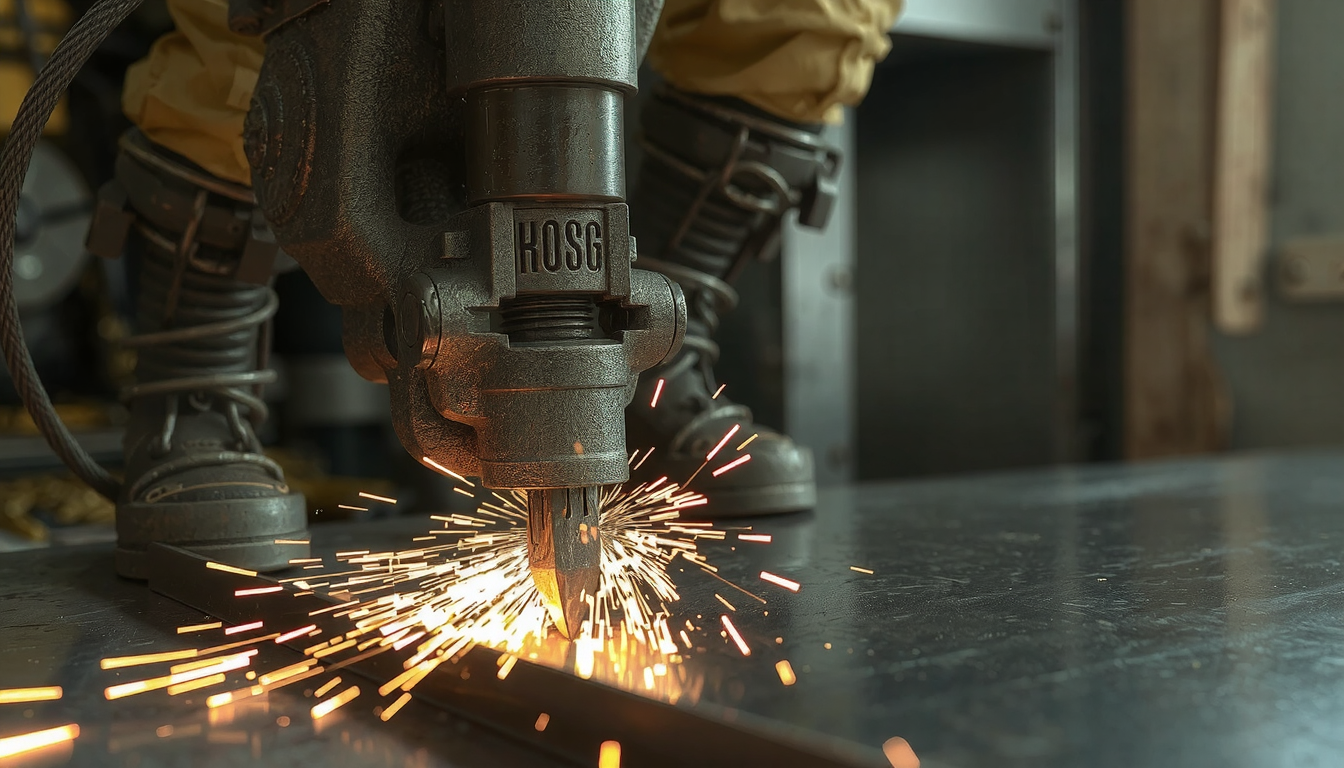
Your cutting approach is determined by your project requirements. The type of brass and the cut to be made are significant factors. A fragile sheet will require a different device than plywood with intricate patterns. All techniques are included in this guide. We begin with simple tools that a hobbyist would use and end with machines that a pro operates. Cutting brass will be no headache with our help.
The First Step: Important Preparatory and Safety Measures
Preparation is key. With proper preparation, you will be safe. It will also help you avoid mistakes and waste. A little time spent in preparation will help you cut the brass sheet metal more smoothly and be more successful in doing so.
Get Dressed: Mandatory Safety Gear
Safety should always be a priority. Metal working tends to involve sharp edges, and sometimes, parts can go flying away. Always wear the required safety gear.
- Safety Goggles: These are the most important piece of protection. Goggles will cover your eyes against small metal particles that may fly off during cutting.
- Cut-Resistant Gloves: Brass edges are often very sharp after the cut. Protective gloves keep your hands safe from cuts.
- Long Sleeves: A long-sleeve shirt will guard your arms against hot or sharp pieces flying around.
- Dust Mask: Power tools can create fine metal chips, and a mask will keep you from inhaling them.
Get Acquainted with Brass
There are different brass sheets in the market. The thickness, as well as the type of brass, will determine the cutting methods. Thickness is usually indicated in gauge measurements; the size of a piece is inversely proportional to the gauge number. So, a smaller gauge corresponds to a thicker sheet and vice versa. Gauge measurements may also be expressed in inches or millimeters.
For example, a 22 gauge (0.025″ or 0.64mm) brass sheet is thin enough to work with in jewelry and models. While a thicker 1/8″ (about 3mm) brass sheet is used to achieve strength. The type of brass also matters. C260 “Cartridge Brass” is a common one. Softer alloys, which are mainly copper, are easier to cut by hand.
Setting Up Your Workspace and Sheet
Being organized and maintaining cleanliness are part of the major health attitudes that one can adopt in life. First, you have to stabilize your brass sheet. Use clamps to hold it tightly to a workbench. A loose-cutting sheet is a potential hazard and it will lead to a poor-cutting result.
Next, mark your cut line clearly. A fine-point permanent marker works well. If you want more exactness, use a metal scribe. A scribe creates a scratch in the brass sheet which is perfectly aligned for your tool to follow.
Decision Making: The Practical Decision Guide for Methods
Depending on the variety of available tools, how do you choose the one that fits? The best way to learn how to cut brass sheet metal is to match the tool to the job. This decision guide removes all guessing and makes it easier to find a tool according to the brass sheet thickness and specific cut type.

How to Decide on the Right Brass-Cutting Tool
This table will help you compare the most popular methods. It will lead you to make a wise decision and spare you from frustration.
| Инструмент | Best For Sheet Thickness | Cut Type | Плюсы | Cons |
|---|---|---|---|---|
| Tin Snips | Very Thin (<0.5mm / 24 ga) | Straight & Gentle Curves | Cheap, fast, no power needed | Can bend edges, not for tight curves |
| Jeweler’s Saw | Thin to Medium (<1.5mm / 16 ga) | Intricate & Tight Curves | Very precise, clean cuts | Slow, blades break easily, takes practice |
| Hacksaw | Medium to Thick (>1mm / 18 ga) | Straight Cuts | Cheap, cuts thick material | Rough edge, not for curves |
| Jigsaw | Medium to Thick (>0.8mm / 20 ga) | Straight & Wide Curves | Fast, powerful, versatile | Loud, can leave burrs, needs right blade |
| Dremel | Thin to Medium | Detailed cutouts, grinding | Versatile, good for odd shapes | Uses up cutting discs quickly, can overheat |
| Shear/Waterjet | All Thicknesses | All Shapes (Professional) | Perfect precision, no heat/warping | Needs professional service |
How to Cut Brass Sheet Metal by Hand: DIY & Hobbyist Methods
Hand tools are sufficient for many projects. They are cheaper, quieter, and let you control the whole process. They are ideal for DIY lovers, model makers, and jewelers, who want to achieve fine results without huge budget investments on power tools.
Method 1: Using Tin Snips for Thin Sheets
Tin snips (aviation shears) will feel like heavy-duty scissors for you. After all, you will cut thin brass metal with them. They are excellent for straight lines and wide curves. It is good to know the colors that handle snips in. Yellow is for the straight cuts. Red is left-hand cut curves while green is right-hand cut curves.
This is the easy 5-step process of using snips to trim brass:
- Don on your gloves and safety goggles.
- Press the sheet firmly with one hand or clamp it down.
- Open the cut with a small confident snip at the edge.
- For the cleanest line, try to make long, smooth cuts. Don’t close the blades all the way at the end of each cut. This helps to minimize any little nicks on the edge.
- While cutting, bend the waste metal side upwards and away. This way, it will not be caught in the snips’ jaws.
Method 2: Using a Jeweler’s Saw for Intricate Designs
When intricate shapes, tight curves, or patterns are needed, a jeweler’s saw is the perfect tool. Patience and practice are required; however, the precision comes unfathomable. A score-and-snap method for perfectly thin, straight cuts is discussed at various hobbyist forums, but none can beat the jeweler’s saw for curves.
Get a clean & straight cut using these steps:
- Clamp a bench pin on your table. This will be a little woodblock which is V-notched to support the sheet while you saw.
- Insert the saw blade into the frame. The teeth must point down and away from the handle. Ensure that the blade is as tight as a guitar string.
- Put a bit of beeswax or blade lubricant on the blade. This will help it to glide smooth and also keep it from getting stuck.
- Hold the saw frame straight. Make a gentle, steady up-and-down movement. Leverage the weight of the saw and the blade’s teeth to do the cutting. Do not push forward.
- To make a sharp turn, keep sawing up and down in the same spot and slowly turn the brass sheet.
Method 3: Using a Hacksaw for Thicker Sheets
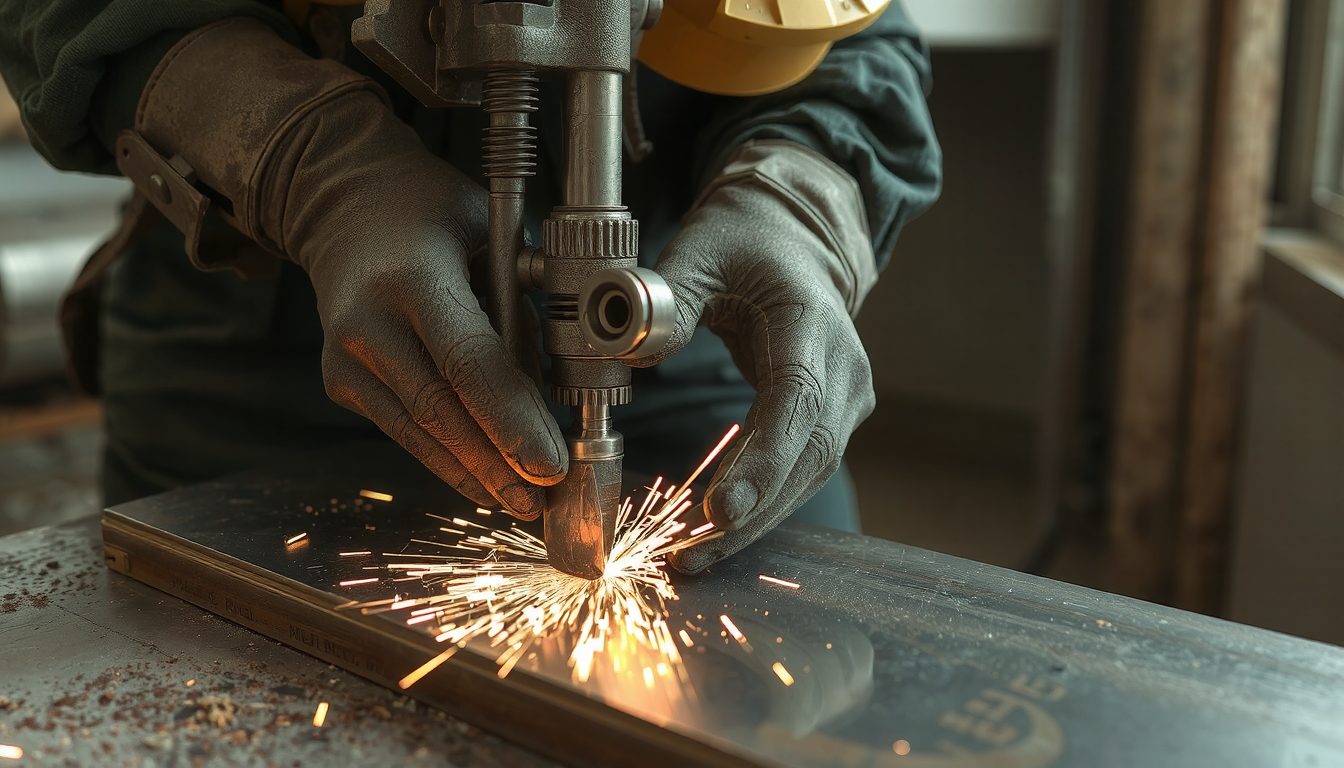
If you are dealing with thicker brass sheets or plates, a hacksaw is an excellent, low-cost option. The tool is mainly suitable for the straight cuts. The key is to have the right blade and a proper technique for a clean outcome.
Here is how to cut a brass sheet with a hacksaw:
1. Select a fine-toothed blade. For brass, a blade with 24 to 32 TPI (Teeth Per Inch) is what works best. More teeth mean a smoother cut.
2. In the vise, secure the brass sheet very tightly. To reduce vibration, you want as little of the sheet sticking out as possible.
3. A tip for cleaner cuts is to sandwich the brass sheet between two pieces of scrap wood. Clamp all three of them together. This way, it will support the metal and help to prevent bending and loud noise.
4. Make your cut with a small notch at a low angle. This way, the blade will have guidance.
5. Apply long, steady strokes. On the forward stroke, apply pressure only lightly. During the backstroke, lift the blade slightly.
How to Cut Brass Sheet with Power Tools
Whenever you need clean and precise cuts or working on thicker materials, power tools become tremendously useful. The right blade and the right tension of speed are the secret to power tool applications on brass sheet metal. Safety is much harsher in this case due to the velocity and power involved.
Using a Jigsaw or Scroll Saw
The jigsaw you select when cutting medium to thick brass with straight lines and wide curves is perfect. A scroll saw for detailed work is electric, but it is like a powered jeweler’s saw. For either tool, you must have a cutting blade dedicated to metal working.
Look for a bi-metal blade that is fine-toothed. Choose a slower setting on your saw. High speed can overheat things and make the brass too hot. You have to make sure the brass is clamped down tight. Vibration is your enemy; it can break the blade and ruin your cut.
Using a Dremel or Rotary Tool
A Dremel with a reinforced cut-off wheel is an extremely useful tool. This is perfect for small cuts that require freehand operation. Freeing up spaces on the sheet by cutting shapes in the middle instead of starting from an edge is also possible.
Our experience suggests that the trick is to keep high speed low pressure. Do not press hard; this can break the cutting disc. In this way, a lot of sparks and dust will be produced so it is important to put your goggles and mask on. This technique is one of the more advanced ways of how to cut brass sheet.
Avoiding Common Mistakes & Troubleshooting
Even with the right tools, you might run into problems. Knowing how to fix them is part of becoming a pro. Here are solutions to some of the most common issues people face when learning how to cut brass sheet metal.
Problem: The Cut Edge is Jagged and Full of Burrs
A rough, jagged edge, also called a burr, is a common problem. The major source of this is having a blade with too few teeth (low TPI). It can also be if you are cutting fast or if the brass sheet is not stabilized properly.
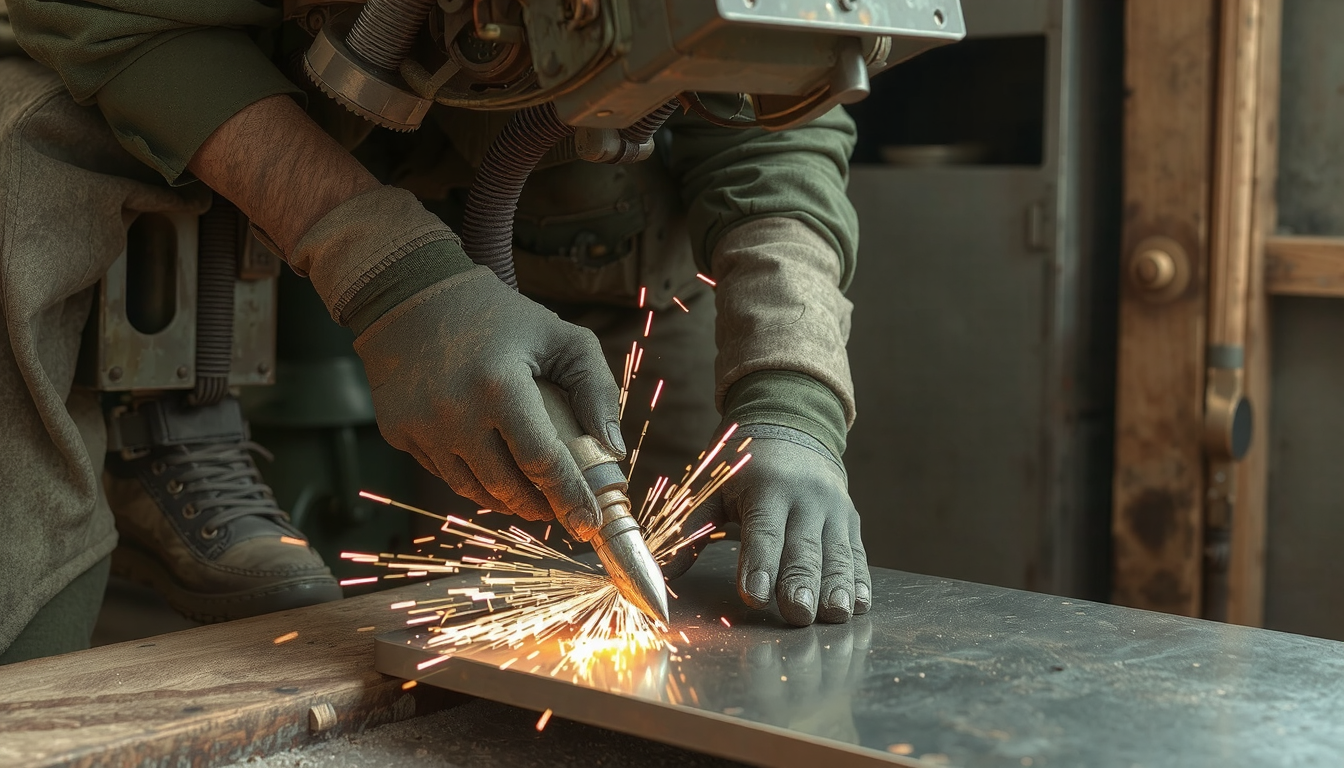
Solution: Opt for a blade with a higher tooth-per-inch count (higher TPI). Slow down your cutting speed, whether using a hand saw or power tool. Most importantly, make sure to clamp your workpiece firmly on both sides of the cut line.
Problem: The Thin Sheet is Bending or Warping
Thin brass sheets are often subject to bending and warping when they are cut. This frequently happens when using tin snips or an aggressive power saw blade. The soft metal is deformed by tool force.
Solution: When using snips, take smaller bites as opposed to trying to cut too much at once. When using a saw, use the “sandwich” method. Place the thin brass sheet between two pieces of scrap plywood or hardboard and cut through all three layers. This supports the brass and prevents it from bending.
Problem: My Jeweler’s Saw Blades Keep Breaking
A common problem for beginners is this. Jeweler’s saw blades are thin and very fragile. They are easily broke if used wrong.
Solution: First, do check your blade tension. It should be tight enough to make a ping noise when you pluck it. Second, always use lubricant like beeswax. Third, focus on having a perfectly straight up and down sawing motion. Don’t push the saw forward or twist it; let the blade do the cutting for you.
Beyond the Cut: Finishing for a Professional Look
You have only done half the job with the cut. The final finishing steps are what distinct a homemade project from a hand-finished one. A smooth edge is more than a mere cosmetic advantage; it is also a functional one.
Step 1: Deburring
After every cut, a small and sharp ridge called a burr will be left on the edge of the brass. You have to take that off. A specific tool can be used to get rid of the burr. This tool has a swivel blade that neatly removes the burr. In the same manner, you can use a simple flat file but with an angle of 45° to the edge.
Step 2: Filing & Sanding
Using files remains the next step after burrs have been removed. A set of needle files is just right as they can get into difficult spaces and curves. A bigger flat file is meant for straight edges and bringing them to perfection.
Sanding, after filing, makes the edges smooth. Start the process with medium-grit sandpaper of 220-grit. Next, move to finer grit, like 400, and then to 600 for a silky-smooth edge.
FAQ: Your Questions on Cutting Brass Sheet, Answered
Here are quick answers to some of the most common questions we hear about how to cut brass sheet metal.
Can I use a regular pair of scissors to cut a brass sheet?
Only if the brass sheet is extremely thin, like a foil (typically under 36 gauge / 0.127mm). For anything thicker, you will damage the scissors and get a poor-quality cut. It is always better to use tools designed for metal, like tin snips.
What is the best blade for cutting brass sheet with a jigsaw?
The best choice is a fine-tooth blade specifically designed for cutting non-ferrous metals. Look for bimetal blades with 21-24 TPI (Teeth Per Inch). This high tooth count ensures a smoother cut and reduces chipping and grabbing on the relatively soft brass.
Do I need to use a lubricant when cutting brass?
While not always strictly necessary for hand tools on thin sheets, using a lubricant like cutting oil or even beeswax is highly recommended. It reduces friction, keeps the blade cool, extends tool life, and results in a cleaner, smoother cut, especially when using power saws or a jeweler’s saw.
How do I cut a circle or round shape out of a brass sheet?
For small, precise circles, a jeweler’s saw is the best hand tool. For larger circles, you can use a jigsaw or a scroll saw. Another method is to use a hole saw attachment on a drill press for standard-sized holes. For the highest precision, professional waterjet or laser cutting is ideal.
How do I get a clean, straight cut on a brass sheet?
For a perfectly straight cut, clamp a steel straightedge along your marked line and use it as a guide. You can either score deeply along the guide with a carbide scribe and snap the sheet, or run a power tool (like a jigsaw or circular saw with a metal blade) along the guide. Securing the sheet and the guide is the most critical step.
You now have a complete map for how to cut brass sheet metal. Remember that the best method always depends on the sheet’s thickness and the shape you need to cut. With the right preparation, tools, and technique, you can tackle any brass cutting project with confidence.
