



Installing a metal roof is a big project. But you can do it yourself. A new metal roof adds great value to your home. It also lasts a very long time. This guide will show you how to install metal roof sheets from start to finish. We will cover planning, safety, and step-by-step instructions.

We will also talk about common mistakes to avoid. With good planning and careful work, you can get great results. For quality materials, you can learn more about metal parts from resources like Mekalite. This article gives you all the details you need for a successful job.
Is a DIY Metal Roof Installation Right for You? (A Quick Reality Check)
Before you start, think about if this project is right for you. You need good building skills. This is not a project for complete beginners.
This is not a weekend job. It takes time and hard work. You will be working high up, which can be dangerous. Safety must always come first.
Sometimes, it is better to call a professional. If your roof is very steep or has many angles, hire a pro. Also, if you do not have time, tools, or help, hiring an expert is the safest choice.
Before You Begin: The Critical Planning Phase
Good planning is the most important part of learning how to install metal roof sheets. It prevents costly mistakes. It also makes the job go smoothly. This phase sets you up for success before you even pick up a tool.
Step 1: Roof Assessment and Accurate Measurements
First, check your current roof deck. The deck is the flat wood surface under your old roofing. Look for any soft spots, rot, or damage. Fix or replace any problems. A solid, flat deck is needed for a good metal roof.
Next, measure your roof carefully. Measure each flat section. These are called planes. Measure the length of hips and valleys too. Hips are where two roof planes meet at an outside corner. Valleys are where they meet at an inside corner. Also, measure the ridge, which is the peak of the roof. Add these up to find the total square footage. This helps you order the right amount of material.
Step 2: Choosing the Right Metal Roof Sheets & Profile
There are several types of metal roof panels. Each has its own look, cost, and way to install it. The right choice depends on your budget, skill level, and building style.
Here is a simple table to help you decide:
| Profile Type | Best For | Installation Difficulty | Cost |
|---|---|---|---|
| Corrugated Panel | Sheds, barns, simple roofs | Beginner-friendly | $ |
| R-Panel / PBR-Panel | Homes, commercial buildings | Intermediate | $$ |
| Standing Seam | High-end homes, low-slope | Advanced / Pro | $$$$ |
For most DIY projects, Corrugated or R-Panel systems are good choices. They offer durability, good looks, and easy installation.
Step 3: Understanding Local Building Codes and Permits
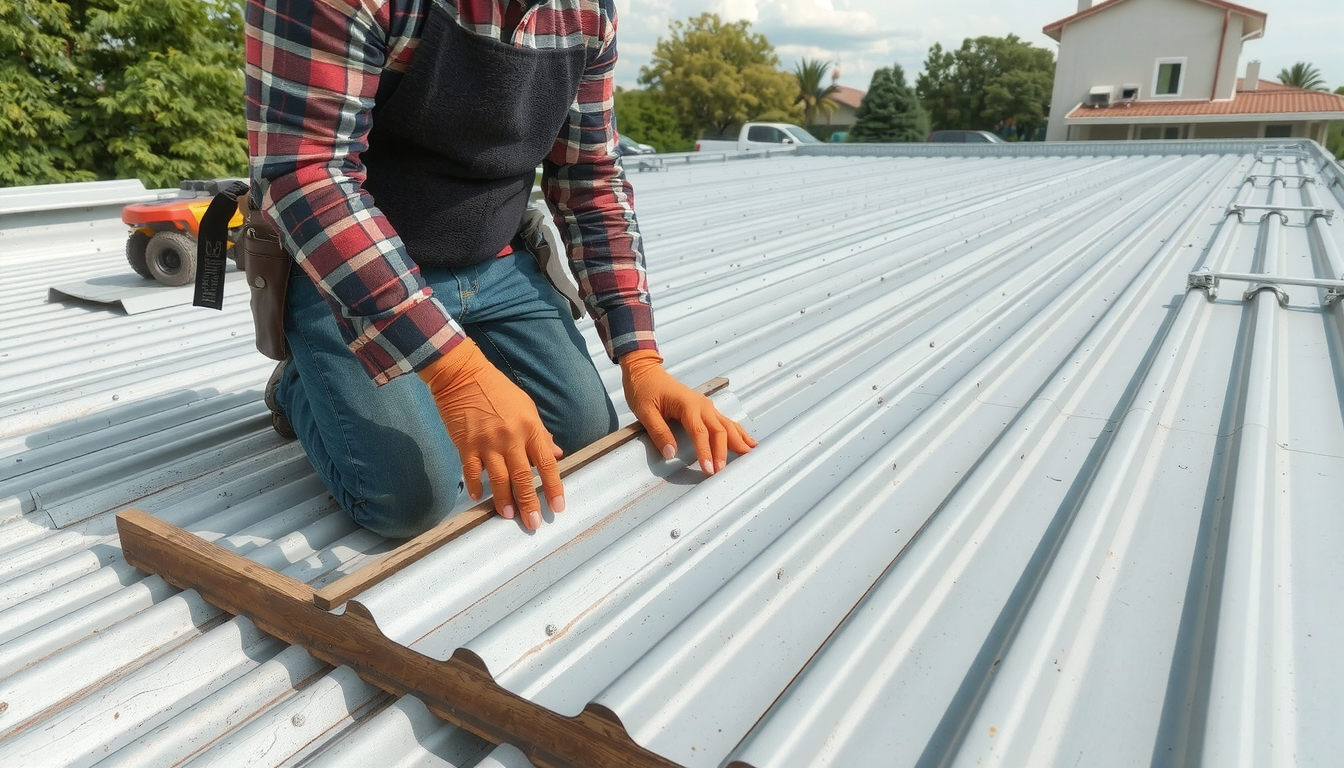
Never skip this step. Before you buy materials, contact your local building department. Ask them about the rules for metal roofing in your area.
You need to ask about specific requirements. Key questions include what type of underlayment is needed. Also ask what kind of screws are allowed. Find out if you can install the new metal roof over your old shingles. This is called an overlay. Following local codes is required by law. It also makes sure your roof is safe.
Essential Tools and Materials Checklist
Having everything you need before you start is key. A trip to the store mid-project wastes time. It can also be dangerous if the roof is left open. Use this checklist to get organized.
Safety Gear (Non-Negotiable)
- Fall protection harness, ropes, and a roof anchor point
- Hard hat
- Work boots with non-slip soles
- Safety glasses
- Heavy-duty work gloves
Tools for the Job
- Cordless drill with an adjustable clutch
- Aviation snips (left, right, and straight cut)
- Electric metal shears for cleaner, faster cuts
- Chalk line
- Tape measure
- Speed square
- Caulk gun for sealant
Materials for a Watertight Installation
- Metal roof sheets
- Matching screws with rubber washers
- High-temperature synthetic underlayment
- Drip edge (also called eave trim)
- Ridge caps
- Gable trim (for the sloped sides of the roof)
- Valley and wall flashing
- Butyl tape and high-grade roof sealant
The Step-by-Step Guide to Installing Metal Roof Sheets
This is where planning meets action. Follow these steps carefully for a secure and waterproof roof. Work slowly and never rush. This is especially important when working at heights.
Step 1: Prepare the Roof Deck & Install Underlayment
Decide if you will tear off the old shingles or install over them. A clean deck is best. But an overlay can work if the old roof is flat and codes allow it.
Next, install the synthetic underlayment. Start at the bottom edge of the roof. This is called the eave. Roll it out sideways. Overlap each new row over the one below it by 4 to 6 inches. This makes sure water runs down and off the roof.
Now, install the eave trim or drip edge. This trim goes over the underlayment along the eaves. On the sloped sides, the trim goes under the underlayment. This layering directs water away from the roof edge.
Step 2: Square the Roof and Snap a Reference Line
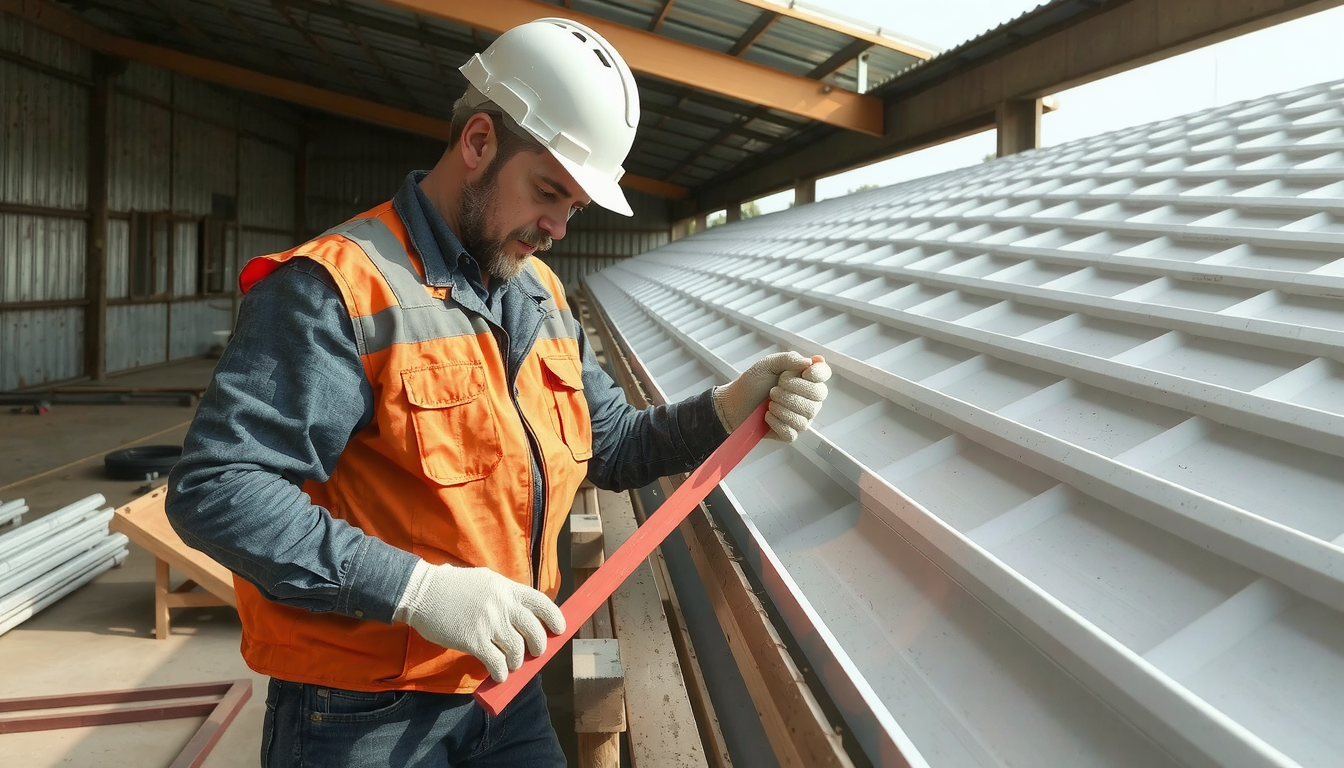
This step is critical for a straight roof. If the first panel is crooked, every other panel will be too. You need to create a perfectly square reference line to guide your first sheet.
Use the 3-4-5 triangle method. Measure 3 feet up one side of the roof from a corner. Then measure 4 feet along the eave from that same corner. The distance between those two points should be exactly 5 feet. Adjust your 4-foot mark until the diagonal line is 5 feet. Then snap a chalk line from the corner through that mark. This line is now perfectly square to the eave.
Step 3: Laying and Fastening the First Metal Sheet
Position the first sheet with a 1 to 2-inch overhang past the eave trim. This helps water drip clear of the board below. Line up the side of the panel perfectly with the chalk line you snapped.
Before you drive any screws, double-check the alignment. Once it is perfect, drive your first screw to hold it in place. The right screw placement is key to maximise water tightness. For R-panels, screws go in the flat area next to the major ribs. For corrugated panels, they often go through the high point of the wave.
Step 4: Overlapping and Securing Subsequent Sheets
Take your next sheet and overlap it onto the first one. Most panels are made to lock or nest together. Make sure the overlap is snug and secure.
Fasten the second panel just like the first. As you continue to install metal roof sheets, check for squareness every 3 or 4 panels. You can do this by measuring from the top of the panels down to the eave at both ends. Make sure they are parallel.
Follow a steady fastening pattern. A good rule is to place screws every 24 inches along the length of the panel. Line them up with the roof trusses underneath. Always follow these step-by-step metal roof installation guidelines provided by the maker for a secure fit.
Step 5: Cutting Sheets for Obstacles and Valleys
You will need to cut panels to fit around things like vent pipes or chimneys. You may also need to cut them at the end of a run. Measure twice and cut once. Use aviation snips for small cuts. Use electric shears for long, straight cuts.
Clean cuts are a sign of quality work. Professional shops get perfect fits through expert sheet metal fabrication. You should aim for the same level of care. A clean, tight cut is easier to seal. It also makes the roof more waterproof.
Step 6: Installing Flashing, Ridge Caps, and Trim
Flashing is the material used to seal joints and prevent leaks. Install valley flashing first. Then lay your roof panels over it. Next, install the gable trim along the sloped edges of the roof.
Finally, install the ridge cap at the peak. Use foam closure strips under the ridge cap. These fill the gaps created by the panel ribs. Apply a bead of butyl tape or sealant on top of the foam strips. Do this before screwing the ridge cap down. For very complex custom fittings, professional shops sometimes use advanced tools like CNC lathe services to create perfect parts. This shows how important precision is.
Troubleshooting Common Installation Mistakes
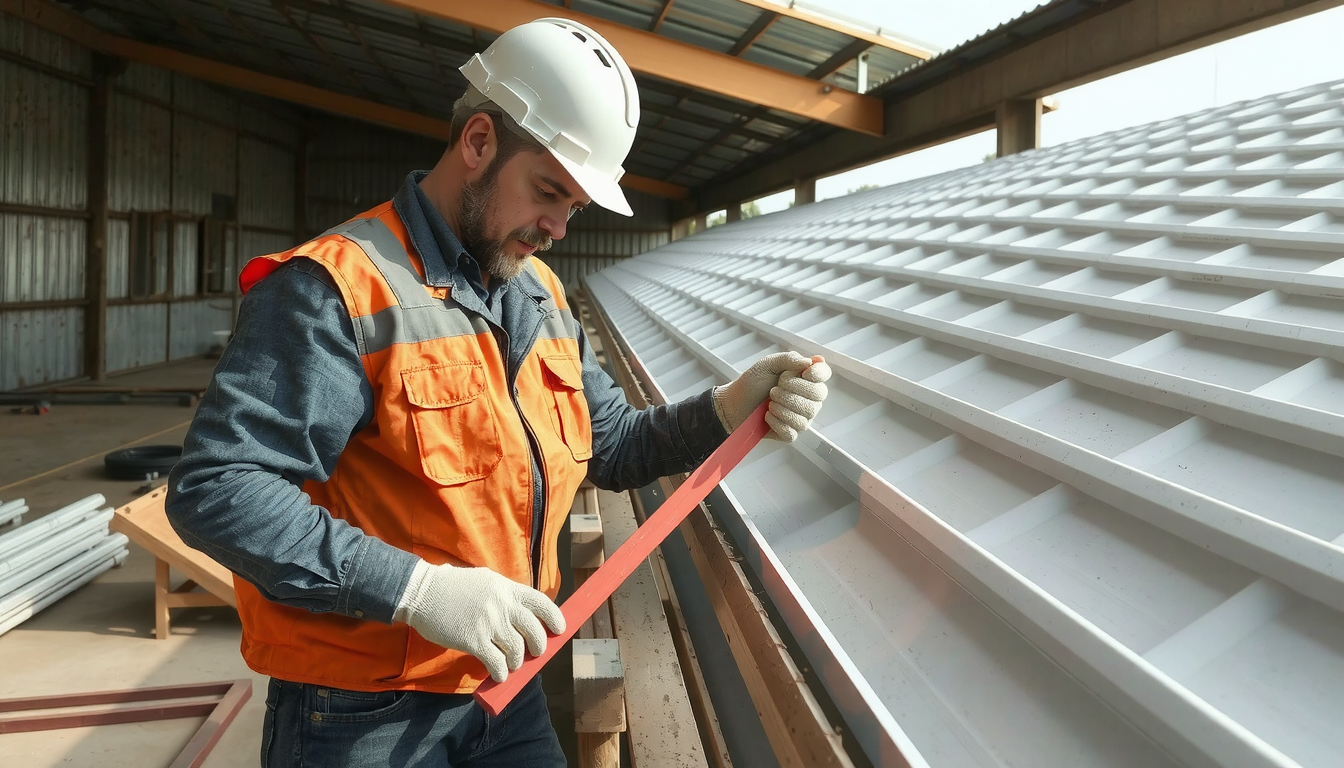
Even with careful work, problems can happen. Knowing how to fix common mistakes when you install metal roof sheets is what separates a DIY job from a professional one.
Problem: Over-tightened Screws (Dimpling) or Under-tightened Screws (Loose Seal)
A common error is driving screws too tight or too loose. Over-tightening crushes the rubber washer. It can also dimple the panel, creating a spot for water to pool. Under-tightening leaves a gap where water can get under the washer.
The solution is to use a drill with an adjustable clutch. Set the clutch so the screw stops turning right when the rubber washer is pressed flat against the panel. The washer should be snug, not squashed out at the sides.
Problem: Panel Misalignment (“Creep”)
As you lay panels across the roof, they can slowly start to run out of square. This is called “creep.” It can leave you with a crooked, wedge-shaped gap at the end of the roof.
To fix this, check for square every few panels. If you see a panel starting to creep, you can make a small adjustment. Before fastening the top, slightly pull or push the top of the panel. This brings it back into alignment with your reference marks.
Problem: Leaks at Overlaps or Flashing
Leaks are the biggest fear in any roofing project. I once spent hours tracing a tiny leak on a job. It turned out to be a small, 1-inch gap in the butyl tape under a piece of wall flashing. It’s a hard lesson that proves you must be very careful with sealing.
The solution is to use high-quality butyl tape and sealant. Use it at all panel overlaps, flashing, and around any holes. Do not try to save money on sealant. A good seal is the best defense against leaks. Many issues happen when rushing. So always take extra care on windy days to prevent panel damage and ensure a proper, safe installation.
Post-Installation: Final Inspection and Maintenance
Once the last screw is in, your job is almost done. A final inspection makes sure your hard work will last for decades. Taking a few minutes to check your work is a vital last step in how to install metal roof sheets.
Final Inspection Checklist
- Walk the roof and check that all screws are properly tightened.
- Carefully sweep off all metal shavings. These tiny bits of metal will rust and stain your new roof if left behind.
- Check all sealant beads around flashing and the ridge cap. Make sure there are no gaps.
- Remove the protective plastic film from all panels and trim.
Long-Term Care for Your New Metal Roof
Your new metal roof needs very little care. Once a year, look at the roof from the ground with binoculars. Look for any loose screws or debris like branches.
If the roof needs cleaning, use a gentle soap and a soft brush. Rinse it with a regular garden hose. Avoid using a high-pressure washer. It can damage the paint finish and force water into seams.
Frequently Asked Questions (FAQ)
1. Can I install a metal roof over existing shingles?
It often depends on local building codes and the condition of your current roof. In many places, it is allowed. It can save you the cost and mess of a tear-off. However, you must first install a smooth underlayment or wooden strips to create a flat surface. A clean, flat roof deck is always the best foundation for a new metal roof.
2. What is the best way to cut metal roofing sheets?
To get the best results and protect the panel’s coating, use electric metal shears or high-quality aviation snips. You should avoid using tools with grinding blades, like an angle grinder. The heat and sparks from a grinder can burn off the protective layers. This will lead to rust.
3. How far apart should the screws be on a metal roof?
This depends on the specific panel profile and the maker’s rules. A general guideline for R-panel or similar profiles is to place screws in the flat section next to each major rib. These screw lines should be spaced about 24 inches apart. They should hit the supports underneath. Always read the installation guide for your product.
4. What is the minimum slope for a metal roof?
For panels with exposed screws like corrugated or R-panel, the standard minimum slope is 3:12. This means the roof rises 3 inches for every 12 inches of horizontal distance. Standing seam panels can often be used on lower slopes, sometimes as low as 1:12. But they need special installation methods and are best left to professionals.
5. How long does it take to learn how to install metal roof sheets and complete a project?
For a simple roof of about 1,500 square feet, a skilled DIYer with a helper should plan for 3 to 5 full days. This time includes preparing the deck, installing the panels, and finishing the trim. A complex roof with multiple hips, valleys, or dormers will take much longer.
