

Metal sheet cutting sounds tough. However, it is a skill that can be mastered with appropriate resources and helpful hints. The steps below consist of recommendations on how to do it in a secure way and thus achieve wonderful effects.
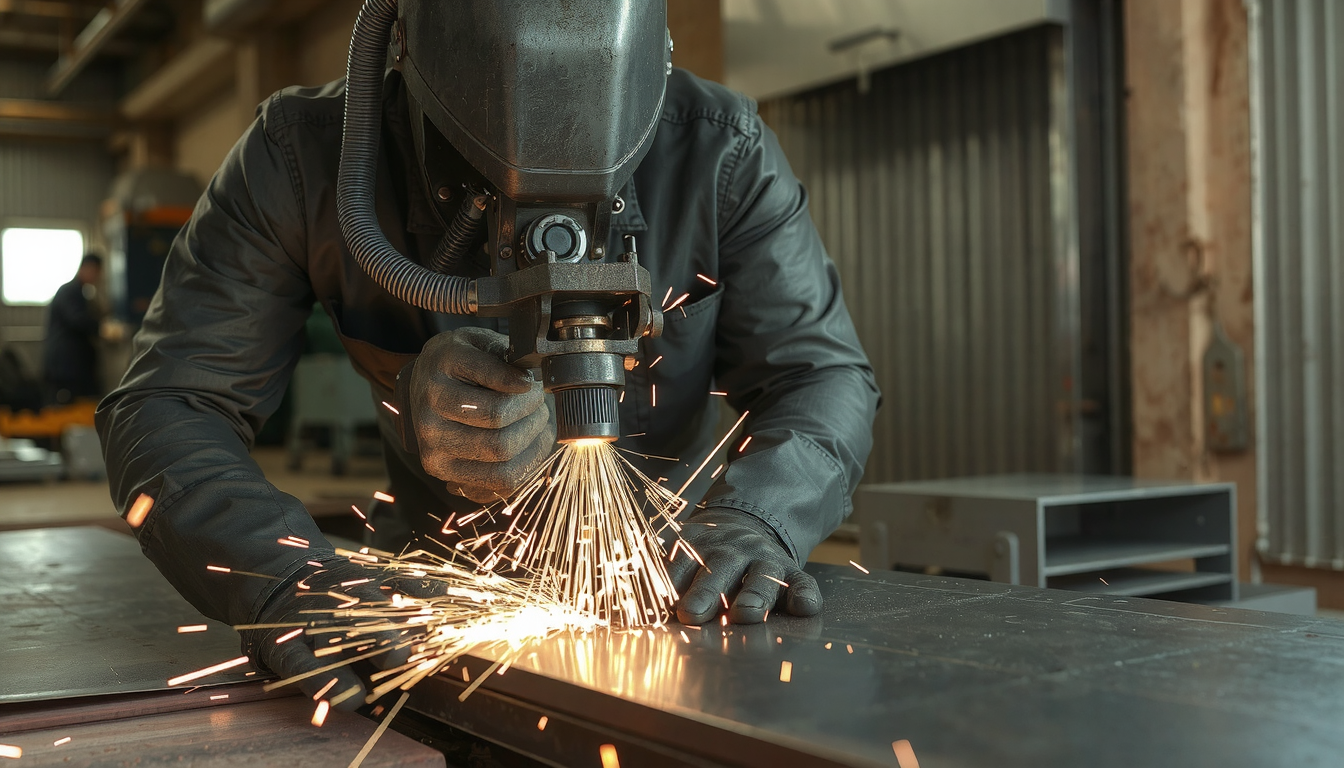
We cover all areas you need to be aware of. These are the tools you use to cut metal sheeting. You will find out how to select the right one. We reveal the most crucial safety rules. This piece also gives you step-wise instructions on different equipment and tools. On top of that, you will get the professional’s guidance on how to achieve a clean and professional look. Be sure to apply safety precautionary measures every time.
Safety First: The Golden Rules
Safety should be your top priority even before making any cut. Metal work creates jagged edges and flying debris. Protecting yourself is not optional. It’s a must. Always wear the appropriate Personal Protective Equipment (PPE).
This equipment is meant to protect you against common injuries.
- Eye Protection: You should always wear safety glasses. A full-face shield is even a better option. It protects your eyes and face from small metal pieces and sparks.
- Hand Protection: Use heavy-duty, cut-resistant gloves. Regular cloth or leather gloves are not effective against sharp metal edges.
- Hearing Protection: Power tools tend to be noisy. Use earplugs or earmuffs to protect your hearing. This is especially important when the job takes longer.
- Respiratory Protection: Cutting or grinding generates fine dust and fumes. Wear a mask or respirator. This is crucial when working with coated metals like galvanized steel.
Before making any cuts, always clamp your metal sheet. A loose sheet can suddenly jump or move, which is very dangerous. This is called kickback. It can spoil your cut as well as injure you seriously.
Work in a neat area. Clear any flammable materials like paper or oily rags. Grinders can ignite fire easily by throwing sparks. A well-organized, clutter-free workspace is a safe workspace.
Preparation for a Perfect Result
The right preparation is vital for an accurate, clean cut. Skipping this step can lead to mistakes and wasted materials. The old saying, “measure twice, cut once,” is applicable in metalwork too.
Be sure you are using a high-quality tape measure for the most accurate readings. Mark a straight line after getting the proper measurement. A permanent marker with a fine tip works well on most surfaces. For more precision try using a carbide-tipped scribe.
Using a straightedge makes it easy to draw a perfect straight line. This time, you will need a framing square. Here is a trick: apply painter’s tape along the cut line first. After that, draw your line on the tape. It is easier to see the line that way. Additionally, it can withhold the surface, metal from being scratched.
Another crucial factor is Properly Supporting the metal sheet. Put the sheet on a solid workbench or use two sawhorses. Ensure the cutting area is well supported. This will prevent vibrational or sagging. It’s a simple way to enhance your control and cut quality.
Choosing Your Method: The Right Tool
The best tool for cutting metal sheeting depends on your job specifications. Consider the metal thickness, cut type, and your spending plan. The right tool makes the job easier, safer, and gives better results.
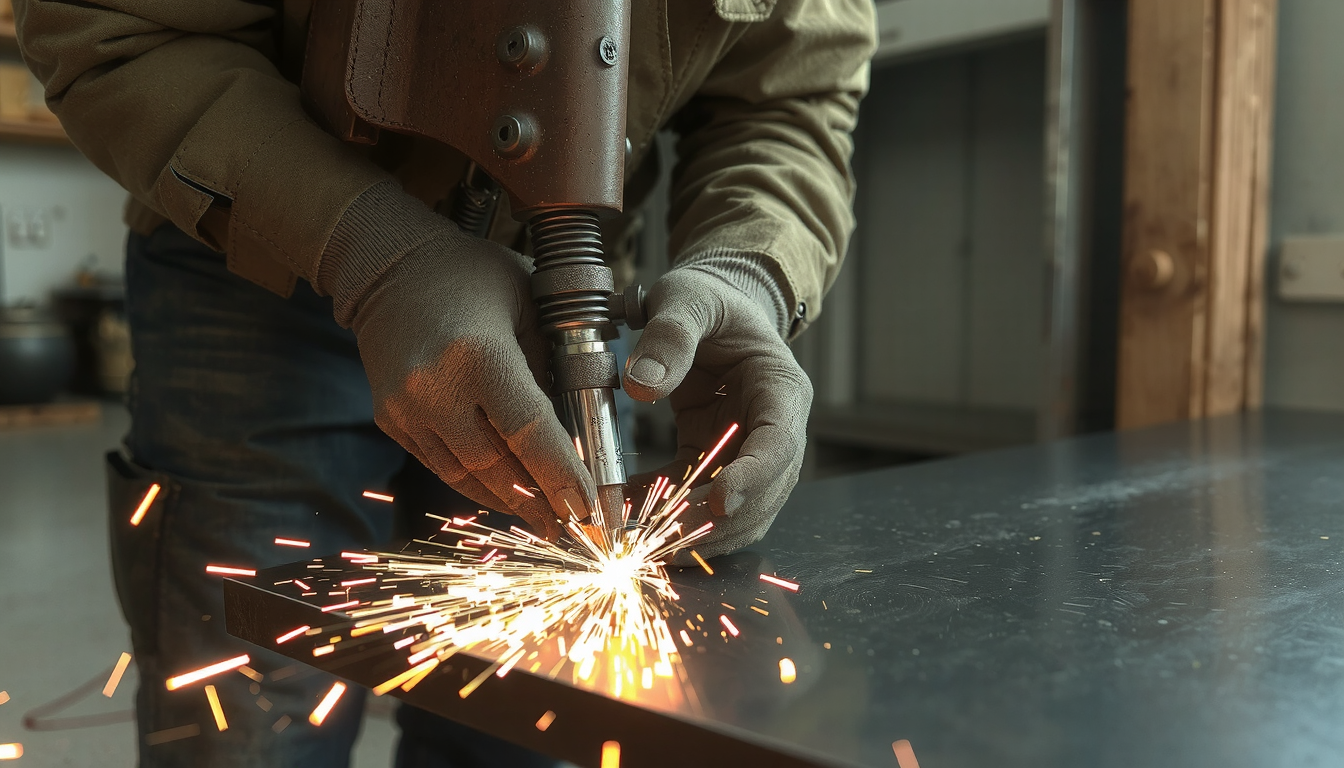
Metal thickness is measured in “gauge.” A lower gauge number means thicker metal. A higher gauge number means thinner metal. Most DIY projects for roofing use 22 to 29-gauge steel. Auto body work is done with thicker 16 to 20-gauge metal. Knowing your metal’s gauge helps you pick the best method to cut metal sheeting.
This table lists common tools and their pros and cons for you to choose from.
| Tool | Best For | Metal Thickness | Cut Type | Pros | Cons |
|---|---|---|---|---|---|
| Aviation Snips | Thin sheets, curves | Up to 24-gauge | Straight & Curved | Quiet, no sparks, great control | Slow, tiring on hands, can warp metal |
| Angle Grinder | Thick metal, demolition | Medium to Thick | Straight | Fast, powerful, cuts thick metal | Very loud, lots of sparks, rough edge |
| Circular Saw | Long, straight cuts | Thin to Medium | Straight | Very fast for long cuts | Loud, can create sparks, requires special blade |
| Jigsaw | Intricate shapes, circles | Thin to Medium | Curved | Excellent for curves, good control | Slower, can vibrate a lot, blade can break |
| Nibbler / Shear | Clean, distortion-free cuts | Thin to Medium | Straight & Curved | Very clean edge, no sparks or warping | Slower, more expensive specialty tool |
Method 1: Hand Tools for Thin Sheets
Hand tools excel at cutting thin metal and for elaborated curves. They are also cheaper and unlike power tools, they don’t produce noise or sparks. The most popular tool is the aviation snips, which is also called tin snips.
There are three major types of aviation snips. They are color-coded for ease of use.
- Red-handled snips – left curve.
- Green-handled snips – right curve.
- Yellow-handled snips – straight line.
Learning how to cut metal sheeting with these is easy.
- First off, you should select the correct type of snips for the cut.
- Set the point of your cut at the sheet’s edge. In case you need to start in the middle, first drill a small pilot hole.
- Use short, smooth squeezes. You should not try to cut all the way to the tips of the blade. Do not pinch or distort the metal edge.
- During your cut the scrap metal will curl away. Be careful not to let it block the path of the snips.
Throughout the properly executed cuts, you should feel the metal crunch as it separates, which will sound like a crisp crack. That indicates a clean cut. If you are not careful and force the tool, you will feel the metal tear instead of cut. You can also check other helpful visuals you can find on the web like the step-by-step visual guides. Your hand gets tired when doing long cuts, only rest when necessary.
Method 2: Power Tools for Speed & Thick Metal
Power tools are the solution for cases when you need to make cuts on thicker metal or do it fast. They allow you to save both time and effort. However, they come at three safety costs due to their speed and power. Here is how to cut metal sheeting with the most common power tools in use.
Using an Angle Grinder
An angle grinder with a thin cut-off wheel is outstanding among metal cutting tools. It is the go-to choice for straight cuts in medium to thick steel. Besides that, it is helpful for working on old bolts and demolition.
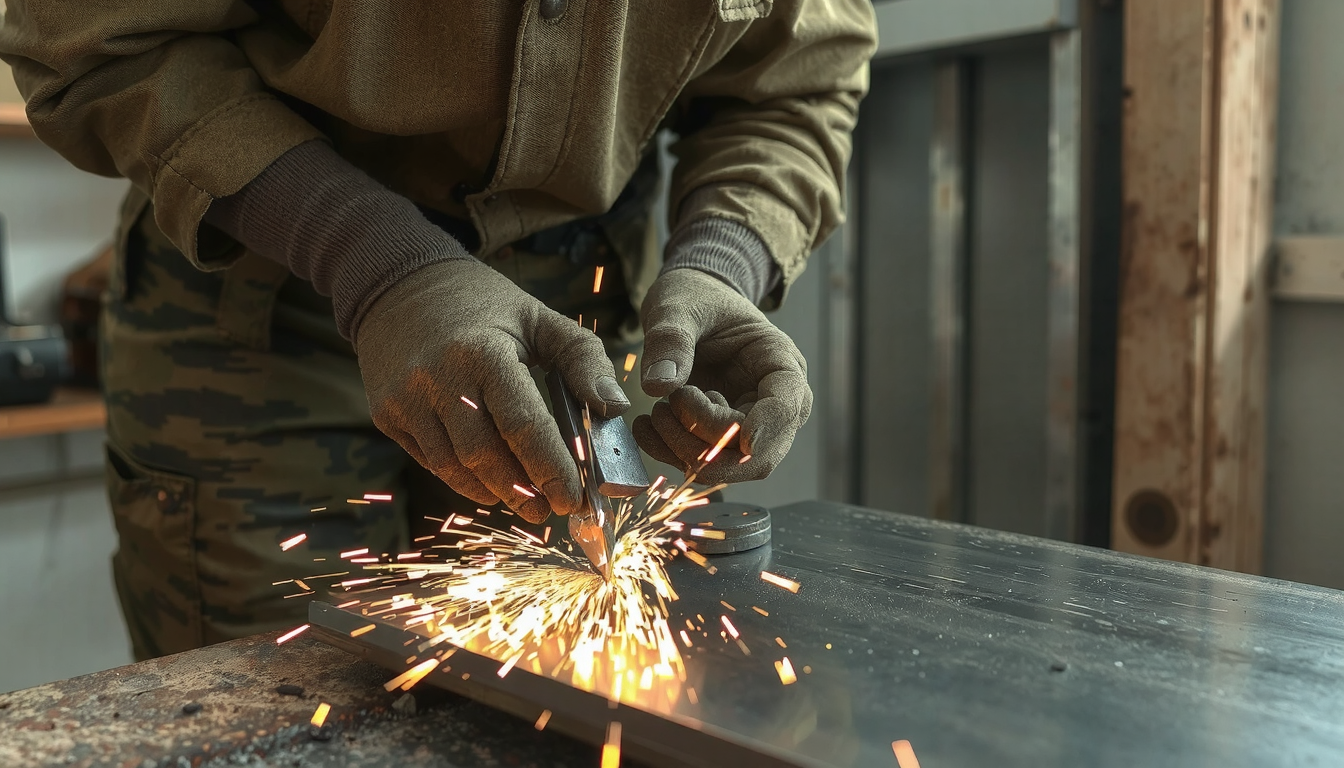
I recommend you firmly grip the grinder with both of your hands. The wheel will spin at high speeds and make the cutting. Be careful not to apply too much pressure. With one hand, guide it along the marked line, and with the other, hold it steady. Expect a lot of noise and a shower of sparks during the process. It will be better if your work area is free of any material that could catch fire.
Using a Circular Saw
A circular saw is best for large, straight cuts in metal siding or roofing panels. You have to use a blade that is specifically for this purpose. There are different blades for ferrous metals (like steel) and non-ferrous metals (like aluminum). Using the wrong blade is dangerous and won’t work well.
First of all, you have to secure the metal sheet by ensuring it cannot move around. Then, you should adjust the depth of the blade so that it just barely goes through the metal. A pro-tip is, for some composite roofing materials, to cut the saw backward. This can score the panel with fewer sparks. However, it is a special method and it will require you to take care. There is the possibility of expert advice being found which will help you with this set up.
Using a Jigsaw
If you want to make curves or complex shapes, a jigsaw is the best tool. You should get a fine-toothed blade that is specially made for cutting metal.
You can run the jigsaw at slow or medium speed. If you go too fast, your blade may overheat and the metal too. Consequently, the blade may become dull more quickly and the metal may end up being warped. Your hand should hold the jigsaw base plate firmly against the metal sheet. This is necessary to control “the chatter” or vibration that you will feel as the jigsaw cuts. Steady hands and firm pressure downwards are the primary conditions to get a smooth, curved cut.
Using a Nibbler or Shear
Electric shears and nibblers are specialty tools that come with these fantastic results. They have benefits like no distortion at all which makes them the right choice for clean cuts. They are most effective when applied to corrugated or shaped panels.
A shear works like two little blades that cut through the metal. A nibbler is more like a small punch. It features a pincer which removes tiny bits of metal while it moves forward. The tools do not produce sparks and they don’t heat the metal. This is why they are a good option for someone who cuts metal sheeting on a regular basis.
Troubleshooting and Pro-Tips
Issues may arise even when the correct tool has been chosen. Here are expert tips to help you with common problems and attain a smooth finish. A little trick goes a long way in improving your work quality.
To cut thin metal sheets straight with power tools, you will often find them wanting to warp or bend in the process. To achieve this, the “sandwich” technique can be useful. Put the thin sheet between two larger pieces of plywood and clamp them. Mark the line at the top piece of plywood. Make a cut through all three layers. The plywood will support the metal one-hundred percent. Thus, you will have beautiful, flat, and clean cuts.
Vibrations and noise are also a problem, especially with big panels. Some creative solutions have been shared by DIYers, such as laying the panel on a lawn. Support the cut line with a 2×4 on the bottom. The grass beneath it will absorb some of the noise and vibration.
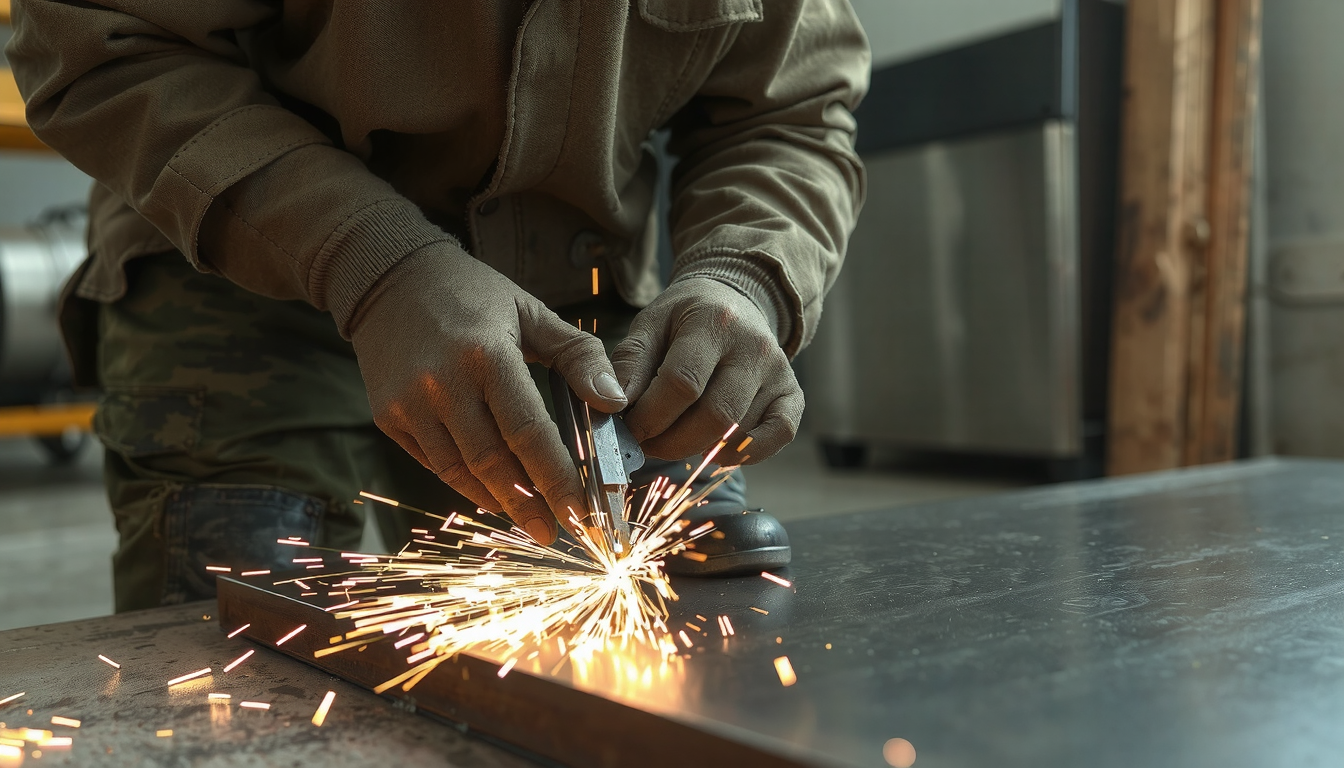
If the blade gets stuck it is referred to as blade bind. Don’t try to force it. Switch off the tool, unplug it, and gently back out the blade. Verified that your workpiece is well secured. Check the cut path before starting again.
Using cutting lubricant or wax stick, will help avoid burnt edges from a grinder, especially. You could also try a slower speed on tools with variable speed.
When you’re working with galvanized steel and using an abrasive tool like a grinder take special care. The heat burns off the zinc coating which causes fume emissions that are dangerous to breath in. Always do this work in a well-ventilated area and wear the proper respirator.
The Final Step: Finishing Your Edge
When you cut metal sheeting the new edge will be razor-sharp. It also has some small, rough slivers of metal, called “burrs,” which are easily caused by deeper cuts. Burrs have to be taken off. This process is called deburring.
Besides making the edge safe to handle, deburring also gives your project a professional finish. You need only one tool, which is a simple one. A standard metal file works just fine. Alternatively, you can go in for a special deburring tool or choose a fine-grit sandpaper. A flap disc, which is applied on an angle grinder, is also recommended for a very smooth finish.
To deburr the edge, position your file or tool at a 45-degree angle to the metal. Move it smoothly for the entire cut on both sides. This will get rid of the sharp burrs and will leave a safe, clean edge.
When to Leave It to the Pros
It is a great feeling to do things by yourself but there are times when it is preferable to let the professional do it. Jobs requiring very precise details are better left to the pros. Such projects may involve very thick metal or may require many identical parts, often necessitating the use of special equipment.
When faced with these tasks you may want to try professional sheet metal fabrication services. They offer tools such as laser cutters and waterjets that make perfect cuts each and every time. If your project needs accuracy that is usually unachievable by hand, then these services are for you.
For other complex shapes, particularly round or tube-like parts, advanced processing methods are needed. Services like CNC lathe services incorporate computer-enabled lathes and provide unmatched precision.
When it comes to large or complicated jobs, an expert opinion is generally a good idea. You can be sure your project is done to the highest standard by working with reputable fabrication shops like Mekalite.
Conclusion: You’re Ready to Cut
You are now ready to handle your next project, as you have the necessary knowledge. The formula for success has only one thing and that is making safety a priority. The second is selecting the most appropriate tool for your task. The third is the preparation of the material and the workspace.
With this guide, you now know how to cut metal sheeting safely, cleanly and with confidence.
